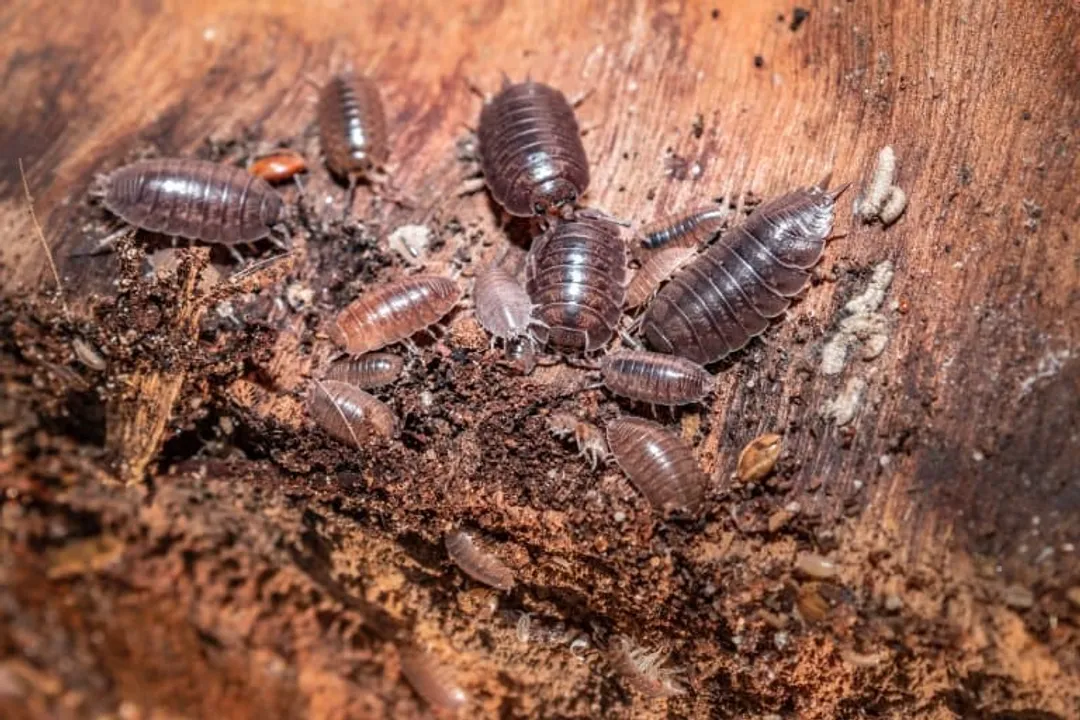
How does the woodlouse molt process occur, setting it apart from many other arthropods?
Shedding the posterior half first, followed by the anterior half
The molting process in woodlice is unique among many arthropods because it occurs in two separate stages, which is a crucial adaptation for maintaining structural support while vulnerable. Initially, the rear half of the hard exoskeleton is shed, leaving the front portion intact. This allows the woodlouse to retain its structural integrity and some mobility, reducing the risk of being crushed or desiccated while defenseless. After an interval of two or three days, the woodlouse then sheds the remaining anterior (front) half of its old shell. This staggered approach minimizes the duration during which the creature is completely unprotected, which is vital in environments where hiding spots can quickly dry out.