Wolf Spider Facts

The name "wolf spider" immediately conjures images of a fearsome, ground-pounding predator, and while they are indeed formidable hunters, they are also creatures of remarkable maternal devotion. [5][7] These spiders belong to the family Lycosidae, a name derived from the Greek words lycos (wolf) and hespera (evening), hinting at their nocturnal, active hunting habits. [2][10] Unlike many other spiders that rely on intricate silk traps to ensnare meals, wolf spiders are cursorial predators, meaning they actively chase down their prey rather than waiting for it to stumble into a web. [2][5] This active lifestyle has shaped their entire anatomy and behavior, making them fascinating subjects for anyone interested in the world of arachnids found across nearly every continent. [2][5][7]
# Family Lycosidae

Wolf spiders are categorized within the infraorder Araneomorphae, the group containing the majority of modern spiders, but they form their own distinct family, Lycosidae. [2][10] This large family contains numerous genera and species, and the term "wolf spider" is a common name applied broadly across this group. [2] They are often contrasted with web-building spiders, but it is important to note that while they do not spin aerial webs for catching food, they still produce silk for other vital functions, such as wrapping their egg sacs or lining their burrows, if they create one. [5][1] Their global distribution is vast, illustrating their adaptability to varied environments, from deserts to forests and even suburban gardens. [2][5][7]
# Body Features
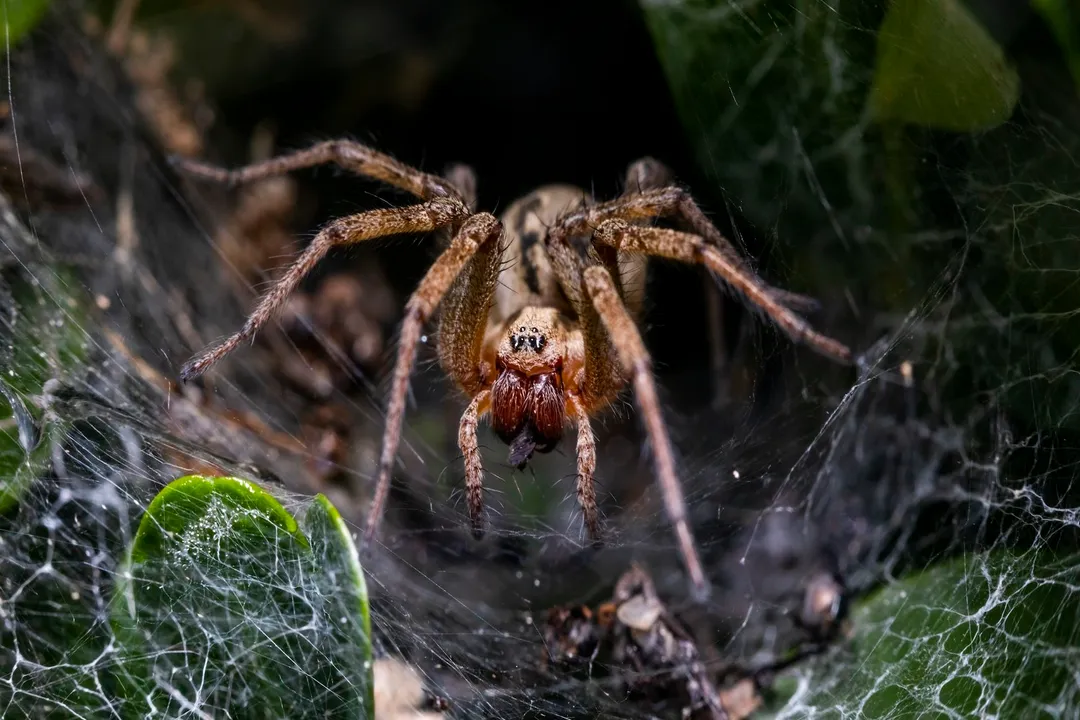
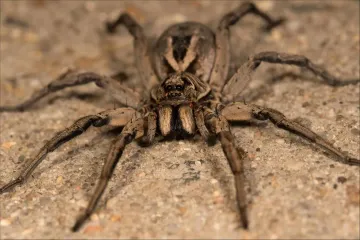
A quick glance at a wolf spider reveals a body structure built for speed and sensing the environment. They are typically described as being hairy or bristly, often displaying mottled patterns of browns, grays, and blacks, which provide excellent camouflage against soil, leaf litter, and bark. [1][5][7] This coloration is essential for an animal that spends most of its life on the ground, relying on stealth and sudden bursts of speed for survival. [7]
The key to their predatory success lies in their eyes. Wolf spiders possess an extremely specialized visual arrangement that distinguishes them from many other spiders. [2][5] They have eight eyes arranged in three distinct rows. [2][5] The bottom row consists of four smaller eyes set close together. Above these, centrally positioned, are two very large, prominent eyes that grant them superior vision. [2] Finally, set back above the large pair are two medium-sized eyes. [2] This configuration, particularly the large anterior median eyes, gives them excellent light-gathering ability and vision for tracking moving targets, which is a distinct advantage for a pursuit predator. [5]
While size varies significantly across the species within the Lycosidae family, some species can reach quite substantial dimensions, making them noticeable additions to any local ecosystem. [1] For instance, some larger types can have leg spans measurable in centimeters, easily capturing the attention of a casual observer. [1][7]

# Hunting Tactics
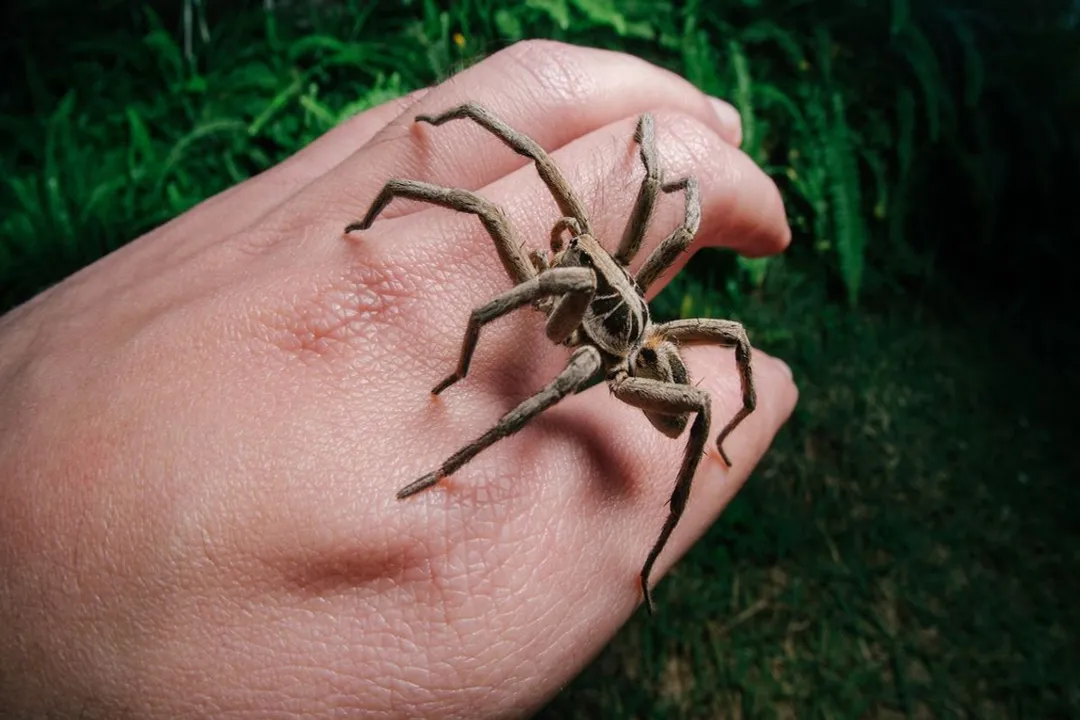
The hunting method of the wolf spider is what truly defines its name. They are energetic, active foragers that hunt using their acute vision and tactile senses to stalk and ambush prey. [1][5] They do not construct orb webs to capture insects mid-flight; instead, they roam the ground, searching for small invertebrates like crickets, grasshoppers, and other spiders. [1][2]
Their hunting style is characterized by rapid pursuit. Once prey is spotted, the wolf spider closes the distance quickly, overwhelming the target with speed rather than complex trapping mechanisms. [5] This contrasts sharply with spiders that rely on sticky threads, placing the wolf spider in a niche similar to mammalian predators in terms of approach, hence the common name. [1] An interesting observation for those studying local fauna is that the best time to spot this hunting behavior is often during the evening or night, though many species are active during the day as well, especially in cooler weather or when moving between hunting spots. [1][7]
When considering how common ground-dwelling insects might survive in an area with a dense wolf spider population, it becomes clear that evasion through cryptic behavior or burrowing becomes far more critical than web avoidance. If you are tracking local insect populations, noting where wolf spiders congregate can give you an idea of where ground-dwelling prey might be most vulnerable or where they tend to congregate themselves, as the spiders will often patrol established routes. [7]
# Maternal Care
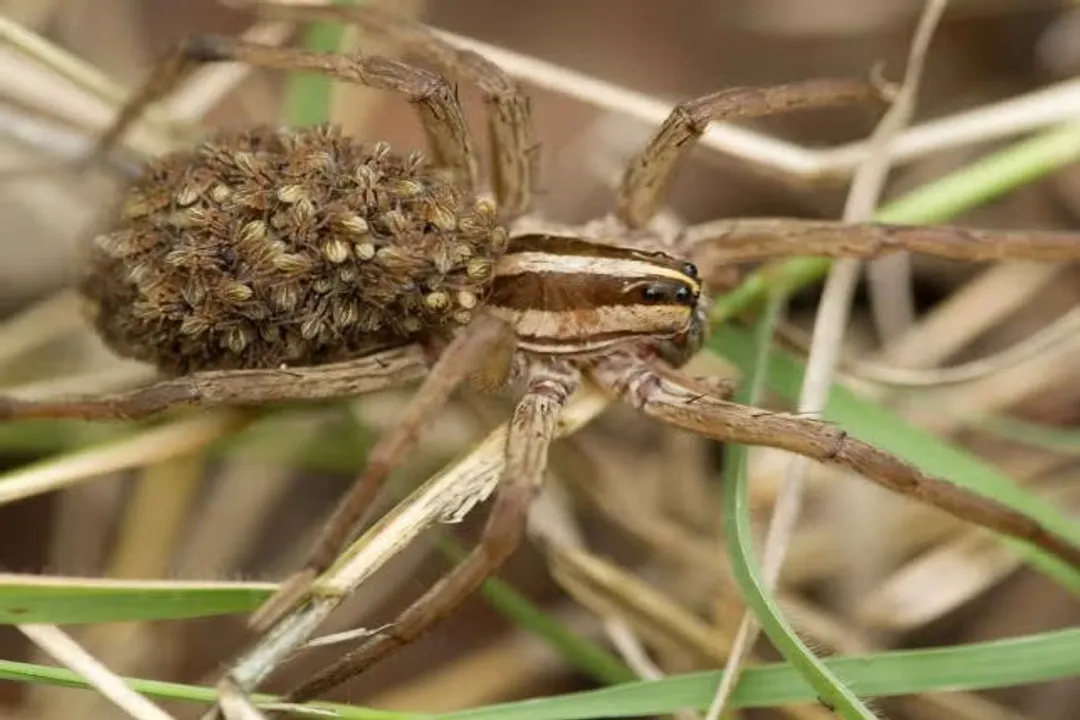
Perhaps the most compelling aspect of wolf spider biology is the intense level of maternal care exhibited by the female after fertilization. [2] This behavior sets them apart from many other spider families. The female does not simply deposit her eggs and leave them unprotected; instead, she demonstrates remarkable commitment to her offspring's early survival. [5][7]
The process begins when the female spins a silken sac, often described as spherical or pear-shaped, to house her eggs. [1][7] She meticulously attaches this egg sac directly to her spinnerets, the silk-producing organs at the rear of her abdomen, and carries it with her everywhere she goes. [1][7] She will guard this sac fiercely until the spiderlings are ready to hatch. [5]
Once the hundreds of tiny spiderlings emerge, the next stage of maternal devotion begins. The hatchlings immediately crawl up their mother’s legs and congregate on her back. [1][2][5] The mother then carries this sizable, wriggling mass of offspring on her dorsum until they are ready to disperse and fend for themselves. [2][7] This period of carrying the young ensures they are protected from predators and environmental hazards during their most vulnerable stage of life. This behavior—carrying the egg sac and then the young—is a significant differentiator from many other common household spiders. [1][2]
# Habitat and Behavior
Wolf spiders are incredibly widespread, found globally in many different habitats, which speaks to their generalist nature. [2][5] They are primarily ground dwellers, preferring to live on the surface of the soil, under leaf litter, in grassy areas, or sometimes within silken-lined burrows they excavate. [2][7] In Missouri, for example, they are commonly seen near the ground in various landscapes, and they are known to utilize burrows for shelter and to ambush prey. [7] Australian species are also noted for utilizing burrows, sometimes with trip lines of silk radiating from the entrance to detect passing insects. [6]
While many species are free-roaming hunters, others, particularly those found in more arid or stable environments, are sedentary inhabitants of silk-lined silk tubes or burrows. [6][7] Even when they use a burrow, they do not typically stay inside waiting; they often sit at the entrance or patrol the immediate vicinity. [7]
One fascinating behavioral adaptation involves their movement. Because they are often seen scurrying across the ground, sometimes seeming to pause momentarily before darting off, it can appear as though they are running in erratic patterns. [1] This rapid movement, combined with their hairy appearance, contributes to their reputation. [1] If you see a quick, dark shape moving rapidly across a paved driveway or lawn, especially during non-web-building seasons, there is a high probability you are observing a wolf spider on the move. [7]
# Interaction with Humans
Despite their sometimes startling appearance and quick movements, wolf spiders are generally not considered medically significant to humans. [1][8] They possess fangs and venom, as all spiders do, and they are capable of biting if they feel threatened, particularly if they are accidentally trapped against the skin. [1][8]
However, their venom is typically not potent enough to cause serious harm in healthy individuals. [1][8] Bites are rare because they prefer to flee rather than confront a perceived threat much larger than themselves. [8] When a bite does occur, symptoms are usually minor, akin to a bee sting, potentially involving localized pain, redness, or mild swelling around the bite site. [1][8] Unlike the highly publicized bites from some other spider groups, such as the widow or recluse spiders, wolf spider bites do not generally result in severe necrotic lesions or systemic illness. [8] The primary risk associated with them, as with any outdoor creature, is defensive injury, not predatory attack on humans. [8]
For those who encounter them indoors, understanding their habits can inform removal or control methods. Since they are ground hunters, they are often found wandering on floors, especially in basements or ground-level rooms. [1][7] If you observe one indoors, the best course of action, given their beneficial role in controlling common pests outside, is often to gently capture it using a cup and piece of paper and release it outdoors, away from immediate doorways. [8] Trying to smash them often results in a fast, missed strike, confirming their evasiveness. [1]
# Species Diversity
The sheer number of species within the Lycosidae family means that their characteristics can vary widely depending on the geographic location. [2] For instance, while some species might be large, day-active hunters in arid scrublands, others could be smaller, nocturnal inhabitants of damp forest floors. [5][7]
In certain regions, like Australia, wolf spiders are recognized as significant members of the local invertebrate fauna. [6] Research into species like Lycosa in Australia reveals that while they might create deep burrows, they remain aggressive hunters. [6] Comparing this to North American species often studied in agricultural or natural settings, like those in Michigan or Missouri, reveals a shared behavioral core—active hunting and strong maternal care—despite different local habitat pressures. [7][10] The diversity underscores that "wolf spider" is a label for a lifestyle and physical structure, encompassing many unique adaptations to local environmental niches. [2][5] For instance, it is not uncommon for local guides or university extension offices to list several different genera of wolf spiders as native to a single state, each with slightly different preferred microhabitats. [7][9]
Related Questions
#Citations
Wolf spiders: Behavior, bites and other facts - Live Science
Wolf spider - Wikipedia
Wolf Spider Facts - Terro
Wolf spider Facts for Kids
Wolf Spider Facts | National Geographic
Wolf Spiders - The Australian Museum
Wolf Spiders - Missouri Department of Conservation
Who's Afraid of the Big Bad “Wolf Spider”? | The Real Dirt
[PDF] Wolf spiders
Kids' Inquiry of Diverse Species, Lycosidae: INFORMATION - BioKIDS