What evolutionary advantage do wood frogs gain by hibernating on the forest floor rather than underwater?
Answer
They can emerge and breed in shallow meltwater pools faster
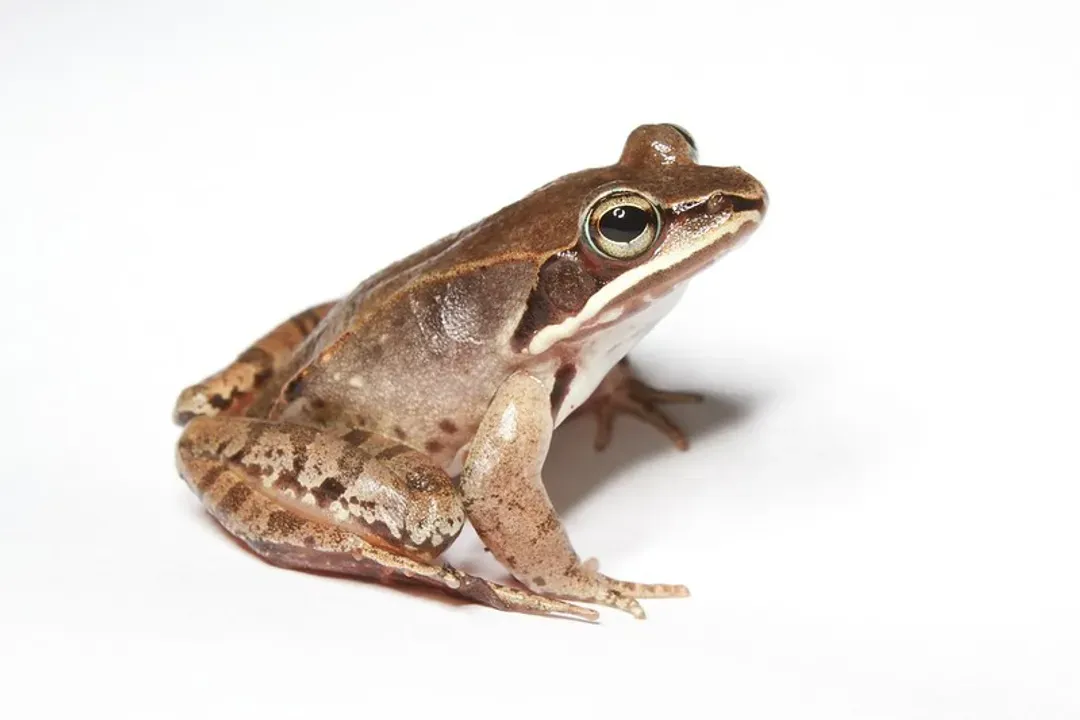
The evolutionary strategy of freezing solid on the forest floor offers a substantial temporal advantage in reproduction compared to amphibians that must wait for water bodies to fully thaw. Land thaws much more rapidly than ice-covered lakes. Consequently, wood frogs can thaw and emerge earlier, gaining immediate access to shallow pools formed by melting snow and ice. These meltwater pools are ideal, temporary breeding grounds that dry up completely by midsummer. This early access to ephemeral water resources is unavailable to underwater hibernators who must wait for larger, deeper water bodies to clear of ice, thereby delaying their breeding cycle significantly.
Related Questions
What sugar floods wood frog cells to act as an intracellular cryoprotectant during freezing?What substance do gray tree frogs rely on for freeze tolerance, differentiating them from Alaskan wood frogs?What biological activity resumes first when the wood frog thaws out in the spring?What evolutionary advantage do wood frogs gain by hibernating on the forest floor rather than underwater?What did the Skelly Lab research reveal about wood frog embryos from 2018 versus 2001?What two metrics were compared in the eastern clade study to assess trait divergence drivers?How did wood frog populations from climatically challenging, less suitable habitats generally develop in the common garden?What resilience did high-suitability region larvae show when reared under high-density conditions?What did the $Q_{ ext{ST}}$ versus $F_{ ext{ST}}$ analysis confirm about trait variation drivers?What physical change occurs to the wood frog's eyes during the absolute metabolic shutdown?