What are some interesting facts about turtle frogs?
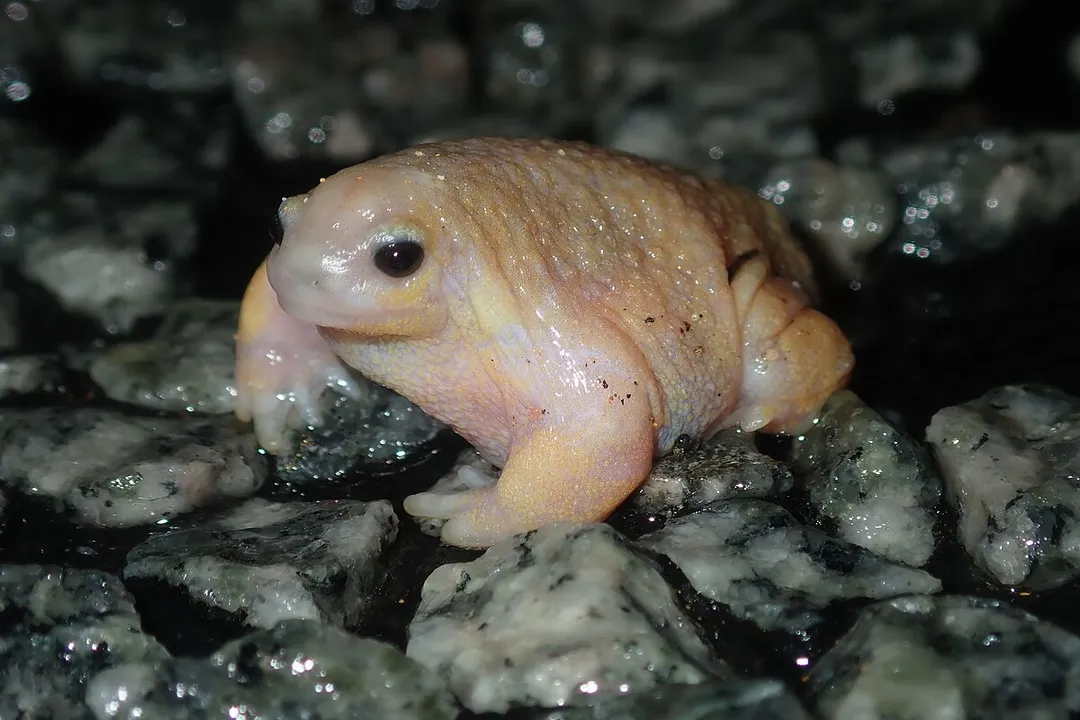
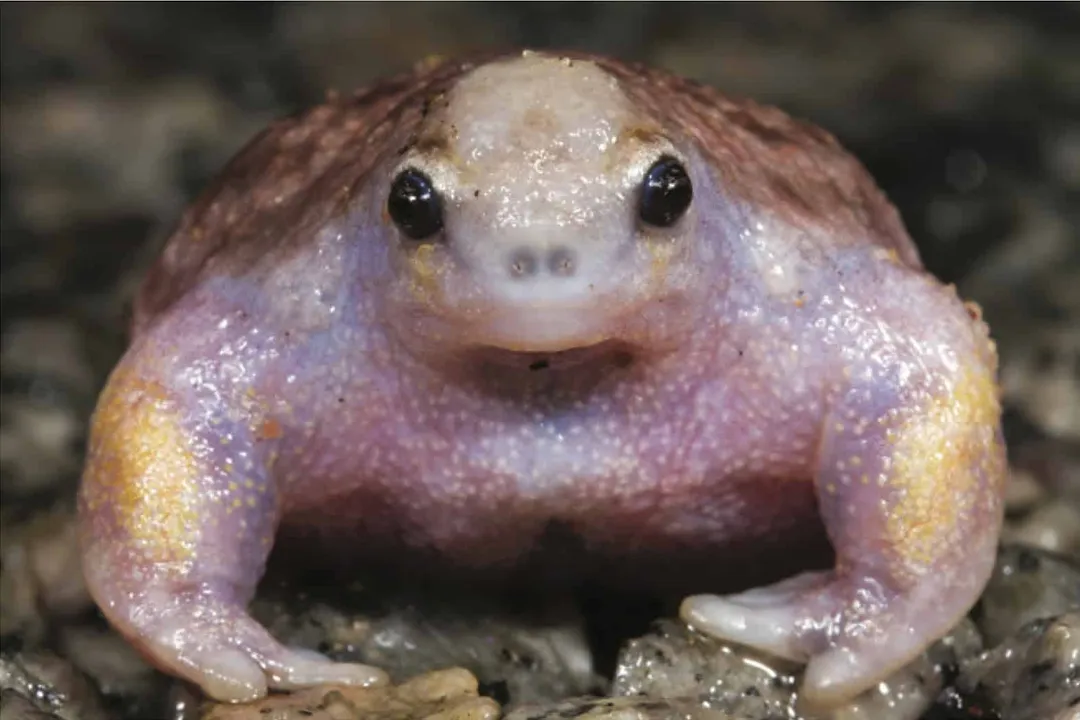
The turtle frog, scientifically known as Myobatrachus gouldii, presents one of the most singular profiles in the vast world of Australian amphibians. It’s a creature so physically distinct from its frog relatives that its common name seems less a descriptor and more an understatement. This small amphibian is instantly recognizable, primarily due to its almost comically rounded body and disproportionately short limbs, giving it a distinct, almost toy-like resemblance to a miniature turtle. [2][4] Endemic solely to the sandy regions of southwestern Western Australia, this frog has evolved a lifestyle completely divorced from the typical damp environments favored by most amphibians. [1][3]
# Unique Body
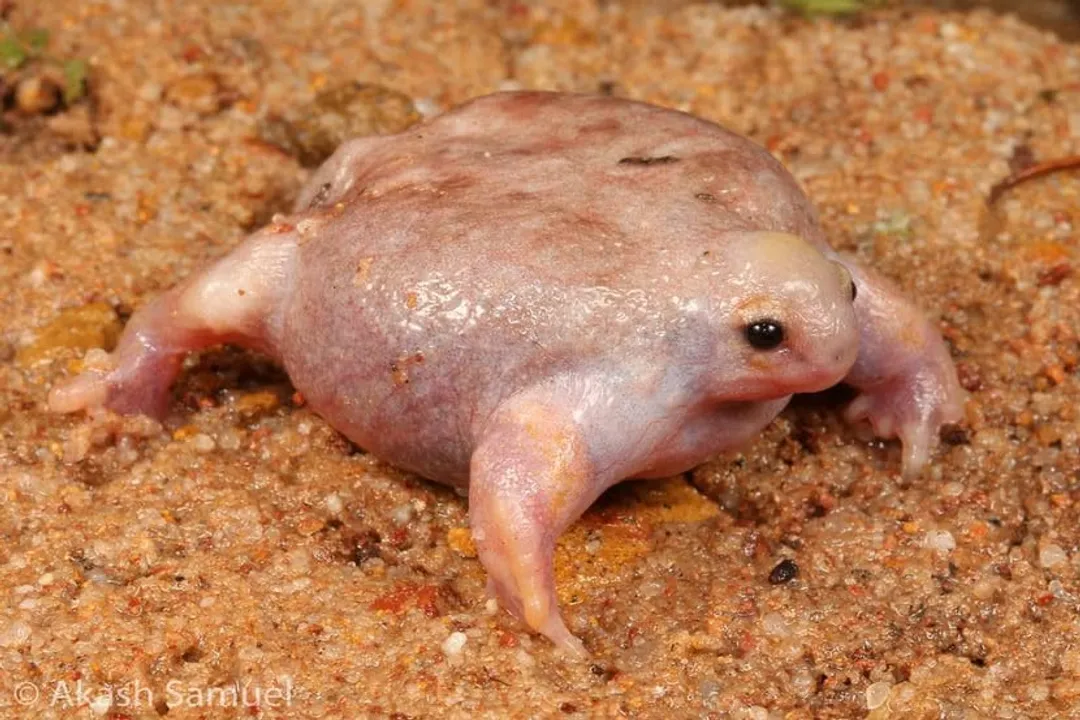
The visual characteristics of the turtle frog are its most striking feature, setting it apart from nearly every other species in its family. [3] The most immediate observation is the nearly spherical body shape combined with a surprisingly broad, dome-shaped head. [3][4] Coupled with this profile are its remarkably short and stubby legs. [7] This morphology is not random; it is a direct adaptation to its subterranean existence. [1] While other burrowing amphibians might retain longer limbs for pushing aside soil, the turtle frog seems to favor a compact design that excels at squeezing through tight soil structures. Observing videos of them moving on the surface, they appear slow and somewhat clumsy, often described as waddling rather than hopping. [8] This suggests their limbs are primarily built for pushing and anchoring underground rather than rapid terrestrial locomotion.
# Fossorial Habits
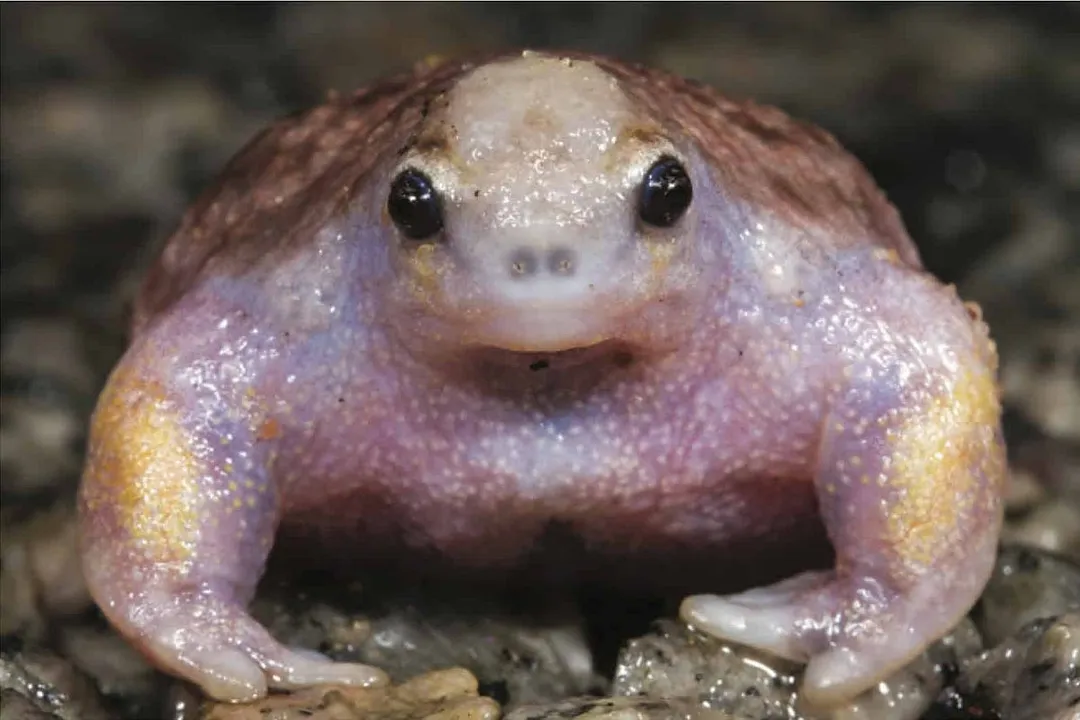
Life underground defines the turtle frog. They are classified as fossorial, meaning they spend the overwhelming majority of their lives buried beneath the sandy substrate where they live. [1][2][4] These creatures are expert excavators, capable of creating extensive tunnel systems in the sand plains. [7] While information varies on the exact depth, some accounts suggest they can burrow several meters down, seeking stable temperatures and moisture levels away from the harsh surface conditions. [7] This deep retreat is a critical survival mechanism in the arid-leaning environments they inhabit. [1] Their short, stiff tail, sometimes mentioned in descriptions of the genus Myobatrachus, likely plays a functional role, perhaps acting as a brace or anchor when pushing through the sand, which is a specialized biomechanical requirement that separates them from frogs that merely hide under surface debris. [3] Unlike many frogs that may only burrow to hibernate or aestivate, the turtle frog maintains its subterranean existence as its default state, only emerging when the conditions are precisely right. [4]

# Emergence Triggers
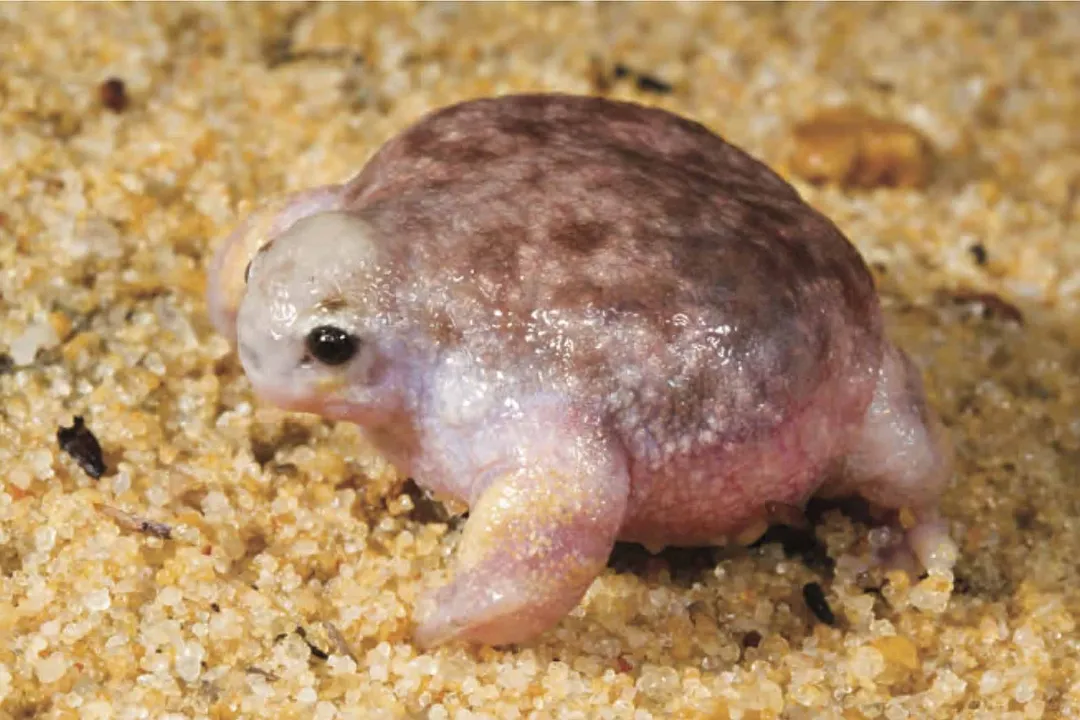
The trigger for surfacing is a key piece of the turtle frog's life cycle puzzle, and it hinges entirely on the weather. [2] They generally remain hidden deep underground until significant, heavy rainfall occurs. [1][2] This rain is necessary not just for surface moisture, but likely to penetrate deep enough to signal favorable conditions for activity and, more importantly, reproduction. [1] Citizen science groups and observers often note these synchronous mass emergences, turning otherwise barren sand plains into temporary frog habitats for a brief window. [5] For anyone interested in spotting one of these elusive amphibians, understanding this dependence on substantial rain events is the most actionable tip: waiting for a significant soaking is far more productive than casual searching during dry spells. [1] After these rains, they become active, often at night, seeking food before retreating again as the sand dries out. [2]
# Diet Specialization
When the turtle frog does venture out, its menu is surprisingly narrow and specialized. [6] Unlike generalist predators that snap up whatever small invertebrates they encounter, the turtle frog demonstrates a strong preference for ants and termites. [1][2][6] This dietary focus—myrmecophagy—is shared by only a few other amphibians. [1] This specialization suggests a co-evolutionary relationship with these social insects and implies that the frog has adaptations, perhaps in its tongue structure or digestive system, to handle large quantities of ants, which often carry formic acid. [2] It’s fascinating to consider that an animal that spends most of its life in the dark, cool depths of the earth relies so heavily on the very creatures that dominate the sunbaked surface world during its brief active periods. [7]
# Reproductive Strategy
Perhaps the most significant departure from typical amphibian biology is the turtle frog's reproductive cycle. [1][6] Most frogs undergo metamorphosis, starting life as aquatic tadpoles before developing lungs and legs to become terrestrial adults. [1] The turtle frog bypasses this entire aquatic stage in a process called direct development. [2][6] Instead of laying eggs in a pond or puddle, the female deposits a very small clutch of eggs—typically numbering only twenty to fifty—directly into her underground burrow. [4][7] These eggs hatch directly into miniature versions of the adult frog, which are already equipped to burrow and hunt ants. [1][2] This strategy is incredibly high-risk, high-reward. If the underground chamber floods too severely or dries out too quickly, the entire small clutch is likely lost. [4] However, by avoiding the dangers of open water predation (like diving beetles or fish) and the risks associated with temporary surface water drying up, they have secured a unique niche. [1] The small clutch size is offset by the relatively high survival rate once they hatch into tiny froglets, given the protection of the burrow system. [4]
# The Distinctive Call
While they spend their time hidden away, when male turtle frogs are active, they do produce a sound used for communication, particularly during breeding seasons following heavy rains. [3] Their vocalization is not the familiar deep croak or ribbit associated with many other frogs. [3] Instead, observers describe the sound as a series of high-pitched squeaks or chirps. [3] This unique acoustic signature is another piece of data that aids researchers in tracking them, especially since visual confirmation is so rare. [3] Listening for these high-pitched sounds after a major downpour might be the best way to confirm their surface presence if one is in their specialized habitat range in Western Australia. [3]
# Longevity and Status
The turtle frog is a relatively long-lived amphibian, which is perhaps another consequence of its slow-moving, protected lifestyle. [2] Reports suggest they can survive for over fifteen years in the wild. [2] This longevity, coupled with their restricted range and highly specialized needs, makes population monitoring important. [1][7] While not currently listed as critically endangered across all sources, their habitat is specific, and their dependence on the correct rainfall patterns means they are highly sensitive to localized environmental changes, such as shifts in regional weather patterns caused by climate change. [1][7] Protecting the unique sandy habitats in the southwest of Western Australia is inherently protecting the survival blueprint of this remarkable, turtle-like inhabitant of the deep sands. [3]
#Videos
What Exactly Is: Turtle Frog | The Muscular Frog - YouTube
Related Questions
#Citations
Turtle Frog | Western Australian Museum
Turtle Frog - Myobatrachus gouldii - A-Z Animals
Myobatrachus - Wikipedia
Turtle Frog - Curious Species
Turtle frogs: what makes them so magnificent? - Facebook
Turtle frogs: Muscly amphibians that dig 3m deep | by Dee Vortex
Australia's Turtle Frog | Critter Science
What Exactly Is: Turtle Frog | The Muscular Frog - YouTube
Turtle frog Facts for Kids