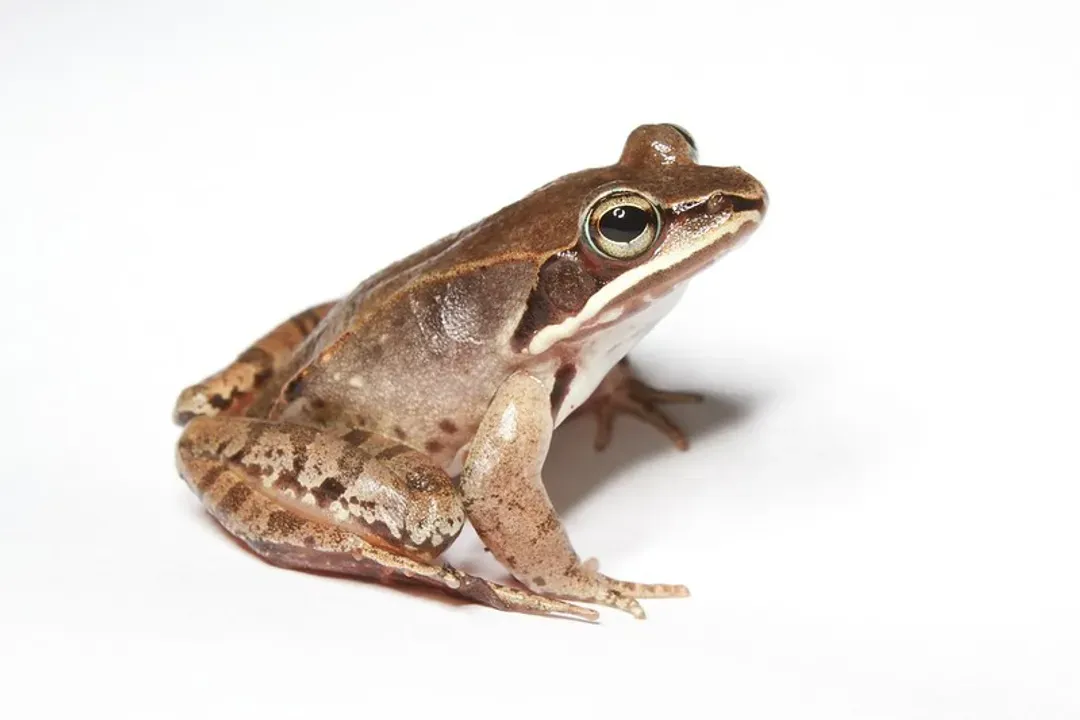
How did wood frog populations from climatically challenging, less suitable habitats generally develop in the common garden?
They developed slower, leading to longer larval periods but larger body weight
In the common garden experiment designed to isolate genetic differences, populations originating from ecologically less suitable habitats—often corresponding to warmer and drier conditions—exhibited a distinct developmental pattern. These populations tended to develop slower during their larval stage, resulting in extended larval periods. However, this slower development, when rearing conditions were not highly competitive, culminated in the tadpoles achieving a significantly larger body weight upon reaching metamorphosis. This suggests an evolutionary trade-off where adaptation to challenging climates favored attaining greater size, perhaps as a buffering mechanism against environmental unpredictability, even at the cost of increased time spent as vulnerable larvae.