What distinguishes the Order Anura to which Lithobates sylvaticus belongs?
Answer
Lack of tails in adulthood and powerful hind legs adapted for jumping
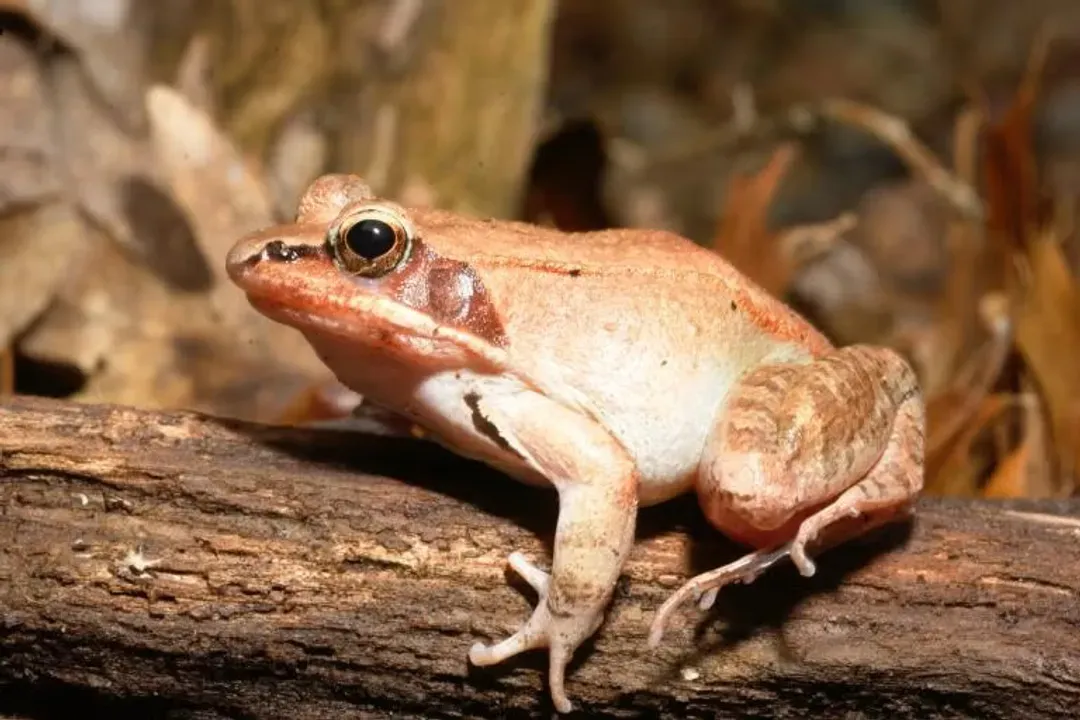
The Order Anura is the biological grouping that encompasses all frogs and toads. The primary morphological characteristics used to define membership in this order relate to the adult body plan. Specifically, adult members of Anura are distinguished by the complete absence of a tail, which differentiates them from other amphibian orders like Caudata (salamanders). Additionally, an essential feature linked to their locomotion is the development of significantly powerful hind legs. These specialized hind limbs are highly adapted for saltatorial movement, enabling effective jumping, which is crucial for escaping predators and navigating their environment.
Related Questions
What characteristics define Lithobates sylvaticus's placement in Class Amphibia?What distinguishes the Order Anura to which Lithobates sylvaticus belongs?Which genus classification preceded Rana for the Wood Frog, Lithobates sylvaticus?What does the specific epithet sylvaticus roughly translate to for the Wood Frog?What does NatureServe's global listing of G5 signify for the Wood Frog?What conservation status might a state listing for Lithobates sylvaticus show, unlike its global G5 status?What remarkable biological feature allows the Wood Frog to survive being frozen solid?What specific substance is produced by the Wood Frog to prevent lethal intracellular ice formation?What key feature indicates Lithobates sylvaticus's placement in Phylum Chordata?Why do field biologists use the binomial nomenclature Lithobates sylvaticus universally?