Wood Frog Scientific Classification
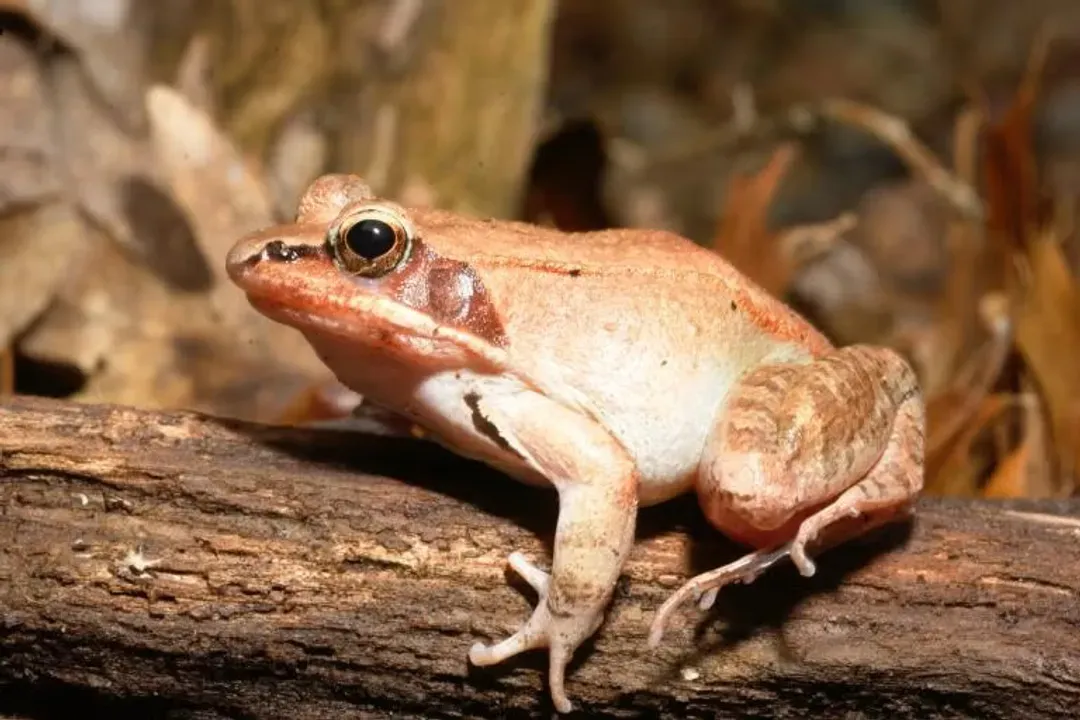
The scientific classification of the Wood Frog, formally known as Lithobates sylvaticus, places this fascinating amphibian precisely within the tree of life, detailing its evolutionary relationships to other creatures. [1][2][3][4][5][6][9] Understanding this taxonomy is more than just memorizing Latin names; it helps scientists track population health, migration patterns, and conservation needs across its broad North American range. [4][6] The Wood Frog belongs to the Kingdom Animalia, meaning it is multicellular and heterotrophic, and within that, the Phylum Chordata, indicating it possesses, at some stage of life, a notochord. [1][5] Its placement within the Class Amphibia is defined by characteristics such as undergoing metamorphosis, possessing smooth, moist skin, and being ectothermic. [1][2][5]
# Ranks Defined
Drilling deeper into the classification reveals its immediate relatives. The Order to which the Wood Frog belongs is Anura, the group encompassing all frogs and toads, distinguished by their lack of tails in adulthood and powerful hind legs adapted for jumping. [1][2][5] Following the order is the Family Ranidae, often referred to as the "true frogs," a diverse group containing many widely recognized frog species globally. [1][2][5] The identification relies heavily on the genus and species combination, which separates the Wood Frog from all other life forms. [1][3]
Here is a quick reference to the established hierarchical ranks for Lithobates sylvaticus:
| Rank | Classification | Characteristic Link |
|---|---|---|
| Kingdom | Animalia | Multicellular Organism |
| Phylum | Chordata | Presence of a notochord (developmental) |
| Class | Amphibia | Vertebrate with moist skin; typically biphasic life cycle |
| Order | Anura | Tailless adult amphibians |
| Family | Ranidae | True frogs |
| Genus | Lithobates | Genus grouping near-identical true frogs [1][5] |
| Species | sylvaticus | The distinct species designation [1][3] |
This table clearly maps out the steps scientists take to pinpoint this specific amphibian, moving from the vastness of animal life down to a single, identifiable species. [4]
# Genus Shift
One of the most significant historical points in the Wood Frog's classification involves its genus assignment. [1] For a long time, this species, along with many other New World frogs, was classified under the genus Rana. [1][9] However, detailed morphological and molecular studies led to a taxonomic revision, recognizing that the North American species represented distinct evolutionary lineages compared to their Old World counterparts. [1][9] Consequently, Lithobates sylvaticus became the accepted scientific name, shifting it into the genus Lithobates. [1][2][5] This change, while sometimes causing momentary confusion for those accustomed to the older Rana sylvatica designation, reflects a more accurate understanding of amphibian phylogeny. [1][9]
The specific epithet, sylvaticus, itself offers a clue to the animal's preferred surroundings, as it roughly translates from Latin to mean "of the forest" or "woodland". [1][9] This naming convention aligns perfectly with the creature's ecology, as Wood Frogs are strongly associated with forested habitats across their range. [9]

# Distribution and Status
The geographical spread of Lithobates sylvaticus is vast, extending across much of North America, from Alaska and Newfoundland down to the southeastern United States. [1][5][9] This wide distribution is key to understanding its scientific classification in terms of conservation assessment. [4] Because its classification is globally recognized, its protection status can be assessed across different political boundaries. [4][6] At the global level, NatureServe currently lists the Wood Frog as G5, which signifies that the species is considered Secure. [4] This generally indicates that the species is common, widespread, and not currently at risk of extinction across its entire range. [4]
However, the story becomes more nuanced when examining state or provincial classifications. [6][7] While secure globally, local populations can face specific threats due to habitat fragmentation or localized environmental changes. [6] For example, its status can vary significantly from one jurisdiction to the next, requiring state-level monitoring programs, such as those tracked by agencies like the Virginia Herpetological Society or the Illinois DNR, to accurately gauge local pressures. [6][9] A state might list it as S5 (Secure), while a neighboring state struggling with wetland loss might list it as S3 (Vulnerable). [7] This distinction highlights an important practical application of taxonomy: while the scientific name unites the species, local ecological realities mandate varied conservation approaches. [4][6]
# Distinctive Features
While taxonomy focuses on lineage, certain inherent biological traits reinforce its classification within the Amphibia class and Ranidae family. [1][2] One particularly remarkable biological feature associated with the Wood Frog, which sets it apart even within the classification structure, is its incredible tolerance to freezing temperatures. [1][5] Wood Frogs can survive being frozen solid during winter hibernation, with up to 65% of their body water turning to ice. [1][5] This adaptation is facilitated by the production of glucose, which acts as a cryoprotectant, preventing lethal intracellular ice formation. [1][5] This physiological specialization is a defining characteristic of the species that scientists study closely, even as they maintain its Linnaean placement. [1]
# Classification in Practice
For field biologists and conservationists, the scientific name Lithobates sylvaticus serves as a universal shorthand, preventing confusion that common names often create. [1] In regions where multiple "wood frogs" or similar species exist, or where common names overlap due to dialect, the binomial nomenclature ensures that everyone is discussing the exact same organism. [1][9] When reporting data on migration timing or breeding calls—a critical component for amphibians—using the precise scientific designation ensures that data from an Illinois study can be accurately compared with research conducted in Maine or Alaska. [6][9] This standardization is what allows organizations like the U.S. Fish and Wildlife Service to monitor populations across international and state lines under a single scientific umbrella. [9] If a researcher is looking specifically at the species that breeds extremely early in the spring, often emerging from hibernation while snow is still present, the reference to L. sylvaticus immediately signals this behavioral marker, regardless of the local slang for the frog. [1][5]
Related Questions
#Citations
Wood frog - Wikipedia
Wood Frog- Lithobates sylvatica - New Hampshire PBS
Rana sylvatica - AmphibiaWeb
Lithobates sylvaticus - Wood Frog - NatureServe Explorer
Wood Frog - Virginia Herpetological Society
wood frog - Illinois Department of Natural Resources
Wood Frog Status - New York Natural Heritage Program
Wood Frog (Lithobates sylvaticus) | U.S. Fish & Wildlife Service
Lithobates sylvaticus (Wood Frog) - Animal Diversity Web