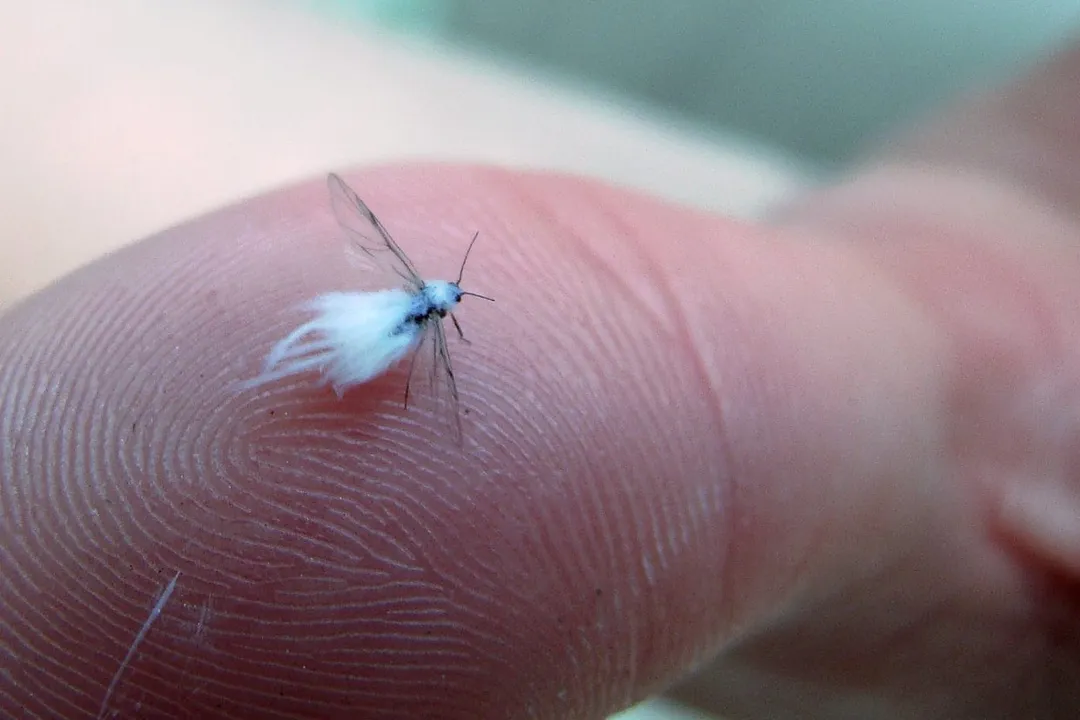
What defines the obligate host alternation strategy of the Woolly Alder Aphid (*Prociphilus tessellatus*)?
Migration from alder trees to a secondary host, typically maple, to complete the sexual cycle
The Woolly Alder Aphid exemplifies obligate host alternation as a key component of its holocyclic life cycle. During the spring and summer months, colonies develop and feed vigorously on alder trees. As late summer or early fall approaches, winged forms mature and undertake a significant migration event. This migration is directed toward a secondary host plant, which for this species is typically a maple tree. It is on this secondary host that the aphids complete their sexual cycle and deposit the tough, hardy eggs designed to survive the winter. This complex movement between two distinct host types is an evolutionary strategy believed to reduce competition for resources and potentially provide an escape mechanism from predators uniquely specialized on the primary alder host.