Woolly Monkey Evolution
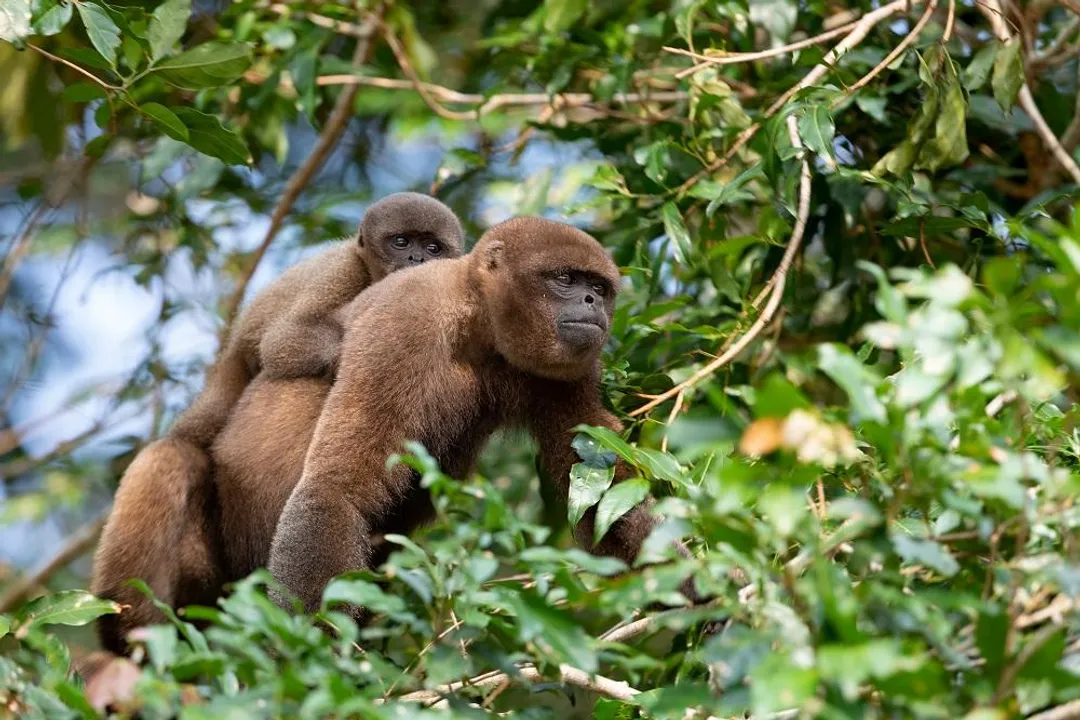
The story of the woolly monkey, a striking primate native to the humid forests of South America, is one etched deeply into the evolutionary history of the New World monkeys. Belonging to the genus Lagothrix, these primates are instantly recognizable by their dense, often shaggy coats—a trait that gives them their common name—and their remarkably robust, prehensile tails. [2][4][8] Understanding their evolution requires looking back to the origins of platyrrhines, the broad-nosed monkeys of the Americas, and tracing the adaptations that allowed Lagothrix to carve out a highly specialized niche within the complex South American canopy. [7]
# Platyrrhine Origins
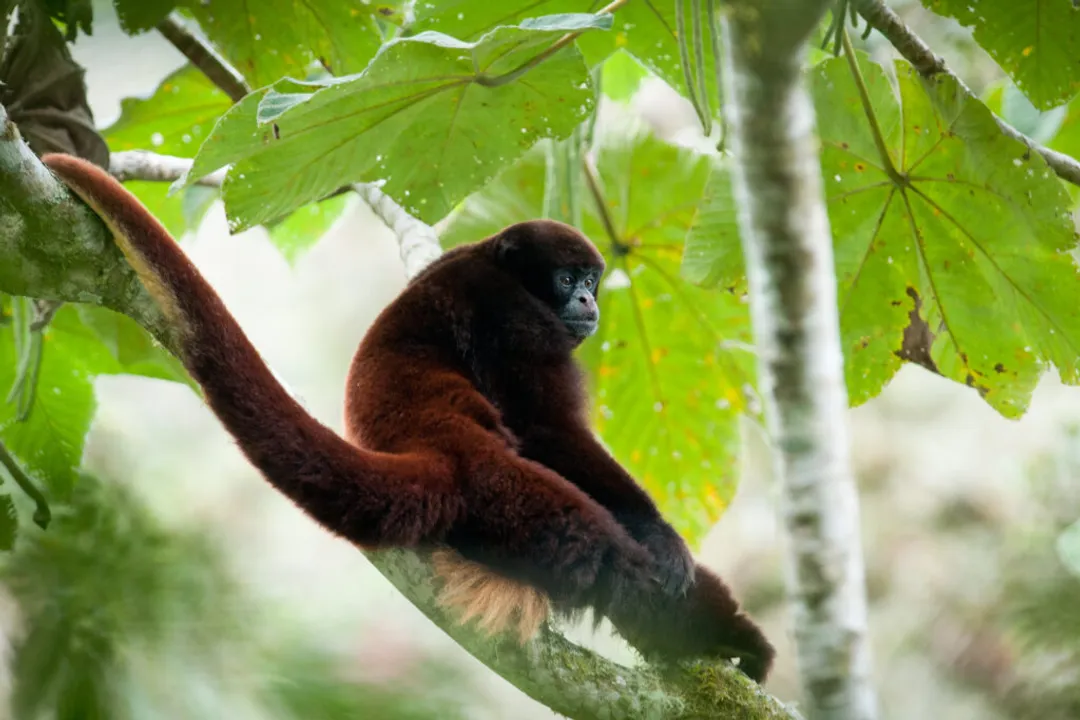
The ancestors of all New World monkeys, including the woolly monkeys, arrived in South America via a dispersal event that remains a fascinating topic in paleoprimatology. One prominent, though debated, hypothesis suggests that an early haplorhine ancestor rafted across the Atlantic Ocean from Africa, perhaps on large mats of vegetation or landmasses, roughly 35 to 40 million years ago. [6] Once established, this ancestral stock diversified rapidly, leading to the various families of platyrrhines we see today, such as the Cebidae (capuchins and squirrel monkeys) and the Atelidae, which includes the spider monkeys, howler monkeys, and the woolly monkeys themselves. [7] The woolly monkeys, grouped within the family Atelidae, represent a lineage that specialized heavily on frugivory and arboreal life, relying on a powerful grip to navigate the high branches. [3][10]
# Genus Divergence
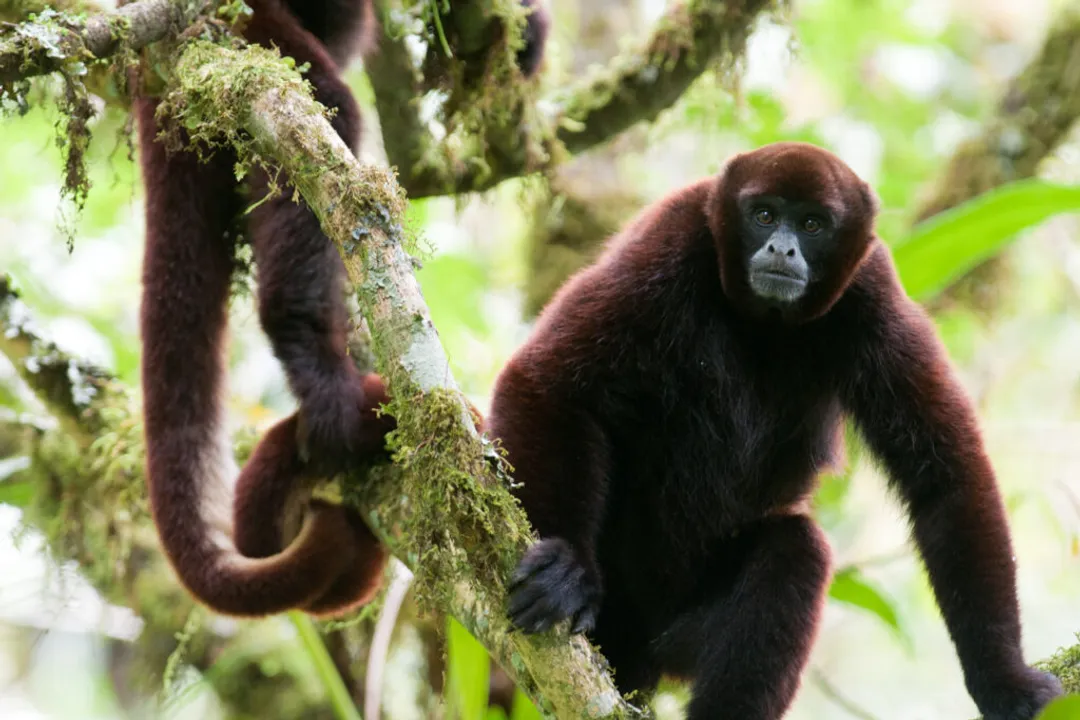
Within the Atelidae family, the genus Lagothrix diverged from the lineage leading to spider monkeys and howler monkeys, establishing its own unique suite of characteristics. [7][10] The evolutionary separation is reflected in their morphology and ecological role. While their close relatives, like spider monkeys, are known for their extreme agility and reduced thumbs, woolly monkeys retained a more generalized hand structure, though still highly adept at grasping. [3] Molecular studies often provide the fine-scale view of this split, revealing genetic distances that correlate with their current species classification. [5] The genus Lagothrix is generally recognized as comprising four recognized species: the common woolly monkey (Lagothrix lagotricha), the brown woolly monkey (L. lagothricha poeppigii), the brown spider monkey (often L. lagothrichus cana), and the black-headed woolly monkey (L. hresoeptes). [7] Though some classifications might vary slightly on the exact number of species or subspecies, the general grouping within Lagothrix is consistent across taxonomic accounts. [1][7]
The existence of distinct species within the genus, occupying different geographic ranges across the Amazon basin and the Andean foothills, suggests that periods of geographic isolation—perhaps driven by river formation or climatic shifts over millions of years—allowed for reproductive isolation and subsequent divergence. [10] This process of allopatric speciation is a common driver in primate evolution across isolated South American forest islands, and the distribution of Lagothrix species provides a tangible map of past environmental fragmentation. [3]
# Adaptation: Fur and Tail
Two features stand out as defining evolutionary adaptations for the woolly monkey: their dense coat and their specialized tail. The fur, which is thick, soft, and remarkably fine, likely evolved as a response to the consistently damp and cool conditions found in the higher elevations or persistently shaded understory habitats they sometimes occupy. [2][8] While many tropical primates manage heat regulation with shorter, sleeker fur, the woolly monkey's coat suggests an evolutionary advantage in insulation against heavy rainfall and cooler nighttime temperatures common in their range, which can extend into the Andes slopes. [4][10] Considering the sheer volume of moisture these primates must endure daily, this heavy coat represents a significant physiological investment, one that must be balanced against potential overheating during periods of intense activity or sun exposure. [2] This physiological trade-off—superior insulation versus thermal load management in a humid tropical setting—is an interesting evolutionary marker, suggesting that protection from chilling or relentless rain was historically more critical than maximizing heat dissipation for this lineage.
Equally important is the tail. The prehensile tail of the woolly monkey is a masterpiece of adaptation, functioning as a fifth limb. [3][8] It is powerful enough to support the animal's entire body weight, allowing them to hang suspended while feeding—a behavior known as suspension feeding—which grants access to fruit clusters or leaves otherwise unreachable. [2][10] The underside of the tip possesses a tactile pad, often hairless, which enhances grip and sensitivity, much like the palm of a hand. [3] From an evolutionary perspective, the development of such a specialized appendage highlights the intense selective pressure for secure, three-dimensional movement in a high-canopy, frugivorous niche. [7]
# Comparative Ecology and Niche
Woolly monkeys typically reside in the middle to upper strata of the forest, favoring areas with high levels of fruit availability. [2][3] Their diet is heavily frugivorous, often consuming a large proportion of ripe fruit, supplemented by leaves, flowers, and insects. [2][8] This specialized diet, requiring significant foraging time and energy, correlates with their social structure. They are known to live in large, cohesive groups that can number up to 30 individuals, though they often forage in smaller subgroups. [3] This grouping behavior likely offers protection against predators such as raptors or felids, while also increasing efficiency in locating widely dispersed food resources. [4]
When comparing Lagothrix to its close relative, the spider monkey (Ateles), we see parallel evolution toward specialized arboreality, but with subtle differences in morphology reflecting niche partitioning. [7] Spider monkeys often exhibit greater reliance on brachiation (swinging arm-over-arm) and possess a slenderer build and a longer tail relative to their body size, suggesting a slightly different locomotor strategy that emphasizes speed and flexibility. Woolly monkeys, conversely, appear more deliberate and robust, relying on powerful grasping and suspension, which may allow them to exploit tougher branches or larger fruit bunches that a lighter spider monkey might avoid or handle less securely. [3] This difference in locomotor morphology suggests that the two genera optimized for slightly different structural elements within the same forest strata, a classic example of adaptive radiation within a single family.
# Life History and Evolutionary Constraints
The evolutionary success of a primate group is often judged by its diversity and range, but also by its life history traits—the timing of key life events. Woolly monkeys are characterized by relatively slow life history patterns, typical of larger, more specialized primates. They have long interbirth intervals, meaning mothers spend a significant amount of time nursing and caring for a single infant before reproducing again. [2]
This slow reproductive pace is an evolutionary constraint that makes them particularly susceptible to population decline when faced with external pressures, such as habitat loss or hunting. [9] High infant dependency and a relatively late age of sexual maturity mean that populations cannot easily rebound from sudden losses. This evolutionary strategy—investing heavily in fewer, well-cared-for offspring—is successful in stable, ancient forest environments where survival risks are primarily predation and competition, but it becomes a severe liability when faced with rapid, human-induced environmental change. [4] For example, where a shorter-lived, fast-reproducing monkey might recover from a localized logging event within a few generations, a woolly monkey population might take decades, if not longer, to approach its original density. [2]
# Conservation Status Reflecting Evolutionary Vulnerability
Today, the narrative of woolly monkey evolution is intimately tied to their conservation status. Nearly all species and subspecies of woolly monkey are listed as either Vulnerable or Endangered by conservation bodies. [2][9] The dense rainforests they inhabit are under intense pressure from deforestation for agriculture, logging, and mining. [4]
The very traits that made them evolutionarily successful in the undisturbed Amazon—large group size, dependence on specific fruit resources, and slow reproduction—now make them acutely vulnerable to fragmentation. [9][10] When a large forest patch is reduced, the carrying capacity of the remaining area plummets, and the small, isolated bands of woolly monkeys struggle to find mates or sufficient, diverse food sources. [2] Furthermore, their relatively large body size (among New World monkeys) makes them attractive targets for illegal bushmeat hunting, compounding the pressure on already shrinking populations. [4]
# Taxonomy Summary
To appreciate the current state of the genus, it is helpful to see a quick summary of the recognized forms, acknowledging that minor taxonomic revisions are common in ongoing evolutionary study:
| Common Name | Genus/Species | Conservation Status (General Trend) | Key Feature |
|---|---|---|---|
| Common Woolly Monkey | Lagothrix lagotricha | Endangered [2] | Wide distribution, often the baseline for the genus. |
| Brown Woolly Monkey | L. l. poeppigii | Vulnerable/Endangered | Found in specific Andean slopes/Amazon transitions. |
| Gray Woolly Monkey | L. cana | Critically Endangered [2] | Often considered the most threatened species. |
| Black-Headed Woolly Monkey | L. hresoeptes | Endangered [2] | Distinctive coloration indicates genetic isolation. |
| [3][7] |
The maintenance of distinct species, like the black-headed form versus the gray form, underscores the evolutionary success of local adaptation across historical habitat barriers. [1][10] Each subspecies represents a unique branch on the family tree that has adapted its local morphology or behavior to a specific ecological microclimate, only to now face a unified global threat that transcends those old geographical boundaries. [6][7]
# Future Evolutionary Trajectory
While we cannot predict the future of the woolly monkey, their current ecological role and intrinsic biology offer clues. The continued success of the Lagothrix genus relies on the preservation of large, interconnected tracts of primary rainforest. [2] Should climate change or continued habitat destruction push them into smaller, fragmented reserves, the evolutionary path forward will be dictated by genetic bottlenecks, increased inbreeding, and a potential selection pressure toward smaller body size or altered dietary habits—a rapid, forced adaptation that contrasts sharply with the slow, gradual speciation that defined their deep evolutionary past. [5][10] The woolly monkey stands as a prime example of a highly specialized, successful evolutionary product that is now struggling to cope with the speed of contemporary environmental shifts, a situation mirrored across many of the world's large, slow-reproducing tropical primates. [4] Their story continues to be written in the field, one threatened population at a time.
Related Questions
#Citations
Woolly Monkey - an overview | ScienceDirect Topics
Common Woolly Monkey, Lagothrix lagothricha
Woolly monkey - Wisconsin National Primate Research Center
Woolly Monkey - Lagothrix Lagotricha - A-Z Animals
The rise and fall of a genus: Complete mtDNA genomes shed light ...
Tracing the woolly monkey - TiME - This is My Earth
Woolly monkey - Wikipedia
More Than 30 Million Years Ago, Monkeys Rafted Across the ...
[PDF] Woolly Monkeys
Lagothrix lagotricha (Humboldt's woolly monkey) | INFORMATION