What common ecological role explains the reduced eyes and tapered snout of *Rena humilis*?
Answer
Its specialized fossorial lifestyle
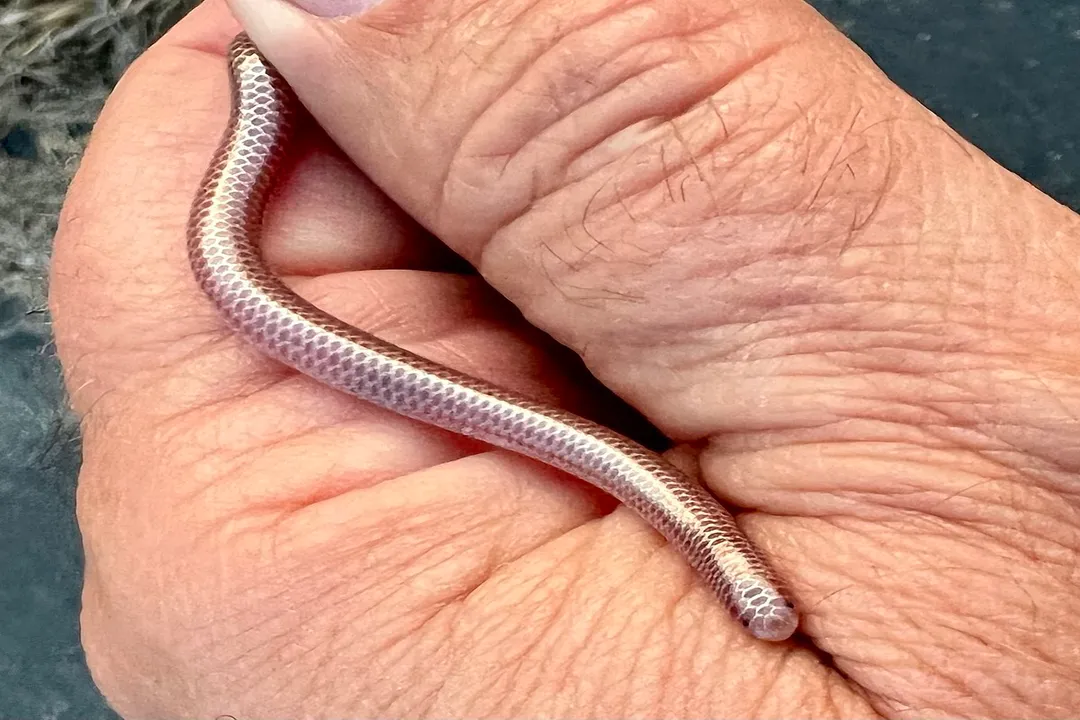
The physical structure and subsequent classification of the Western Blind Snake are heavily influenced by its ecological niche. As a fossorial species, meaning it is adapted for digging and living underground in soil, its morphology reflects this adaptation. Key physical traits resulting from this lifestyle include highly reduced eyes, which are not useful in darkness beneath the substrate, and a tapered snout, which is physically suited for efficiently navigating and pushing through soil while hunting prey like ants and termites.
Related Questions
What is the current accepted genus name for the Western Blind Snake, *humilis*?What key feature separates snakes in the Family Leptotyphlopidae from other snakes?What meaning is associated with the specific epithet *humilis* used for *Rena humilis*?What structure must an organism possess during some life cycle stage to qualify for Phylum Chordata?Besides overlapping keratinous scales, what structural characteristic defines the Order Squamata?What primarily prompted the change in genus classification from *Leptotyphlops* to *Rena*?What common ecological role explains the reduced eyes and tapered snout of *Rena humilis*?In the Linnaean hierarchy, where is *Rena humilis* placed relative to turtles and crocodilians?What historical name synonym for the Western Blind Snake is found in older scientific literature?Which two key features, besides being multicellular and eukaryotic, define placement in Kingdom Animalia?