What characteristic body shape do true water bugs, especially Giant Water Bugs, typically exhibit?
Answer
Flattened, oval shape
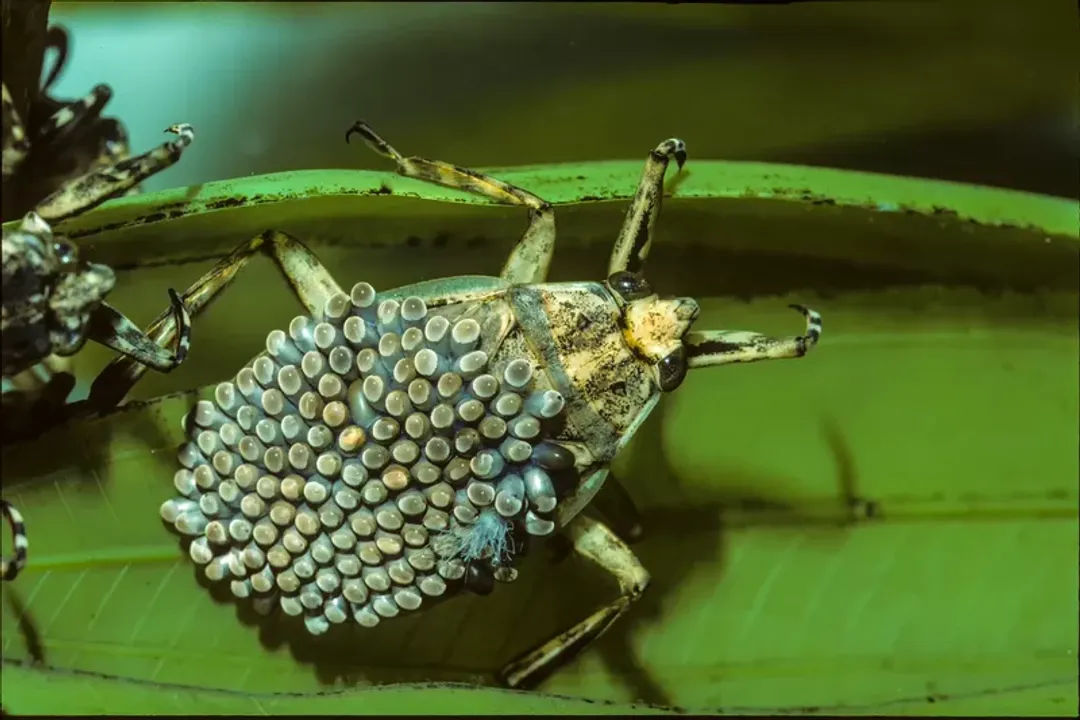
The general body structure of the true water bugs, particularly the large Giant Water Bugs, is characterized by a flattened, oval shape. This dorsoventrally compressed form is an adaptation that serves several functional purposes within their aquatic habitat. The broadness contributes to a shield-like appearance which aids significantly in hydrodynamic stability, allowing them to navigate water currents more effectively. Furthermore, this shape facilitates hiding and remaining concealed beneath detritus, submerged vegetation, or debris resting on the bottom of ponds and slow-moving waters, which is vital for both ambushing unsuspecting prey and avoiding larger predators that might hunt them.
Related Questions
Which family categorizes true aquatic water bugs like the Giant Water Bug?What characteristic body shape do true water bugs, especially Giant Water Bugs, typically exhibit?How are the specialized front legs of predatory Giant Water Bugs adapted for prey capture?What is the term for the structure water bugs use as piercing-sucking mouthparts?What substance do water bugs inject to liquefy the internal tissues of their prey externally?What is the specific term for the front wings of insects in the order Hemiptera?What dual adaptation allows Belostomatidae to carry an oxygen supply while submerged underwater?The nickname "toe-biter" for Giant Water Bugs is primarily associated with what physical feature and resulting action?What is the typical muted coloration palette observed on the exoskeletons of true water bugs for camouflage?In distinguishing between a true water bug and a mislabeled cockroach pest, what is the primary difference in foreleg function?