What is the typical muted coloration palette observed on the exoskeletons of true water bugs for camouflage?
Answer
Brown, tan, or gray
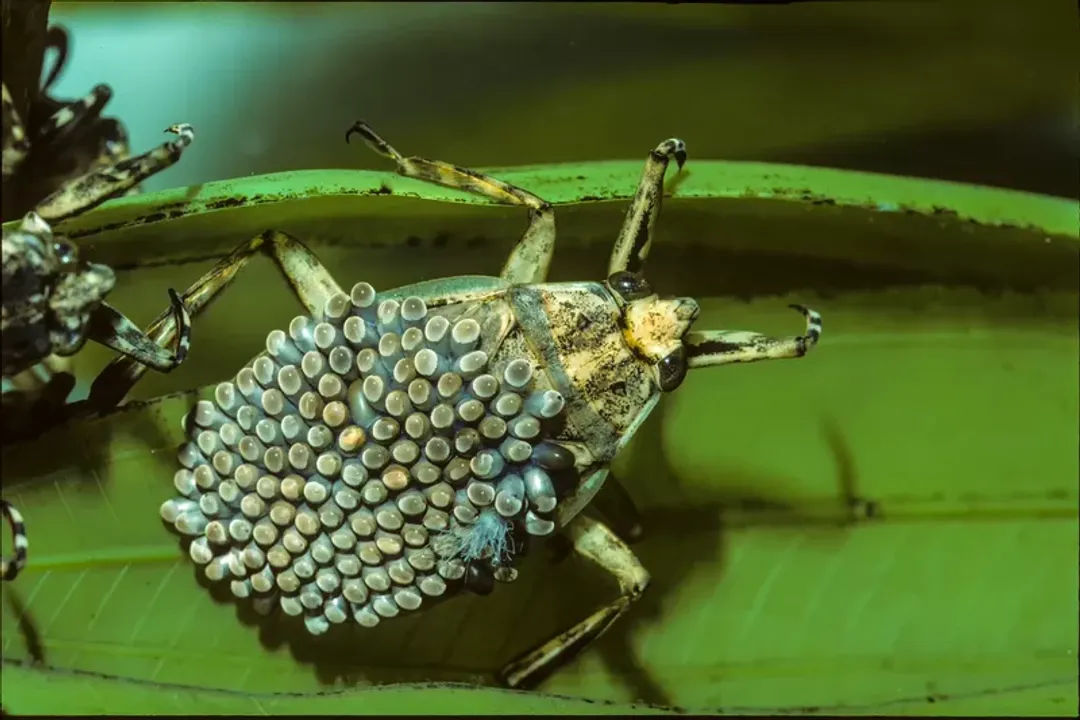
The coloration of true water bugs serves as vital camouflage within their native habitats, which include ponds, streams, and other slow-moving waters. Their exoskeletons usually display dull, mottled shades of brown, tan, or gray. This muted palette allows the insect to blend seamlessly with the surrounding environment composed of mud, submerged detritus, fallen sticks, and general bottom debris. Effective camouflage is critical for their predatory success, enabling them to hide from larger predators and remain undetected while they wait to ambush smaller prey that ventures nearby.
Related Questions
Which family categorizes true aquatic water bugs like the Giant Water Bug?What characteristic body shape do true water bugs, especially Giant Water Bugs, typically exhibit?How are the specialized front legs of predatory Giant Water Bugs adapted for prey capture?What is the term for the structure water bugs use as piercing-sucking mouthparts?What substance do water bugs inject to liquefy the internal tissues of their prey externally?What is the specific term for the front wings of insects in the order Hemiptera?What dual adaptation allows Belostomatidae to carry an oxygen supply while submerged underwater?The nickname "toe-biter" for Giant Water Bugs is primarily associated with what physical feature and resulting action?What is the typical muted coloration palette observed on the exoskeletons of true water bugs for camouflage?In distinguishing between a true water bug and a mislabeled cockroach pest, what is the primary difference in foreleg function?