What are the physical characteristics of a woodpecker?

The physical makeup of a woodpecker is a masterclass in biological engineering, perfectly tailored for a life spent clinging vertically to bark and hammering wood surfaces. These birds, belonging to the family Picidae, possess a suite of remarkable adaptations that allow them to perform actions that would instantly incapacitate most other creatures. [2][7] Their entire morphology, from the tip of the beak to the structure of the tail, reflects their unique dietary and nesting requirements. [2]
# Specialized Beak

Perhaps the most recognized characteristic is the woodpecker’s bill. It is remarkably strong and straight, shaped much like a chisel. [1][3][8] This hardened tool is essential for its primary activities: excavating nesting cavities and searching for insect prey hidden beneath the bark or deep within the heartwood. [3] The length of this specialized structure can vary considerably between species; for instance, some larger woodpeckers may sport a bill that approaches two inches in length. [3] The strength required for this constant pounding means the bill needs to be continually self-sharpened as the bird drums against wood, acting almost like a continuous self-maintenance routine. [6]
# Tongue Anatomy
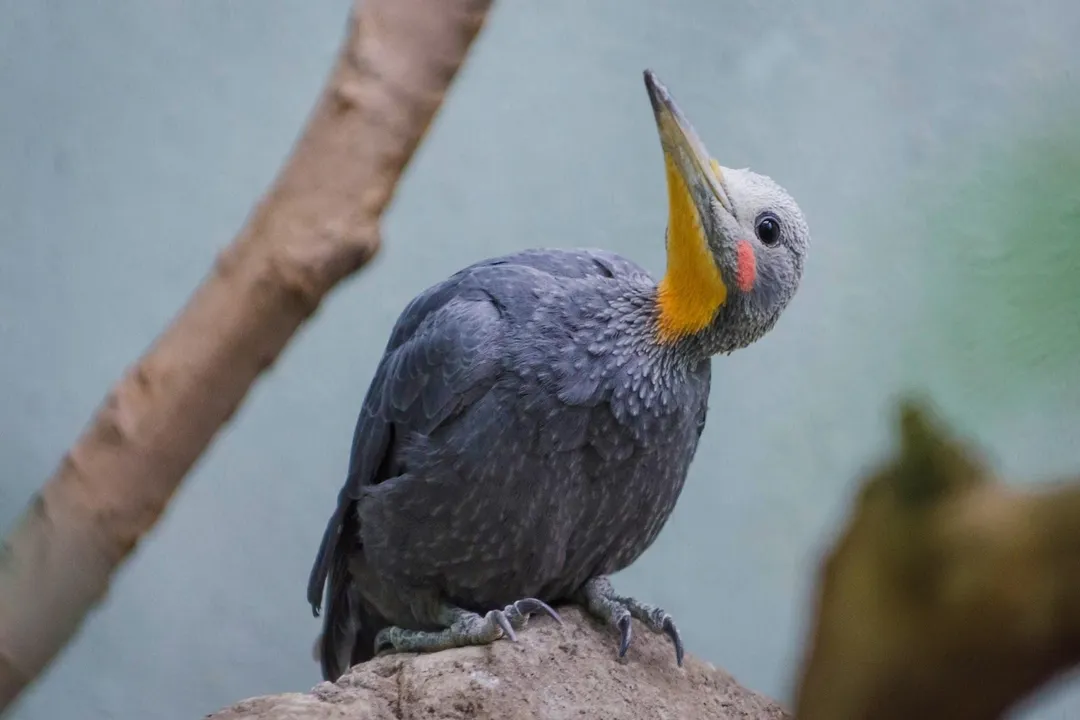
While the beak provides the entry point, the tongue is the real marvel of insect extraction. A woodpecker’s tongue is exceptionally long, often extending far beyond the tip of the bill when fully projected. [3] This impressive length is achieved because the tongue bone (hyoid apparatus) loops up over the back of the skull and anchors near the nostrils, effectively using the entire head as a housing unit. [3][5] The tongue surface itself is not smooth; it is often equipped with backward-pointing barbs near the tip, and it is coated in a sticky saliva. [1][3][8] Once the bird has hammered its way into a gallery or burrow, it darts this specialized appendage in to spear or adhere to grubs and ants, retracting them quickly for consumption. [3] The structural necessity of having this long organ fit inside a relatively small head forces an anatomical arrangement unseen in most avian species. [5]

# Foot Structure
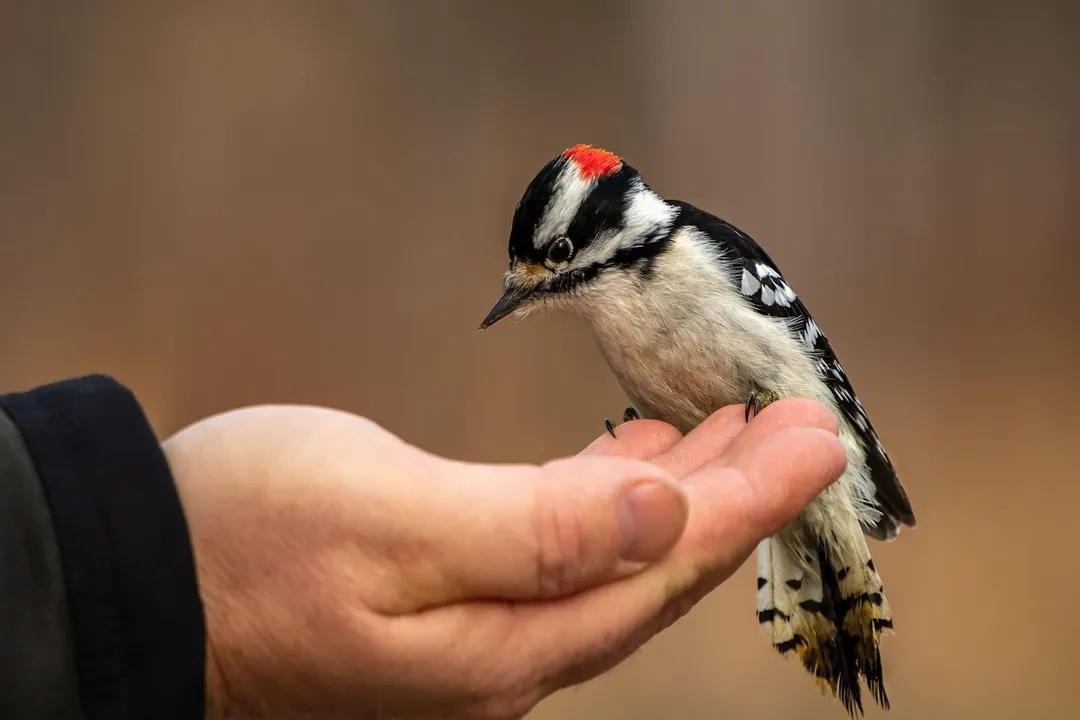
To maintain a stable position while delivering powerful blows, woodpeckers require specialized feet. They possess zygodactyl feet, a configuration where two toes point forward and two toes point backward. [1][3][4][8] This arrangement provides an opposable grip, allowing them to clamp tightly onto the rough vertical surfaces of tree trunks, offering far greater purchase than the three-forward-one-back arrangement common to perching birds. [3] Coupled with powerful leg muscles and sharp, curved claws, this foot structure ensures they can perch securely, even in windy conditions or while bracing for impact. [1][4]
# Tail Support

The tail feathers themselves are modified to act as an integral part of their climbing apparatus. Unlike many birds whose tail feathers are broad and used primarily for steering in flight, a woodpecker’s tail feathers are stiff, pointed, and wedge-shaped. [1][3][4][8] When the bird is clinging to a tree, it presses this rigid tail directly against the bark, forming a crucial third point of contact—essentially a strong prop or brace—that stabilizes the body against the forces generated by drumming. [1][3] This structural bracing is vital; without it, the bird would simply topple backward with every strike. [4]

# Cranial Protection
The sheer concussive force involved in drumming necessitates extreme protection for the bird's brain. Woodpeckers strike wood at rates up to 20 times per second, with impacts equivalent to forces of over 1,000 g's in some small species. [3] To manage this stress, their anatomy features several layers of defense. Their skull bones are thicker than those of similar-sized birds, and they possess spongy, porous bone tissue situated between the bill and the skull that acts as a natural shock absorber. [3] Furthermore, specialized muscles are in place to help dampen vibrations. [3][5] The way these specialized physical attributes work together—the rigid tail providing a stable base, the feet gripping tightly, and the skull absorbing the residual shock—shows a unified system for high-impact work. [6] Thinking about the cumulative wear and tear over a lifetime of feeding, it's fascinating how this internal architecture prevents neurological damage that a human subjected to similar repeated forces would immediately suffer.
# Plumage Variation
While the internal mechanics and grasping structures are remarkably uniform across the family, the external appearance varies widely in terms of size, pattern, and color. [2][5] Size ranges from very small species, like the approximately 8-inch Red-cockaded Woodpecker, which is distinguished by a narrow white stripe above and below its eye and a small patch of red crown feathers visible only on the male, [5] to much larger birds. [2] The plumage often features striking patterns, black and white being common, sometimes accented by bold reds, yellows, or greens. [6] A prime example of color distinction is the Pileated Woodpecker, known for its large size and prominent bright red crest. [4] This difference between the highly standardized mechanics for feeding and the diverse external coloration suggests that while feeding adaptations drive internal evolution, external features like crests and patterns are heavily influenced by sexual selection or species recognition, rather than just camouflage. [4]

# Feeding Behavior Adaptations
The way woodpeckers use their specialized tools is also highly adapted. In addition to excavating for insects, some species will peck at wood simply to create resonant holes, often on dead limbs or gutters, for communication—a behavior known as "drumming". [9] This drumming serves as a territorial declaration or a mating call, using the wood itself as an amplifier. [9] Furthermore, while most rely on pecking and probing, certain species might exhibit slightly different foraging strategies. For example, some species are known to chip away bark to expose insects rather than drilling deep into the heartwood. [9] This behavioral plasticity, combined with their physical setup, allows them to exploit various food sources within the forest structure. [6] Observing a woodpecker working, you notice how efficiently they move between bracing with the tail, striking with the bill, and swiftly deploying the sticky tongue, all in a fluid sequence dictated by the thickness of the wood and the location of their target meal. [1][7]
Related Questions
#Citations
Woodpecker | Characteristics, Species, & Facts - Britannica
Physical Characteristics of Woodpeckers - Backyard Chirper
Woodpeckers - The Science of Birds
Pileated Woodpecker Overview, All About Birds, Cornell Lab of ...
Red-cockaded Woodpecker (Picoides borealis) | U.S. Fish & Wildlife ...
Woodpeckers - Penn State Extension
[PDF] WOODPECKERS - Georgia Wildlife Resources Division
What Does a Woodpecker Look Like? - Critter Control
Woodpeckers - UC IPM