The nickname "toe-biter" for Giant Water Bugs is primarily associated with what physical feature and resulting action?
Answer
Their rostrum strength required to puncture skin upon handling
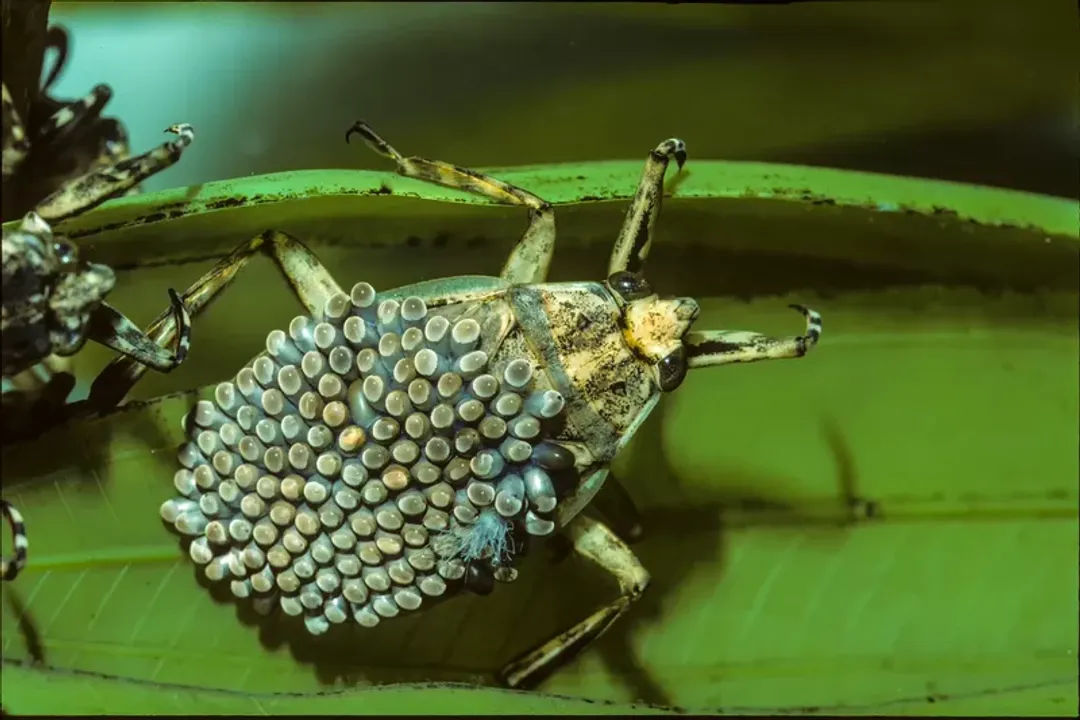
The common nickname "toe-biter" applied to the Giant Water Bug stems directly from the functional nature of their mouthparts and the potential interaction with humans. Because the water bug possesses a stout, piercing-sucking rostrum strong enough to puncture the tough skin of fish or snails, it can inflict a slight but noticeable pain if a human were to step on one or grab it, leading to the rostrum puncturing the skin. This powerful piercing capability, necessary for injecting digestive saliva into prey, is the direct source of this nickname, emphasizing the strength required by the beak to achieve feeding.
Related Questions
Which family categorizes true aquatic water bugs like the Giant Water Bug?What characteristic body shape do true water bugs, especially Giant Water Bugs, typically exhibit?How are the specialized front legs of predatory Giant Water Bugs adapted for prey capture?What is the term for the structure water bugs use as piercing-sucking mouthparts?What substance do water bugs inject to liquefy the internal tissues of their prey externally?What is the specific term for the front wings of insects in the order Hemiptera?What dual adaptation allows Belostomatidae to carry an oxygen supply while submerged underwater?The nickname "toe-biter" for Giant Water Bugs is primarily associated with what physical feature and resulting action?What is the typical muted coloration palette observed on the exoskeletons of true water bugs for camouflage?In distinguishing between a true water bug and a mislabeled cockroach pest, what is the primary difference in foreleg function?