What are the physical characteristics of a Boston Terrier?
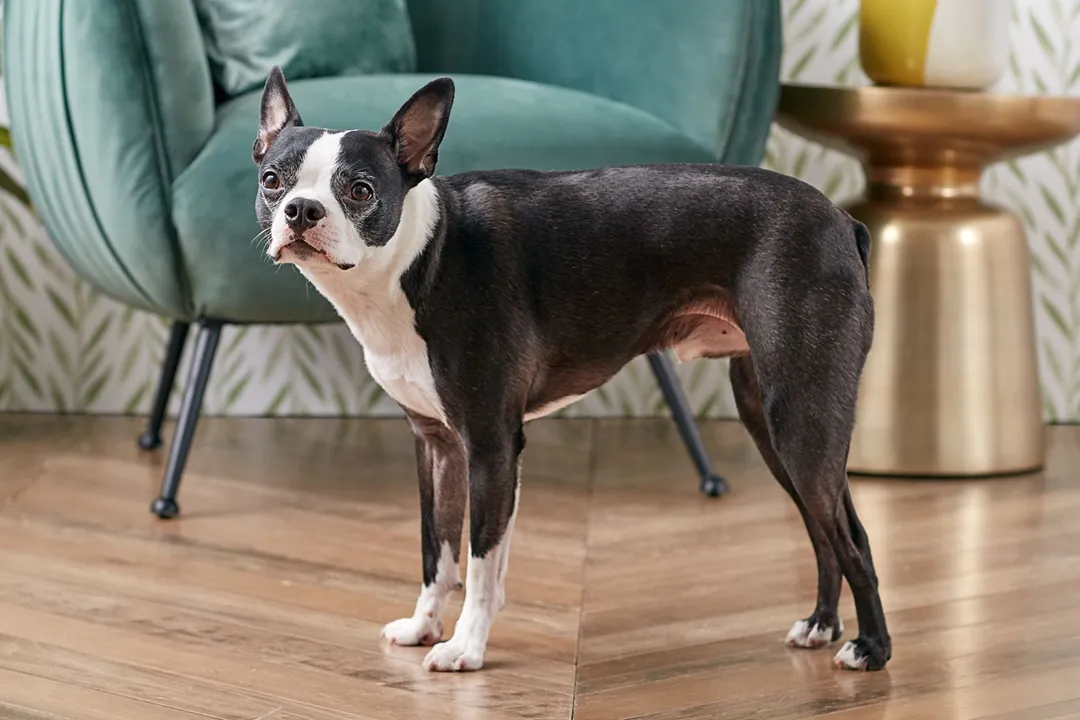
The Boston Terrier presents itself as a charming, compact dog with a distinct, almost tuxedo-like appearance that sets it apart in the canine world. [1][2][3] Often nicknamed the "American Gentleman" due to its neat, black-and-white markings, this breed carries itself with an air of intelligence and undeniable spunk. [1][8] Physically, they are categorized as a small breed, though their sturdy build gives them more substance than some other toy dogs. [7] The overall impression is one of a well-balanced, muscular dog, squarely built and indicating both strength and agility, despite their relatively small stature. [1][4]
# Size Targets
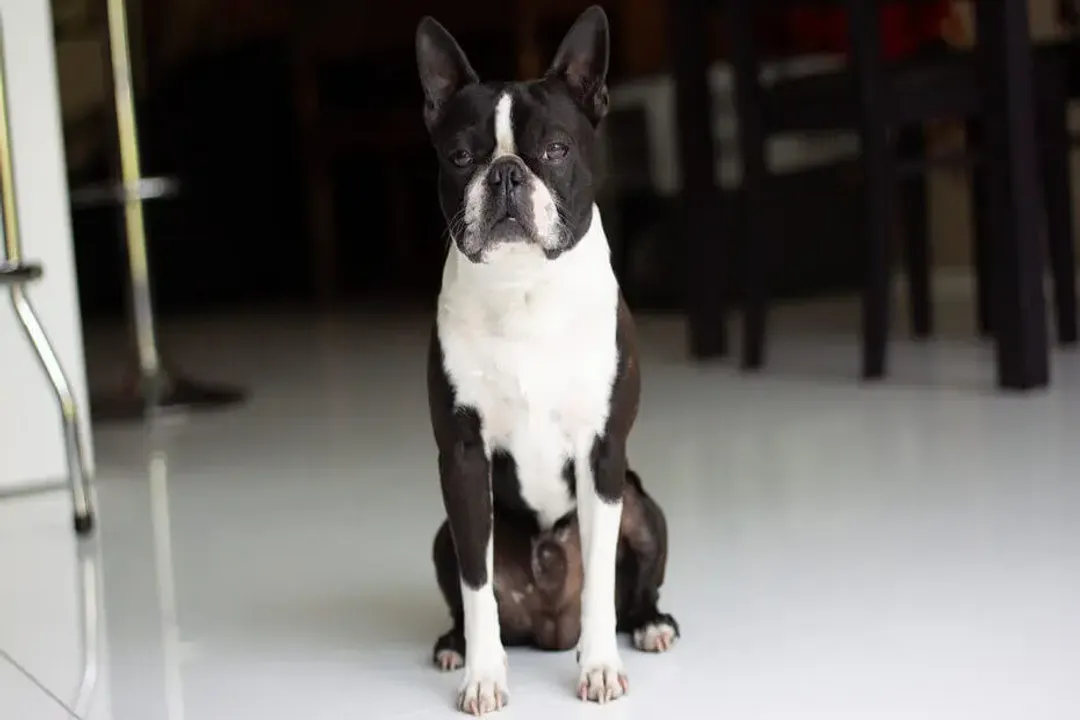
Defining the precise size of a Boston Terrier often comes down to established weight classes dictated by kennel clubs. [1] Generally, they are divided into three weight classifications, though the exact weights can vary slightly depending on the specific standard being referenced. [1][5] The lightest division typically encompasses dogs weighing less than 15 pounds. [1] Moving up, the middle group usually ranges from 15 to under 20 pounds. [1] Finally, the heaviest group includes those dogs weighing 20 pounds and not exceeding 25 pounds. [1][5] It is crucial to note that they are not overly heavy; for instance, the American standard aims for an adult weight generally between 12 and 25 pounds. [1] In contrast, some sources note that the weight limit might be strictly kept below 15 pounds for one class, and up to 25 pounds for the largest class, which is the upper limit to maintain breed standards for conformation shows. [5][4] The height, while less often segmented than weight, usually means they stand somewhere around 15 to 17 inches high at the shoulder. [3][4] When you pick up a well-conditioned adult, the density and solidness of their frame—not their scale—are what stand out. [8]
If you consider the standard 15 to 25-pound range, this places them solidly in a manageable size for apartment living, yet substantial enough that they don't feel fragile when interacting with children, provided supervision is present. [7] Their sturdy, compact nature means they carry their weight efficiently, allowing for quick movements, unlike some leggier small breeds that might appear more delicate.
# Head Structure
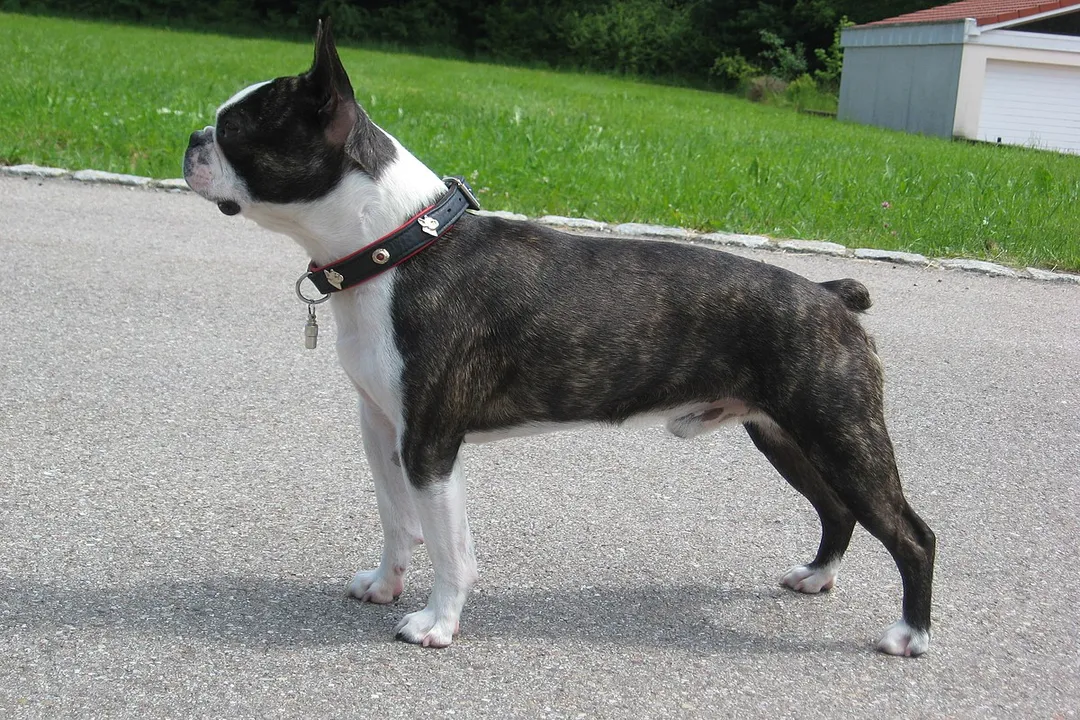
The head is perhaps the most defining feature of the Boston Terrier, giving it an instantly recognizable profile. [1][4] It is distinctly square in shape when viewed from the front or top, and it should be relatively flat across the top, though not overly domed. [1][3] The head is set squarely on a short, muscular neck. [1]
# Muzzle Details
The muzzle is short, broad, and squared, designed to meet the skull almost at right angles. [1][8] It should not appear pushed in or wrinkled excessively, though a slight wrinkle above the nose is acceptable. [1][4] Critically, the muzzle must be considerably shorter than the skull, typically measuring about one-third the length of the total head. [1][6] The underjaw should be broad and exhibit a slight undershot bite, meaning the lower teeth extend slightly beyond the upper teeth, although this must be minimal and tight, without being an extreme "monkey face" or displaying a severe gap. [1][3] Because of this characteristic flat face—a trait known as brachycephaly—owners must be particularly mindful of overheating, as the compressed nasal passages inherently make efficient cooling through panting more difficult than in breeds with longer muzzles. [4] Monitoring their breathing rate during vigorous play, especially in warmer weather, is paramount to ensuring their physical structure doesn't compromise their well-being.
# Eyes and Ears
The eyes are large, round, and set wide apart, contributing significantly to the breed's bright and intelligent expression. [1][3] They should be dark brown or black in color, giving them a soft but alert gaze. [1][8] The overall placement should give the dog an open, friendly look. [4]
The ears are one area where breed standards allow for a minor degree of variation, though one shape is generally preferred in many modern presentations. [1] They are naturally small, thin, and set high on the head. [1] They are typically carried erect, either naturally or by cropping, although natural carriage is increasingly favored. [1][3] When erect, they should appear pointed or rounded at the top. [1] If a dog has natural ears that flop, they may be semi-erect or folded, often described as "bat ears," but erect carriage is the ideal conformation standard. [3][5]
# Coat and Color

The Boston Terrier’s coat is one of its most practical and striking physical attributes. [1][4] It is short, smooth, and fine in texture, lying flat against the body and giving the dog a sleek appearance. [1][8] This short coat means grooming is relatively easy, requiring just occasional brushing to remove loose hair. [2][7]
# Markings and Pigmentation
The coloring of the coat is highly specific and contributes heavily to the "tuxedo" moniker. [1][8] The required coloring is always black, seal (which looks black but has a reddish tinge when viewed in bright sunlight), or brindle. [1][3] These colors must always be accompanied by white markings. [1][8]
The ideal distribution of white is considered a white muzzle, a blaze between the eyes, a white band around the chest, and white on all four legs. [1] Ideally, the white should not extend up the neck or exceed 50% of the dog's entire body surface. [1] A dog that is predominantly white, or one whose coloring is solely brindle without the required white "bib" or muzzle flash, deviates from the typical presentation described by major kennel clubs. [3][5] The seal color, which is essentially black with a reddish cast, is often overlooked by casual observers but is a recognized color variant that must still adhere to the required white pattern. [1]
# Body Proportions
The body of the Boston Terrier is defined by its balanced and square appearance. [1][8] They are compact, meaning their bodies are relatively short from the chest to the rear, giving them a sturdy, cobby look rather than a long-backed profile. [4][6]
# Chest and Topline
The chest should be broad and deep, allowing for ample lung capacity, which is important for a brachycephalic breed. [1][8] The ribs are well-sprung, curving smoothly outward before coming back in towards the waist. [1] The back is short, and the topline should be level, meaning it runs straight from the withers (shoulders) to the tail set. [1][4] If you were to run your hand along their back, you should feel a firm, level surface, without significant dip or roach. [1]
# Limbs and Tail
The forequarters are set straight, with well-muscled shoulders set slightly back. [1] The legs should be straight and moderately well-boned, not overly heavy or spindly. [1][8] When viewed from the front, the forelegs should be set moderately wide apart. [1]
The hindquarters are strong, showing good angulation in the thighs, allowing for driving power in their gait. [1] They are not meant to be heavily angulated like a setter or excessively straight like some bull breeds; rather, they possess a moderate, balanced set of angles. [4] Their feet are small, compact, and round, often described as "cat-like," with short, well-arched toes. [1]
The tail is naturally short, set low, and carried low, following the line of the croup (the area over the hindquarters). [1][3] It can be straight or slightly screwed or kinked, but it must not curl over the back. [1][4] In terms of length, it should not extend lower than the hocks (the rear ankle joints). [1]
# Movement and Gait
When moving, the Boston Terrier should display a light, free, and active gait. [1] They are not meant to trot heavily or plod along; their movement should reflect their compact strength. [4] They move straight forward, both coming and going, without weaving or crossing their legs. [1] Their overall motion should appear effortless and balanced, demonstrating their terrier heritage by being quick and eager in their step. [8] An ideal walk or trot shows good reach in the front and adequate drive from the rear, resulting in smooth forward motion. [1]
# Comparison with Breed Ideals
It's important to understand that the physical characteristics often describe an ideal specimen, particularly when looking at conformation standards. [6] For example, while the weight limit up to 25 pounds is accepted, the goal is usually a dog that looks substantial for its height, not necessarily a heavy dog. [1][5] A common pitfall is breeding for extremes—too short a muzzle leading to severe breathing issues, or excessively large eyes which can lead to proptosis (eye displacement). [4][6] A well-bred Boston balances the brachycephalic structure with enough length in the muzzle (about one-third the skull length) to allow for comfortable respiration. [6]
When observing two Bostons side-by-side, the subtle differences in their head conformation become clearer. One might exhibit the desired square, clean planes, while another might have a slightly more rounded skull or a muzzle that is too stubby, lacking the proper one-third length ratio. [1] Similarly, the coat color markings, while defining, show variability; some dogs might have too much white on their neck, or the brindle might be so dark it appears solid black without the sun to reveal the underlying stripes. [1][3] Maintaining the proper short back and level topline prevents the development of an awkward, sloping gait often seen when breeders focus too heavily on head type at the expense of overall structure. [4]
If you are assessing a potential companion, focusing on the overall balance is more useful than obsessing over one feature. [6] A dog that moves freely, breathes easily when relaxed, and holds its head high, regardless of minor deviations from the show ring ideal, possesses the core desirable physical traits of the breed: compactness, intelligence in expression, and the signature tuxedo pattern. [1][8] The physical blueprint of the Boston Terrier emphasizes health through balance—enough substance to be hardy, but small enough to be adaptable to various living situations. [7]
Related Questions
#Citations
Boston Terrier - Dog Breeds - American Kennel Club
Boston Terrier Dog Breed Information | Purina UK
Boston Terrier - Wikipedia
Boston Terrier: Dog Breed Characteristics & Care - The Spruce Pets
Figo Boston Terrier Breed Guide: Insights for Pet Parents
What is a perfect Boston Terrier? - Petite Pokey
Boston Terrier - PDSA
Boston Terrier Dog Breed - Hill's Pet Nutrition
Boston Terrier Personality & Characteristics | Bark Busters