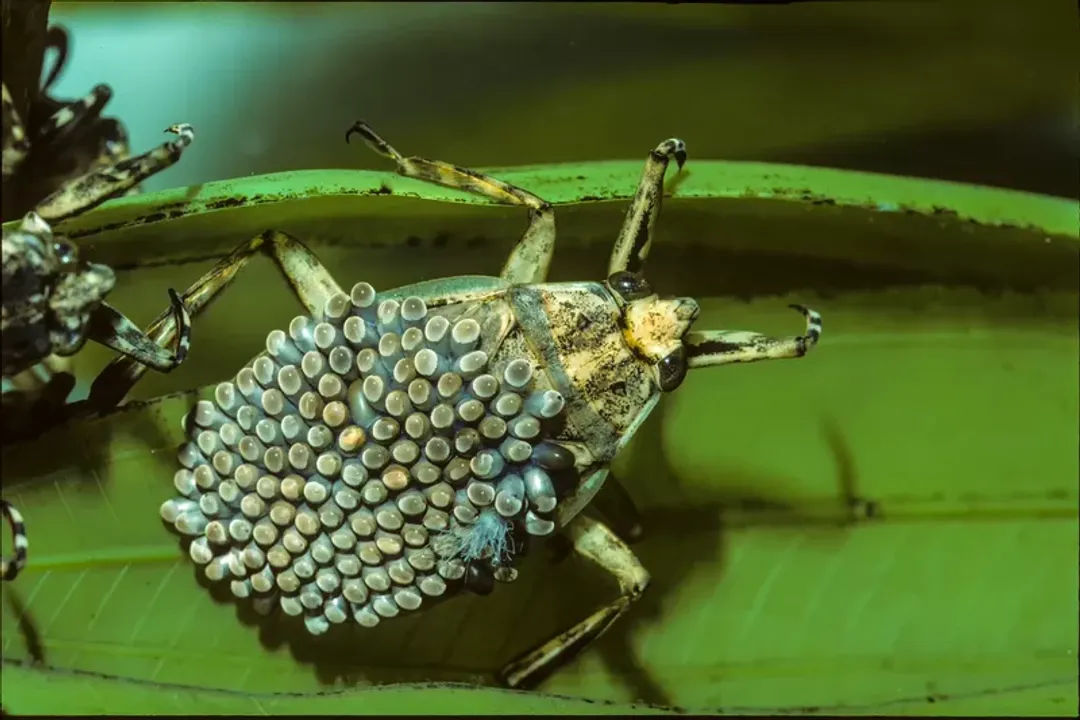
How are the specialized front legs of predatory Giant Water Bugs adapted for prey capture?
Raptorial appendages
The front legs of true water bugs, especially the predatory Giant Water Bugs, are highly specialized structures known as raptorial appendages. This modification means they are explicitly designed for grasping, seizing, and firmly holding onto prey items, drawing a parallel to structures found on a praying mantis. These limbs are stout and muscular, featuring powerful femurs and tibias that clamp together. Often, the inner edges possess sharp spines or serrations which ensure that once small fish, tadpoles, or other aquatic insects are captured, they cannot escape. This powerful grasping mechanism is essential because once prey is secured by the raptorial legs, it is held stable against the water bug's mouthparts for the subsequent feeding process.