What are the physical characteristics of a cat?
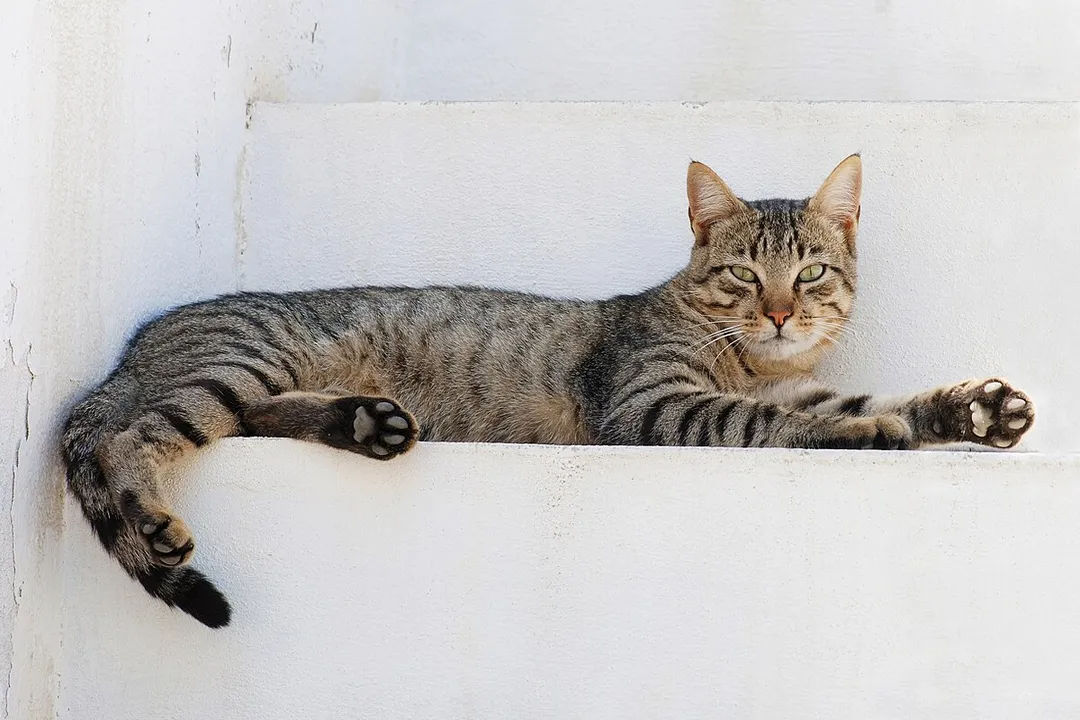
The domestic cat, Felis catus, is a small, obligate carnivorous mammal whose physical makeup is a finely tuned machine built for stealth, agility, and solitary hunting. Though we share our homes with them, their anatomy reflects their wild ancestry, sharing a close genetic link with the African wildcat, Felis lybica. Unlike dogs, which were selected for pack living and work, the physical changes during cat domestication have been relatively minor, meaning their structure remains remarkably similar to their wild cousins. The cat’s entire physical presence, from its backbone to the pads on its feet, speaks to a heritage of precision and silent movement.
# Skeletal Structure
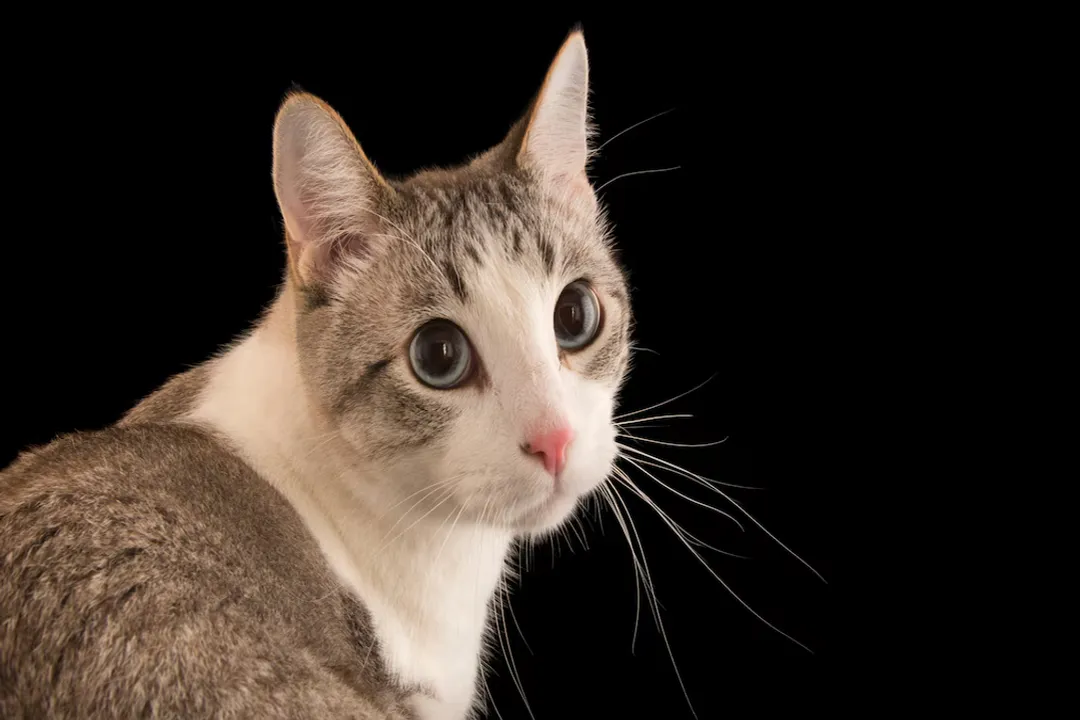
The feline skeleton is a masterclass in engineering designed for flexibility and impact absorption, differing significantly from the human structure. A cat possesses approximately 250 bones in its body, notably more than the 206 found in humans. This abundance of bone contributes to their incredible range of motion.
A key component of this flexibility lies in the spinal column. Cats boast seven cervical (neck) vertebrae, which is standard for mammals, but they have 13 thoracic vertebrae compared to the human twelve, and seven lumbar vertebrae where humans have five. These extra segments in the torso are what allow the cat to compress its body into tight spaces or stretch out significantly when leaping. Furthermore, the vertebrae are held together primarily by muscles rather than rigid ligaments, granting that signature serpentine grace. The shoulder joint construction is equally specialized, allowing the foreleg to turn nearly any direction, aiding in quick directional changes while pursuing prey. A particularly important feature is the floating clavicle, which lacks a bony attachment to the rest of the skeleton. This adaptation means that if a cat’s head can pass through an opening, the rest of its body will follow, a vital characteristic for predators navigating tight burrows.
The tail itself plays a considerable role in physical balance. In many cats, nearly ten percent of their total bones reside in the tail, which acts as a crucial counterweight for maneuvering. This tail movement, in conjunction with their specialized inner ear structures, contributes to the well-known ability to correct their orientation mid-air.
# Paws and Claws

The cat’s feet are built for silent work. They are digitigrade, meaning they walk on their toes, positioning the bones of the feet as the visible lower leg segment. This way of walking inherently promotes quieter movement compared to the flat-footed human gait. The paw pads themselves are thick and resilient, providing both cushioning and traction across varied surfaces. Digging into the sensitivity of these areas, the paw pads house the most sensitive touch receptors of any body part, enabling them to feel minute changes underfoot. It's worth noting that while we often focus on their ability to grip, these hyper-sensitive pads likely function as seismic sensors, allowing them to detect faint vibrations from scurrying prey through the floor or ground long before the source is visible or audible to us.
The claws are perhaps the most famous physical tool. They are protractible and retractable. When relaxed, the claws are sheathed by skin and fur, preventing them from dulling from contact with the ground and ensuring the cat can stalk silently. When deployed for climbing, fighting, or grasping prey, the toes spread wide, effectively doubling the foot's breadth and transforming it into a formidable weapon. Forefoot claws are typically sharper than those on the rear paws. Cats maintain this sharpness by actively scratching rough surfaces, which removes the old, outer claw sheath. Structurally, most cats feature five claws on the front paws and four on the rear ones, with the dewclaw situated proximally.

# Outer Surface
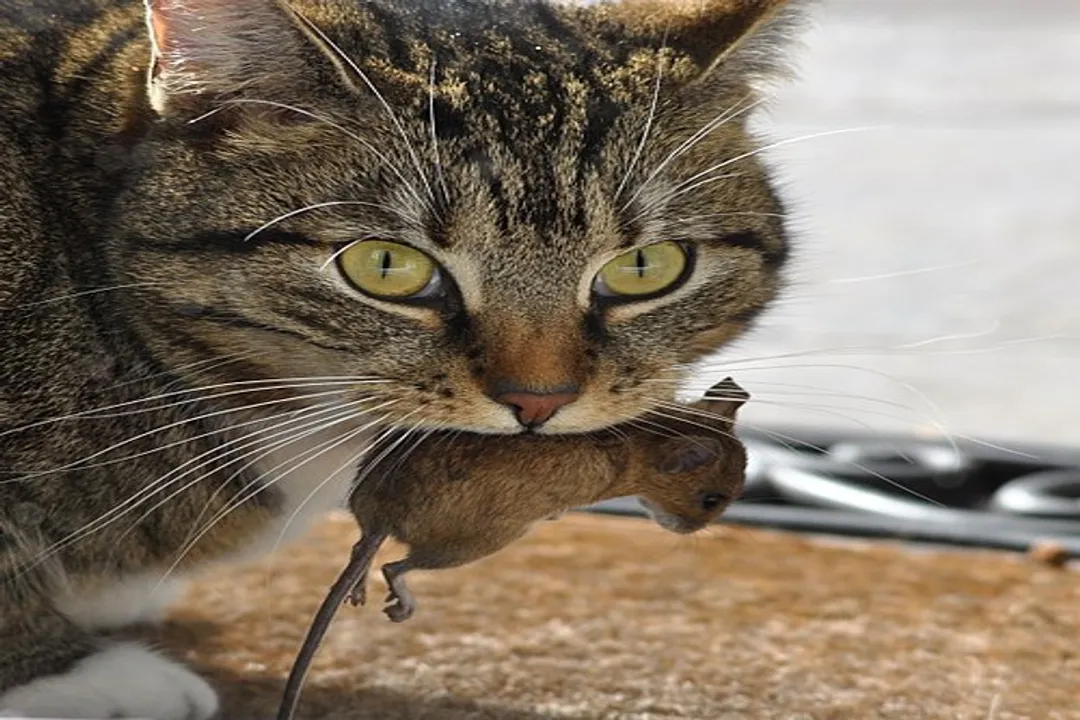
The coat serves multiple functions beyond mere aesthetics, acting as insulation, protection, and even a sensory enhancer. Fur shields the skin from sun, cold, scratches, and insect bites, while the underlying oil glands secrete sebum that coats the fur, giving it a characteristic glossy sheen.
Coat structure involves guard hairs (long and stiff for weatherproofing), awn hairs, and fine down hairs (the undercoat). Cats residing in colder climates, like Maine Coons or Siberians, often develop slightly oily, water-repellent topcoats over a particularly thick undercoat for superior insulation.
Coat color variation is dictated by genetics, with the gene for orange coloration being sex-linked and residing on the X chromosome. This chromosomal placement explains why female cats (XX) can often display both black and orange coloration—a tortoiseshell pattern—while a male (XY) can typically only be one color or the other unless he possesses the rare XXY genotype, in which case he is usually sterile. Breed-specific traits tied to temperature are also fascinating; Siamese cats exhibit colorpoint patterns where darker pigment develops only in the cooler extremities of the body, leaving the warmer core pale. Conversely, entirely white cats, particularly those with blue eyes, have a high likelihood of being deaf, a connection that suggests shared developmental pathways for pigment and auditory function.
When examining the sheer diversity of domestic cat breeds recognized by registries like the Cat Fanciers' Association—which recognizes about 40 distinct types—it is interesting to note that despite dramatic differences in appearance (like the hairlessness of the Sphynx or the massive size of the Maine Coon), the weight variance between the smallest and largest average breeds is surprisingly small, often only 5 to 10 pounds. This suggests that selective breeding has historically favored novel aesthetic traits, like coat texture or facial conformation, over extreme shifts in overall body mass in the general population.
# Primary Senses
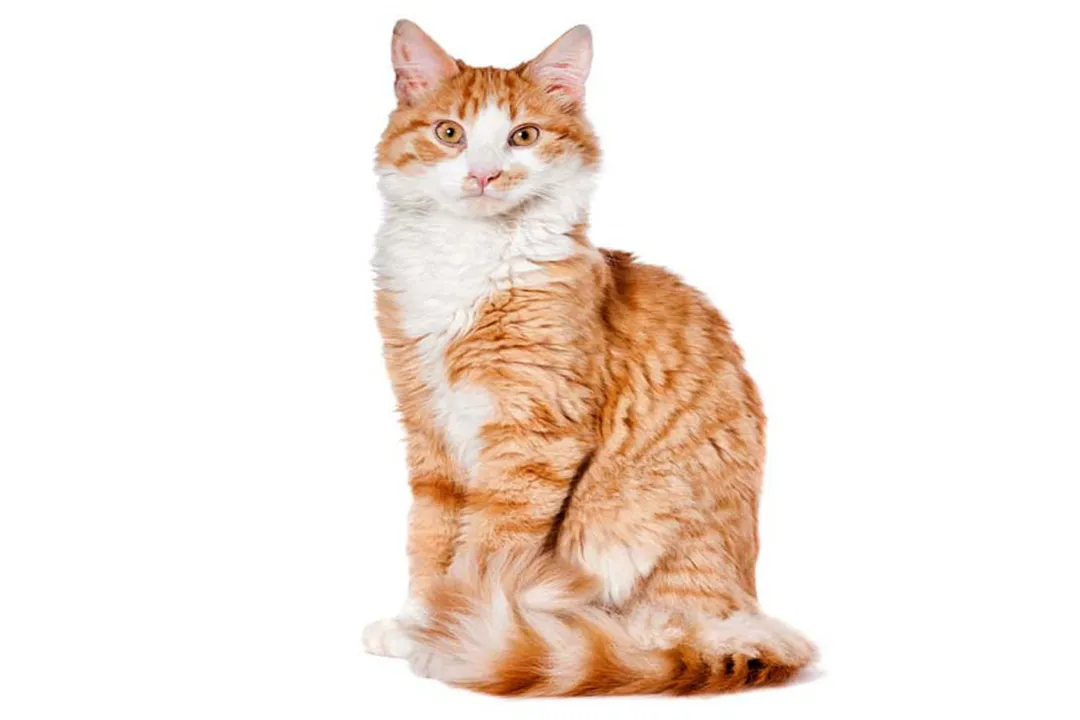
Cats are celebrated for their acute senses, which vastly outperform human capabilities in key areas relevant to their crepuscular (dawn and dusk) predatory lifestyle.
# Sight
The cat’s eyes are disproportionately large relative to its body size, granting them a wide field of vision, approximately 185 degrees. Their visual acuity in dim light is legendary; they can see six times better than people in low light, requiring only one-sixth the illumination humans do to perceive detail. This low-light superiority is thanks to the tapetum lucidum, a reflective layer behind the retina that bounces incoming light back through the photoreceptors, maximizing light absorption. While great in the dark, their color vision is limited, optimized for blue and yellowish-green wavelengths, as motion detection is more critical than precise color discrimination.
A unique physical feature related to vision is the nictitating membrane, often called the third eyelid. Located near the nose, this whitish-pink membrane slides across the eye to protect it from dryness or injury, and its visibility can signal illness. Interestingly, for all their visual prowess, cats cannot see objects immediately beneath their noses, which is why they sometimes struggle to locate tiny tidbits right under their face.
# Hearing
Feline hearing surpasses that of both humans and most dogs. Cats can detect an extremely broad range of frequencies, extending up to , whereas human detection generally stops around . This sensitivity allows them to detect the ultrasonic calls of small prey like rodents. Their external ears, or pinnae, are highly maneuverable, controlled by around 32 muscles—a stark contrast to the meager six muscles humans possess in each ear. This muscular control allows them to swivel their ears independently, like radar dishes, in the direction of the sound source up to ten times faster than a watchdog can turn its head. Some sources mention a small flap of skin at the base of the outer ear called Henry's pocket, which is theorized to further enhance their ability to locate sounds precisely.
# Smell and Taste
While their sense of smell is about twice as potent as ours, with roughly 200 million odor-sensitive cells compared to our 5 million, cats often rely less on scent than other carnivores, though odor is vital to food enjoyment. They possess the Jacobson's organ (or vomeronasal organ) in the roof of the mouth, which they access via the flehmen response (that characteristic grimace or sneer) to analyze complex pheromones and non-volatile scents.
Taste is where the cat radically diverges from human perception. Cats have only about 470 taste buds. Crucially, they lack the necessary functional gene variation to detect sweetness, meaning they cannot crave sugar like we do. Instead, their receptors are tuned to acids, bitter compounds, and amino acids characteristic of protein. They do possess umami receptors, but they perceive those savory flavors based on different molecules (like inosine monophosphate and histidine, often found richly in tuna) than humans do. A practical implication of their sensory preferences is that cats strongly prefer their food served warm, around (), mimicking the temperature of freshly killed prey and maximizing odor release for maximum enjoyment.

# Dental Structure and Hydration
As obligate carnivores, the cat's mouth is specialized for processing meat, not for chewing or grinding grains. They develop 30 adult teeth after losing their 26 deciduous (baby) teeth around five to seven months of age. The long canine teeth are designed for stabbing and anchoring prey, while the premolars and molars form a carnassial pair that efficiently shears flesh like scissors. Since they cannot effectively masticate, the tongue plays a critical role in ingestion.
The feline tongue is covered in rigid, backward-facing spines called papillae, giving it a rough, sandpapery texture. These papillae serve two main purposes: they help scrape meat from bones and act as a specialized grooming brush to catch loose fur, which is often later regurgitated as a hairball. When drinking, the papillae also help the cat lap water by trapping liquid as the tongue retracts rapidly, in a motion likened to a corkscrew. On the subject of fluid balance, it is noteworthy that cats can lose a significant amount of fluid through saliva during their extensive grooming sessions, sometimes comparable to the amount lost through urination.
# Vital Metrics and Reflexes
Feline physiology reflects their high-energy, predatory nature, though much of their adult life is spent conserving energy through sleep, averaging 12 to 16 hours daily.
Adult vital statistics generally include a body temperature in the range of to . The adult heart rate is rapid, typically beating between 110 and 140 times per minute, roughly double that of a human. Newborn kittens, however, exhibit a faster rate, sometimes hitting $200$ to $300$ beats per minute. Respiratory rates are also elevated compared to humans, with healthy adult cats breathing about 20 to 24 times per minute.
A physical characteristic that cannot be ignored is the cat righting reflex. This instinctive ability to twist the body mid-air to land on its feet after a fall, even from heights as low as 90 cm (3 feet), is attributed to a combination of their highly developed inner ear balance organs, extreme spinal flexibility, and the use of the tail as a counterbalance.
Finally, in terms of external thermal regulation, cats possess very few sweat glands, meaning they cannot cool themselves through perspiration as humans do. While licking fur aids evaporation, and seeking cool, dark spots helps, their primary means of avoiding overheating is through behavioral adaptation rather than widespread epidermal cooling mechanisms.

# Specialized Structures
Beyond the major systems, several small structures serve disproportionately large roles in a cat’s life.
# Whiskers and Touch
The whiskers, scientifically known as vibrissae, are far more than simple facial hair; they are deeply rooted, highly sensitive touch receptors connected to numerous nerve cells. These whiskers, located not just on the muzzle but also above the eyes, on the cheeks, chin, and legs, are essential for navigation, especially in low light. They detect subtle changes in air currents and gauge the precise width of openings, acting as a natural, built-in measuring system for hunting access. If a whisker is touched, it triggers a protective blink reflex to shield the eye.
# The Rough Tongue and Grooming
As mentioned, the papillae on the tongue are keratinized and rigid. A scientific analysis of these structures shows that they are shaped like hollow, hooked scoops. When a cat licks, these structures act like tiny spatulas, wicking saliva deep into the fur to aid in cooling and cleaning, a process so efficient that cats lose a large amount of fluid through salivation during grooming.
# Tail Communication
The tail's utility extends past balance. It is a primary signal mechanism in social interaction. A tail held erect typically signals a friendly greeting and confidence. Conversely, a swishing or lashing motion indicates anger or predatory focus, while a tail tucked tightly between the legs signals fear or submission. The subtler, gentle twitch of the tail tip, however, usually points toward mild irritation or preoccupation.
# Color Genetics and Breeds
The sheer variety in domestic cats is vast, though the differences in ancestry are narrower than often assumed, tracing back to pockets of wildcats that adapted locally across Asia Minor, Egypt, and Europe. This leads to a wide array of superficial traits overlaid on a fundamentally similar core anatomy.
The genetic control over coat color is complex, involving multiple genes that modify the underlying tabby pattern common to all felines. Beyond the sex-linked orange coloration, we see patterns like the colorpoint effect, which is a form of temperature-sensitive albinism. This phenomenon results in darker pigmentation on the coolest parts of the body—the ears, paws, muzzle, and tail—while the warmer core remains light.
The development of breeds, which began seriously in the mid-19th century, showcases how specific mutations become fixed traits, sometimes unintentionally introducing health concerns. For example, the gene responsible for the folded ears in the Scottish Fold breed is also linked to a cartilage and bone abnormality called osteochondrodysplasia, which can cause crippling if two such cats are bred together.
Understanding these physical characteristics not only satisfies curiosity about these beautiful companions but also offers actionable insight for responsible ownership. For instance, recognizing that a cat's preference for warm food is rooted in an evolutionary tie to fresh kill temperature, rather than a simple preference, might encourage owners to slightly warm refrigerated meals to increase appeal. Similarly, knowing that their incredible agility is supported by the combination of a highly flexible, muscular spine and lack of a fixed collarbone explains why so many objects placed on high, narrow surfaces—like kitchen shelves or the tops of refrigerators—are often successfully claimed by a cat who simply flows onto them.
Related Questions
#Citations
Physical Characteristics of Cats: Learn about their ears, eyes, body ...
Physical Description of Cats - Cat Owners - MSD Veterinary Manual
Physical Description of Cats - Cat Owners - Merck Veterinary Manual
Physical Characteristics - CWVC Limited
10 facts you never knew about cats' physical characteristics
Cat - Wikipedia
Introduction to Description and Physical Characteristics of Cats
Cat | Breeds, Origins, History, Body Types, Senses, Behavior ...
Domestic cat | National Geographic