Water Buffalo Physical Characteristics
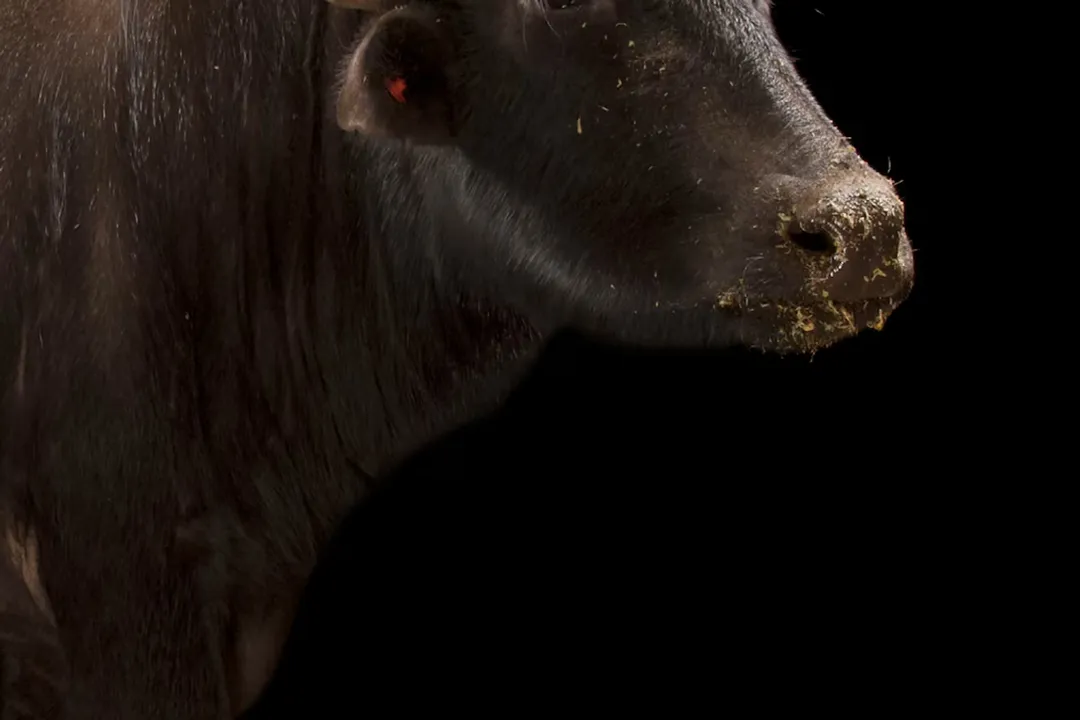
The water buffalo, a magnificent bovid belonging to the genus Bubalus, presents a study in powerful adaptation tailored for Asia's marshlands and tropical climates. [1][5][8] These animals are far more diverse than their common name suggests, encompassing both the widely domesticated Bubalus bubalis and the highly endangered wild water buffalo, Bubalus arnee. [1][5][8] Their physical makeup reveals an animal engineered for strength and resilience, often making them indispensable partners in agriculture across their native ranges. [2]
# Stature
Water buffalo are easily recognized by their massive, stocky frames. [1] They exhibit significant sexual dimorphism regarding size, with the males generally being heavier and more imposing than the females. [1][7] Depending on the specific breed or whether the specimen is wild or domestic, the range in body mass is quite broad. Domestic varieties can weigh anywhere from about 300 kilograms upwards, though large, well-fed individuals, or specific regional breeds like the Carabao, can easily surpass 1,000 kg. [1][2][7] The height recorded at the shoulder typically falls between 1.2 and 1.9 meters. [1] Their overall build is long-bodied, supported by relatively short, thick legs, giving them a low center of gravity ideal for traversing soft ground. [1]
# Horns
The horns are arguably the most striking physical feature of the water buffalo, particularly in the wild form. [3] These structures are distinctively long, heavy, and sweeping, generally curving backward in a crescent shape. [1][2] They are heavily ridged or ringed along their length, a characteristic more pronounced in males. [1] While both sexes typically possess horns, the male's set is significantly larger and thicker. [1] The spread between the tips can be astonishing; records indicate that some wild specimens have achieved horn spreads exceeding two meters tip-to-tip. [3][8] Even in domestic breeds, the horns are impressive, though the immense size of the wild Bubalus arnee set often sets the standard for sheer scale. [5]
# Skin
The exterior covering of the water buffalo is usually dark, ranging from deep slate gray to near black. [1][2] In contrast to many other large mammals, the coat tends to be sparse rather than thick. [1] This observation links directly to their unique thermoregulation strategy. Because they possess relatively few sweat glands compared to other bovids, they cannot effectively cool themselves through perspiration alone. [2] This physiological limitation mandates their well-known behavior of spending significant time submerged or wallowing in water or mud during the heat of the day. [2]
An interesting way to look at this physiological trade-off is through the lens of environmental engineering. While an animal like a cow relies on evaporative cooling via its skin, the water buffalo relies on external cooling agents—water and mud—to coat its dark skin. The mud layer acts as a physical barrier against direct solar radiation and slows the rate of water evaporation from the skin surface, making the cooling effect last longer once the animal emerges from the wallow. This reliance on external factors means that access to adequate, cool mud or water isn't just a comfort preference; it is a non-negotiable requirement for maintaining core body temperature and surviving hot periods. [2]
# Head Features
The head of the water buffalo is large relative to its body mass and features prominent ears that often hang somewhat low. [1] Their muzzle is broad, suited for grazing on tough grasses and aquatic vegetation. [1] The eyes are set on the sides of the head, granting them a wide field of view, an important defense mechanism for large herbivores. [7]

# Movement
The lower extremities of the water buffalo are adapted specifically for their marshy habitat. They possess wide hooves that splay outward when they put weight down. [2] This broad surface area acts much like a snowshoe, distributing their considerable weight over a larger ground area, thereby preventing them from sinking deeply into soft mud or saturated paddy fields. [2]
This wide-hoof structure is a key reason why, historically, they have been far superior draught animals to cattle in the rice paddies of Southeast Asia. While a standard domestic cow might become bogged down trying to pull a plow through thick, saturated soil, the buffalo's foot morphology allows for powerful traction without becoming hopelessly stuck. Farmers often rely on this natural 'mud-shoe' ability when preparing fields for planting, a characteristic that fundamentally shaped agricultural practices in many Asian nations for centuries. [2]
# Distinctions
When comparing the domestic water buffalo to its wild counterpart, Bubalus arnee, the differences in physical characteristics often reflect evolutionary pressures. [5] Wild water buffalo tend to be larger overall and exhibit a deeper, darker coloration than many domestic types. [8] Most notably, the wild males carry significantly larger and more robust horns compared to their domesticated cousins, reflecting the need for greater defense against predators like tigers. [5][8] Today, wild populations are fragmented and face severe threats, making the physical baseline provided by the Bubalus arnee extremely important for conservation genetics. [8]
In contrast, domestic populations have been selected over millennia for traits beneficial to humans, such as docility, higher milk yield, or specific sizes suited for different local tasks, leading to a wider array of phenotypes than seen in the wild. [1]
| Feature | Domestic Buffalo (B. bubalis) | Wild Buffalo (B. arnee) |
|---|---|---|
| Size | Highly variable, generally smaller | Generally larger and heavier |
| Horns | Large, but less massive | Extremely massive, thicker base |
| Temperament | Docile, manageable | Wild, aggressive, unpredictable |
| Conservation Status | Least Concern (Globally) | Endangered |
| [1][5] |
For those working with these animals, understanding these subtle physical distinctions matters. For instance, a farmer purchasing a young male draft animal might find that a buffalo whose horn buds are already showing extreme thickness and backward curve might mature into an exceptionally strong, albeit potentially more stubborn, worker, compared to one with straighter, narrower horns typically selected for easier handling. [7] The physical traits selected for milk production—often smaller body size and less bulky horns—also differ markedly from those prized for pure draught power.
Related Questions
#Citations
Water buffalo - Wikipedia
Water Buffalo | National Geographic
Water buffalo | Mammal, Domestication & Agriculture | Britannica
Water Buffalo (Bubalus Bubalis): Facts, Size, Behavior & Swimming
Asian water buffalo (Bubalus arnee) - Quick facts
WATER BUFFALOES: CHARACTERISTICS, BEHAVIOR AND ...
Buffalo Facts | Water Buffalo & Cape Buffalo | Live Science
Wild water buffalo
Water Buffalo - Asia | Online Record Book Preview