Water Beetle Physical Characteristics
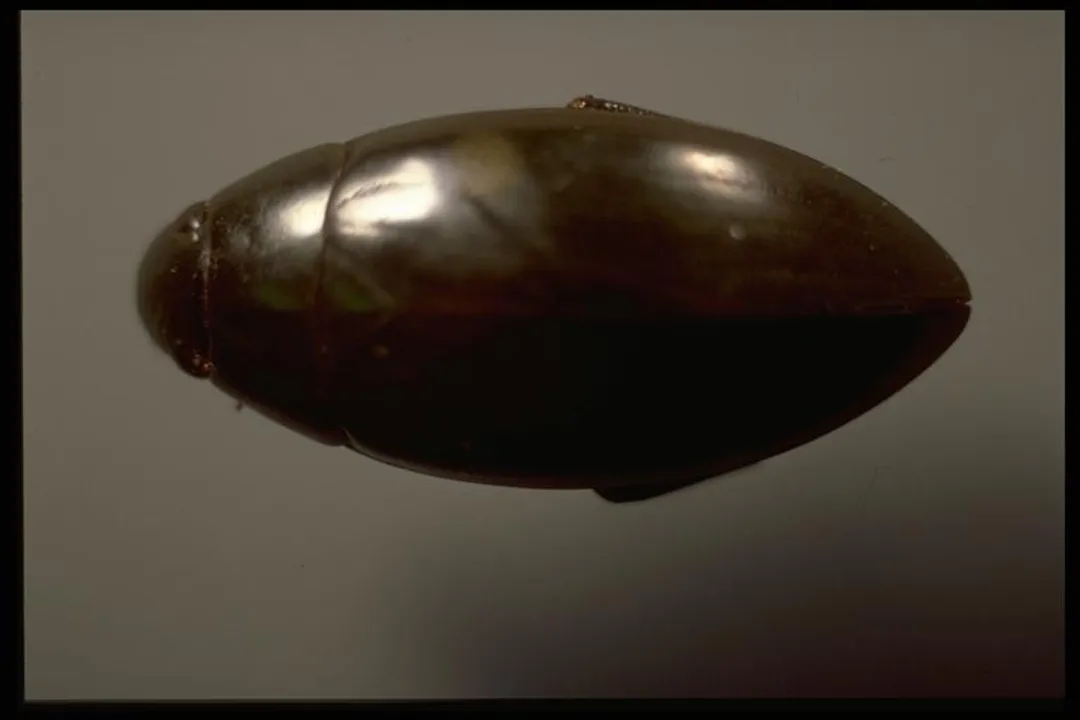
The world of aquatic insects is diverse, and among the most recognizable residents of freshwater habitats are the water beetles, belonging to the order Coleoptera. These insects carry the fundamental characteristics of their terrestrial relatives—a hard exoskeleton, three distinct body sections, and six jointed legs—but their anatomy has been beautifully modified for a life spent entirely or largely submerged. From the streamlined appearance of the adults to the often ferocious structure of their young, the physical makeup of water beetles offers fascinating adaptations to their watery domain.
# Body Structure
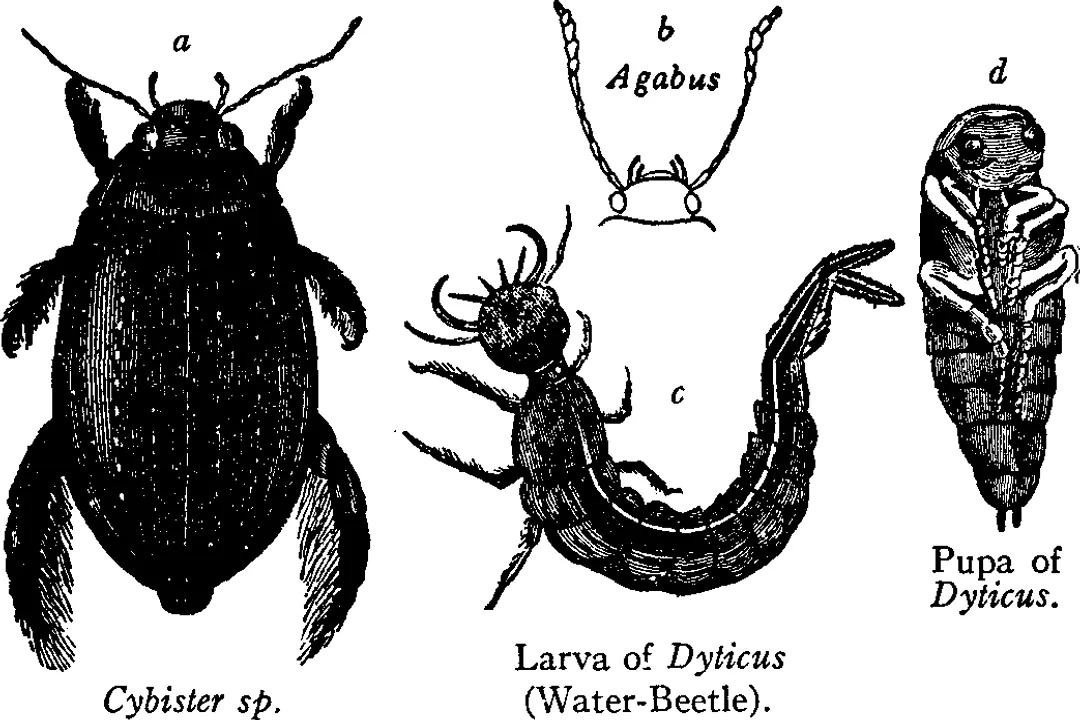
At a glance, the adult water beetle presents a smooth, typically oval or elongated shape, which aids in moving through water with minimal resistance. The body is segmented into the head, thorax, and abdomen, all encased by a tough, chitinous covering, the exoskeleton. This hard shell provides essential protection against predators and physical damage in their often turbulent environments.
A significant feature for many aquatic beetles involves the wing covers, known as elytra. Unlike many terrestrial beetles where the elytra meet in a straight line, many water beetles possess elytra that are tightly closed, forming a smooth, continuous surface over the abdomen. This tight seal is not just structural; it is central to their method of breathing underwater, as it creates a space to trap a reservoir of air. The overall coloration tends toward darker shades, often black or dark brown, which helps them blend into the murky bottoms of ponds and slow-moving streams. Some species, like the Giant Water Scavenger Beetle, are noted for being quite large within the insect world, reaching significant sizes compared to smaller relatives such as Brychius hungerfordi, which measures only around 3.6 to 4.2 millimeters in length.
# Sensory Features
The head capsule houses the compound eyes, which must function both above and below the water surface, a common challenge for semi-aquatic creatures. Antennae length and structure vary considerably between groups, often providing a clue to the beetle's lifestyle. For instance, predaceous diving beetles tend to have relatively long antennae, whereas the Giant Water Scavenger Beetle adults possess short, clubbed antennae. These sensory organs help detect prey, mates, or suitable surfaces for laying eggs in often low-visibility conditions.
# Aquatic Respiration
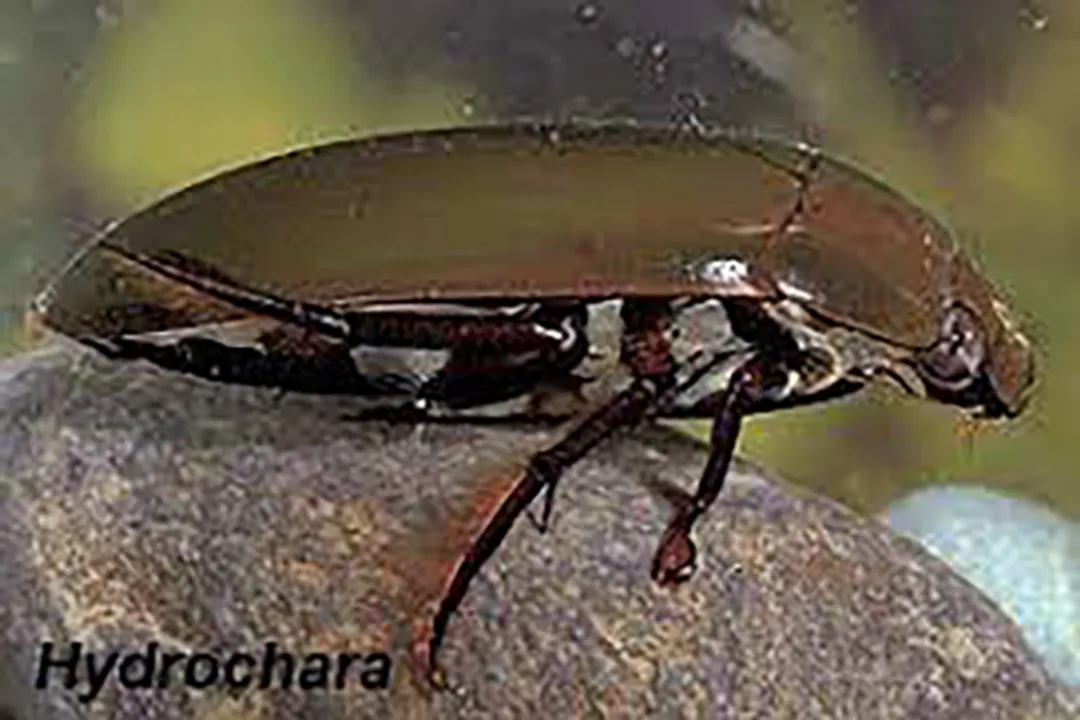
Perhaps the most specialized physical characteristic enabling a water beetle's lifestyle is its method of respiration. Since insects breathe air through a system of tubes called tracheae, most aquatic species must periodically surface to replenish their air supply. However, they have evolved methods to maximize their time submerged.
Many species employ a technique where they trap a film of air beneath their tightly fitted elytra when they break the surface. This trapped air functions much like a portable diving bell or a physical gill, allowing oxygen to diffuse into the beetle's body while carbon dioxide diffuses out. Observers of the Giant Water Scavenger Beetle can often spot this mechanism in action, as the air bubble appears as a bright, silvery sheen underneath the dark wing covers.
A distinct variation exists among some diving beetles, particularly the larvae, which sometimes possess a posterior siphon or breathing tube extending from the tip of the abdomen. This siphon can be projected through the water surface to draw in air while the rest of the body remains hidden below, offering a tactical advantage to the predatory larva. In contrast, the larvae of the Giant Water Scavenger Beetle are described as lacking this siphon, relying on other means, possibly surface contact or general body surfaces, to obtain air. If one were observing a pond, the presence or absence of this obvious breathing tube on a larva would be a rapid physical marker distinguishing between certain families.
# Leg Adaptation
The six legs of a water beetle display remarkable specialization depending on whether the species is primarily a swimmer or a bottom-dweller. The hind legs are often the most altered for aquatic locomotion.
For powerful swimmers, such as the predaceous diving beetles (sometimes known as "water tigers" in their larval stage), the legs are perfectly engineered paddles. Their hind legs are typically flattened into broad, oar-like structures and are fringed with long, stiff hairs. When swimming, these legs work in unison, providing strong propulsion through the water column.
Conversely, beetles that spend more time walking on submerged vegetation or the substrate may have legs that are less dramatically flattened, though they still usually feature swimming hairs to aid in short bursts of movement. Analyzing the leg structure provides a quick insight into the beetle's preferred niche; a flat, hairy paddle suggests a high-speed pursuit predator, whereas a more slender leg might indicate an insect that spends more time foraging on surfaces.
# Larval Appearance
The physical characteristics of water beetle larvae often contrast sharply with the smooth, oval shape of the adults. The larvae of diving beetles are particularly noteworthy; they are long, segmented, and often possess formidable-looking appendages. These larval forms are built for predation and often exhibit specialized mouthparts that are piercing and sucking, designed to inject digestive fluids into prey and then ingest the liquefied contents. This difference in feeding apparatus between the predatory larva and the often scavenging or herbivorous adult represents a classic example of niche partitioning within the same species' life cycle, minimizing direct competition between generations.
In contrast, the larvae of the Giant Water Scavenger Beetle are described as having long, segmented bodies, resembling centipedes more than their adult counterparts, and they lack the siphon found on some other larval forms. While the article mentions the Brychius hungerfordi adult, details on its larva's specific physical traits beyond its small adult size are less detailed in the provided materials, suggesting that larval morphology is a highly variable characteristic across the entire group.
| Feature | Predaceous Diving Beetle (Adult) | Giant Water Scavenger Beetle (Adult) | Diving Beetle Larva (Water Tiger) |
|---|---|---|---|
| Shape | Oval, smooth, streamlined | Oval, smooth | Long, segmented |
| Color | Typically dark | Black or dark brown | Varies, often darker |
| Antennae | Relatively long | Short, clubbed | N/A (Focus on mouthparts) |
| Respiration | Air bubble trapped under elytra | Air bubble trapped under elytra (visible silvery shine) | May use posterior siphon or surface contact |
| Hind Legs | Flattened, fringed with hairs (oar-like) | Adapted for swimming | N/A (Focus on grasping/piercing) |
| Mouthparts | Chewing/grasping (general feeding) | Chewing/scraping (scavenging) | Piercing-sucking |
The sheer diversity in size, even within this single group of aquatic insects, is an important physical characteristic to note. While the Hydrophilus species can be imposing, smaller species like Brychius hungerfordi demonstrate that "water beetle" covers a vast spectrum of miniaturized aquatic engineering. Understanding these minute differences in antenna length or leg shape, when possible, is key for anyone attempting to survey or identify local aquatic biodiversity in a small stream or pond sample.
Related Questions
#Citations
Water beetle - Wikipedia
Water Beetle Insect Facts - Coleoptera hydrophilidae - A-Z Animals
[PDF] Wildlife Profiles: Water Beetles Monitoring & Research
[PDF] Water Beetles—Order Coleoptera - Bob Armstrong's Nature Alaska
Water Scavenger Beetle - Field Guide to Common Texas Insects
Predaceous Diving Beetles (Water Tigers) | Missouri Department of ...
Brychius hungerfordi (Hungerford's crawling water beetle)
Aquatic Beetles - Sacramento Splash
[PDF] Colorado Insect of Interest - Giant Water Scavenger Beetle