What actionable, low-tech conservation measure directly supports the nesting survival of solitary *Hylaeus* specialists?
Answer
Protecting areas containing sufficient amounts of native, dead, or woody debris
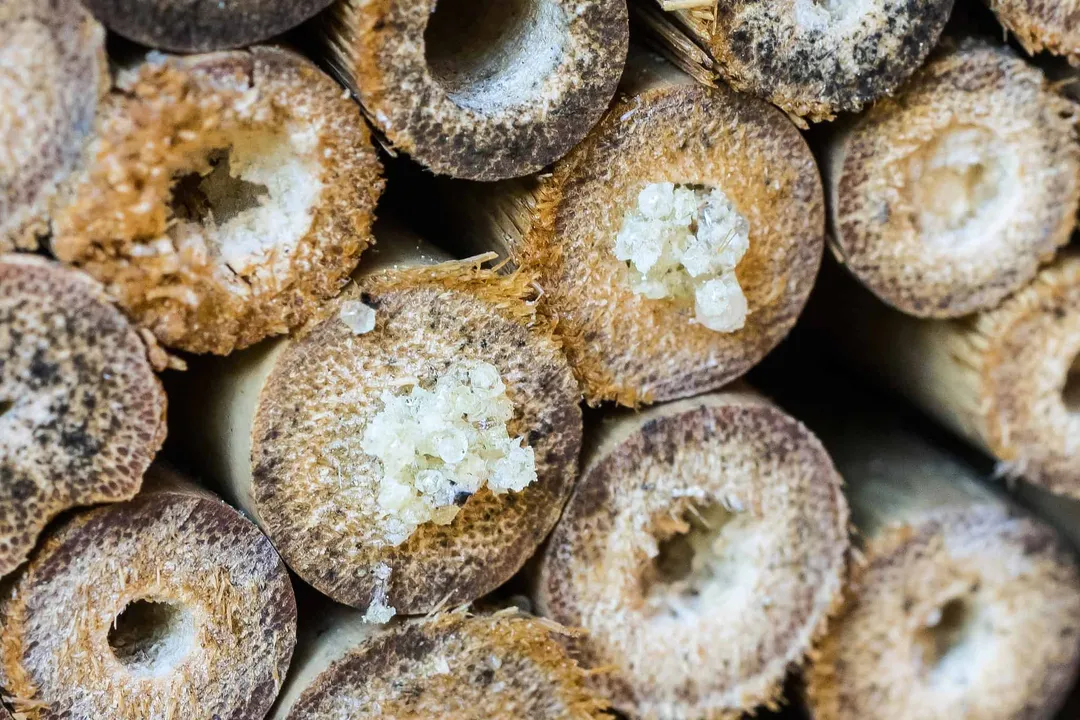
Because *Hylaeus* bees are solitary, they do not form large social hives; instead, they nest individually within pre-existing cavities found in materials such as dead wood or hollow plant stems. Therefore, a direct and effective conservation strategy involves preserving and managing landscapes to ensure an adequate supply of this necessary nesting substrate. Protecting native, dead, or woody debris supports the continuity of their life cycle by providing safe locations for females to provision cells for the next generation of endemic specialists without the need for complex, high-tech interventions.
Related Questions
How do *Hylaeus* bees transport pollen differently from more familiar bee species?What is the evolutionary lineage significance of *Hylaeus* being the only native bees in Hawaii?What process describes the rapid diversification of ancestral *Hylaeus* species across the Hawaiian Islands?To which broader taxonomic family do the Yellow-faced Bees belong?What is a consequence of the high specialization and endemism developed by Hawaiian *Hylaeus* species?What specific federally listed endangered *Hylaeus* species is highlighted as an example of vulnerability?What distinguishes the specialization strategy of the Hawaiian *Hylaeus* radiation compared to island gigantism seen in other groups?What is the local Hawaiian designation for the Yellow-faced Bees?What actionable, low-tech conservation measure directly supports the nesting survival of solitary *Hylaeus* specialists?What ancient pollen transport method do *Hylaeus* bees share with some of their closest relatives?