Unlike honey bees, what structure do *Hylaeus* bees specifically *not* use for external pollen packing?
Answer
Corbiculae
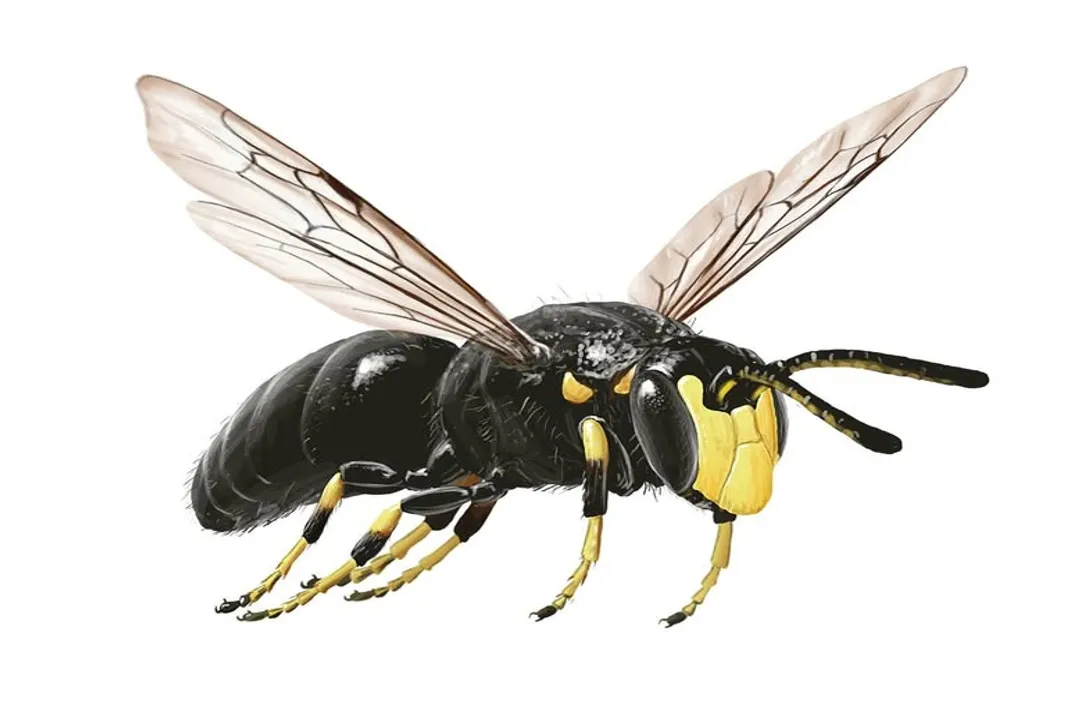
Honey bees and bumblebees characteristically pack pollen externally onto their hind legs using specialized structures known as corbiculae, or pollen baskets. The genus *Hylaeus*, or yellow-faced bee, fundamentally deviates from this method by transporting pollen internally. Because they rely on liquefying the pollen with nectar, they do not possess or utilize the corbiculae structure for reproductive provisioning, as their entire larval food source is stored within their crop.
Related Questions
What substance provides the primary energy source for the adult yellow-faced bee?Where do *Hylaeus* bees store the mixture of pollen and regurgitated nectar for their young?Unlike honey bees, what structure do *Hylaeus* bees specifically *not* use for external pollen packing?What foraging strategy characterizes yellow-faced bees across their native ranges in North America and Hawaii?What vulnerability arises because *Hylaeus* stores contaminated pollen internally?What is the resulting nutritional form of the pollen mixed with nectar for *Hylaeus* larvae?Why does the lack of specialized hair in *Hylaeus* reinforce the need for internal pollen mixing?For native bee conservation, what generalist diet requirement necessitates a diversity of available plants?What aspect of flower characteristics matters less to yellow-faced bees compared to bees with specialized leg structures?What is the benefit potentially derived from the upfront energetic cost of mixing nectar and pollen internally for *Hylaeus*?