What physical aspect causes *Hylaeus* to sometimes be mistaken for wasps or flies?
Answer
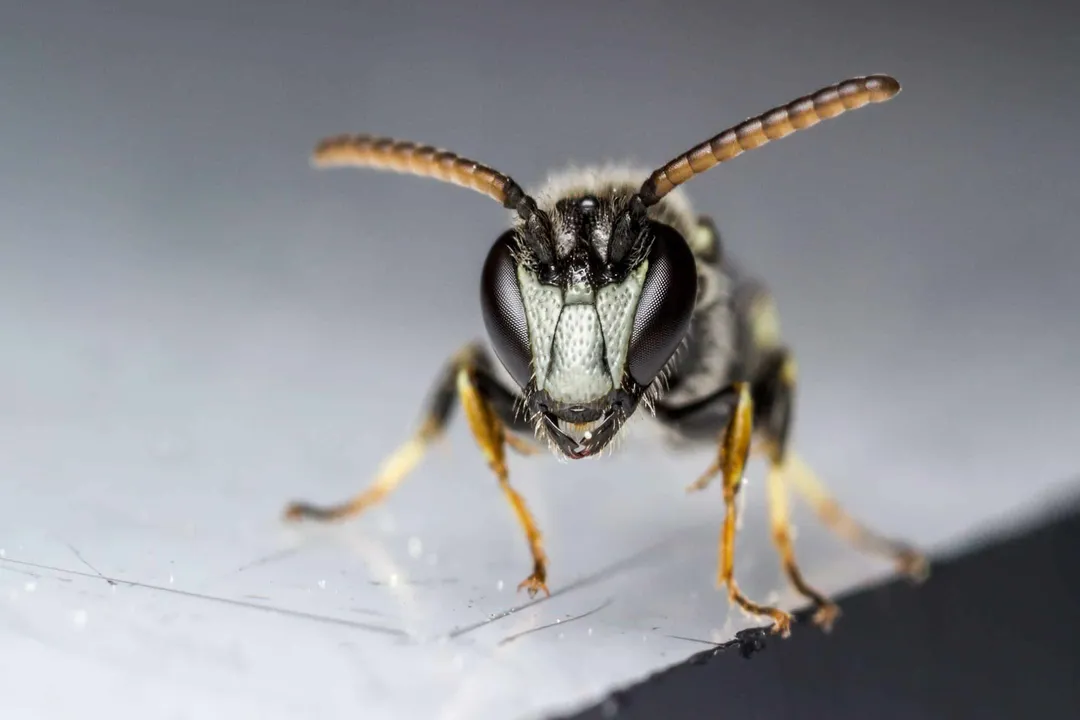
Smooth body surface due to near absence of dense hair (pile)
The smooth integument is a major morphological departure from the typical bee appearance, which is characterized by dense, often branched hairs, or pile, used for pollen collection. Because yellow-faced bees have evolved to collect pollen internally, the necessity for this dense hair covering is eliminated, resulting in an exoskeleton that appears shiny, dark, and relatively bare. This sleek, delicate, and often elongated structure allows casual observers to confuse them with other slender insects like certain types of wasps or flies, despite their actual classification as bees.
Related Questions
What is the most diagnostic physical trait distinguishing yellow-faced bees?How do yellow-faced bees (*Hylaeus*) primarily collect and transport pollen?What physical aspect causes *Hylaeus* to sometimes be mistaken for wasps or flies?How does the morphology of *Hylaeus* contrast with the common European honeybee (*Apis mellifera*)?What finer physical details are crucial for distinguishing North American *Hylaeus* species?What structural element differentiates *Hylaeus* from the solitary wasps it can resemble?What is noted about the yellow markings in the species *Hylaeus facilis*?What combination of features generally describes the overall build of the *Hylaeus* genus?For taxonomic work on Hawaiian endemic *Hylaeus* species, what subtle features are often relied upon?What role do the metallic sheens found on some *Hylaeus* species play in identification?