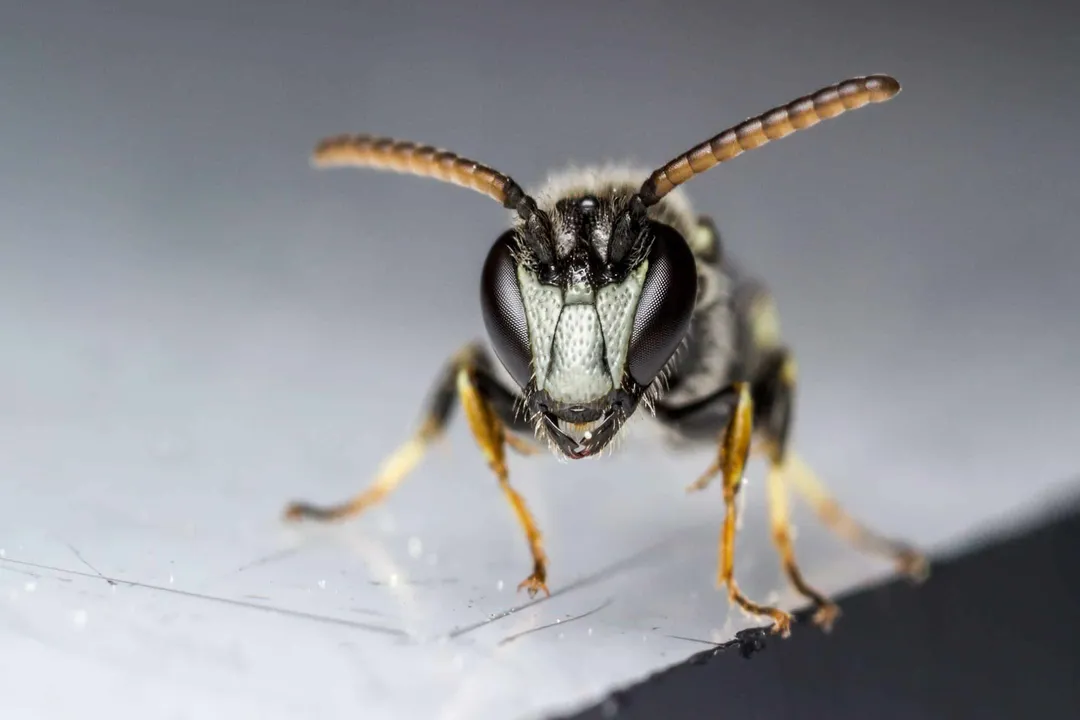
How do yellow-faced bees (*Hylaeus*) primarily collect and transport pollen?
Internally, carried in their mandibles or on forelegs
Yellow-faced bees represent a unique adaptation among bees because they lack the specialized external pollen-carrying structures, known as scopa, which are typically found on the hind legs or the underside of the abdomen in most other bee families, such as honeybees. Instead of external transport, *Hylaeus* species rely on an internal storage system. Pollen adheres minimally to their smooth bodies, but the primary method involves actively collecting and carrying the pollen within their mouths, specifically utilizing the mandibles, or moving it using their forelegs. This specialized internal method directly correlates with their smooth, non-hairy appearance, as they do not need dense hairs to trap the load externally.