Yellow-faced Bee Physical Characteristics
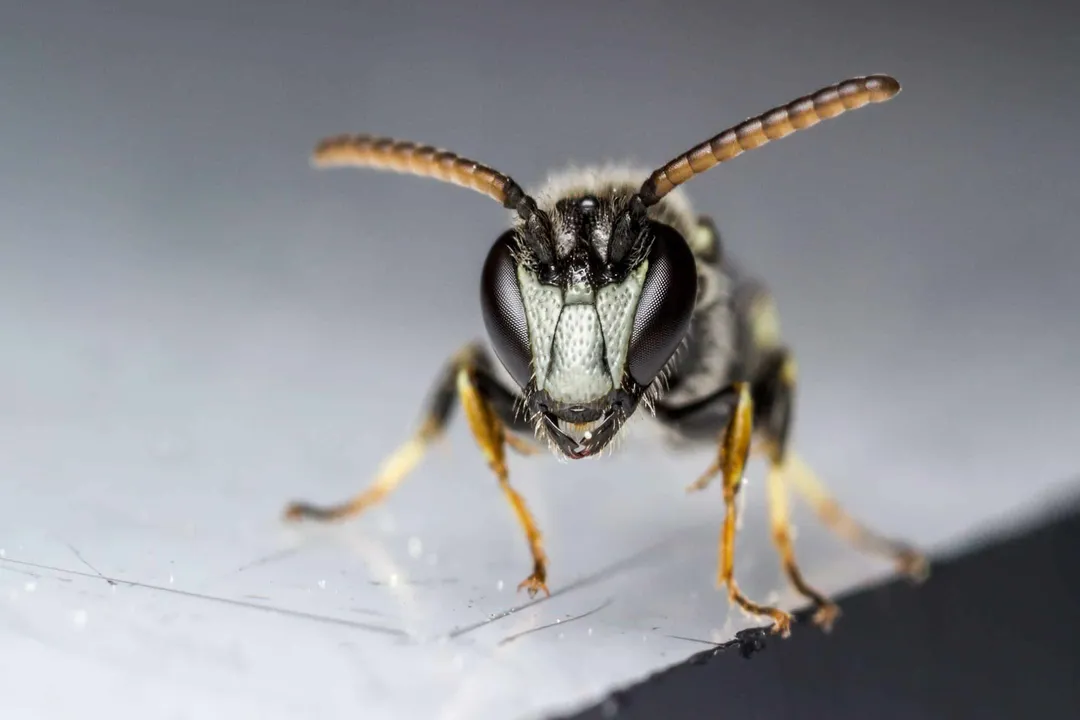
The yellow-faced bees, members of the genus Hylaeus, present a physical appearance that often surprises those accustomed to the fuzzy, robust forms of honeybees or bumblebees. These insects possess a distinctly slender build, setting them apart immediately in the world of native pollinators. While they are indeed bees, their overall look can sometimes lead casual observers to mistake them for certain types of wasps or flies due to their smooth body surface and overall delicate structure.
# General Build
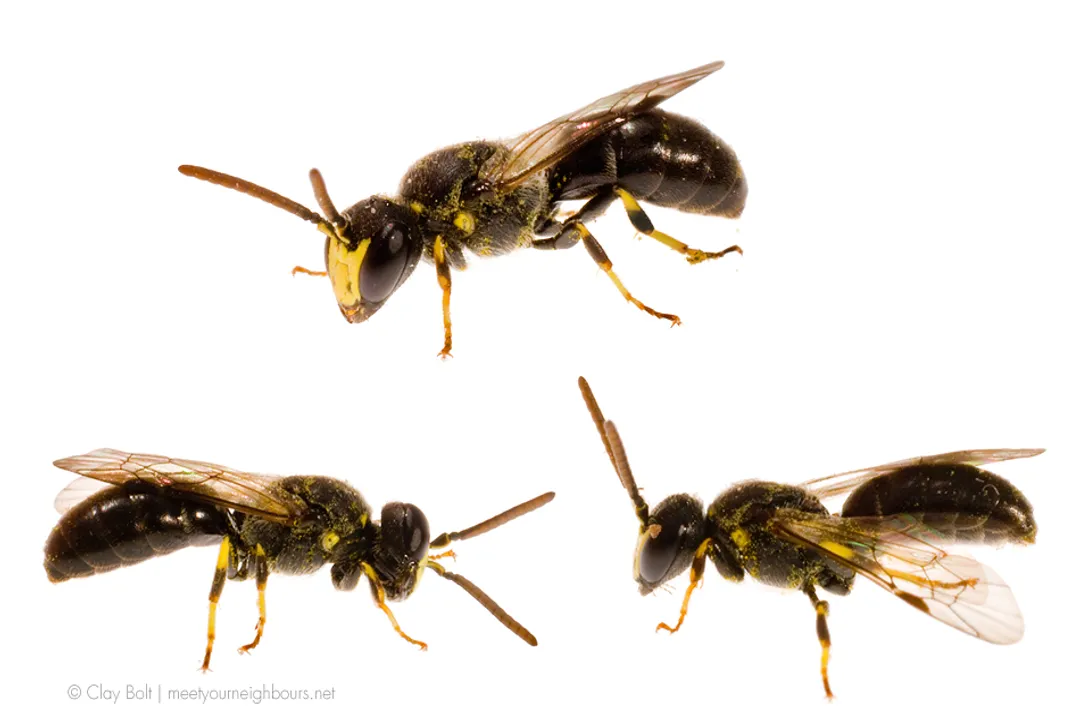
The size of these bees is generally on the smaller side when compared to more familiar bee species. While exact measurements vary considerably across the many species within the Hylaeus genus—which numbers in the hundreds globally and over fifty species in the United States alone—their size tends to fall into the category of small to medium-sized solitary bees. For example, some of the Hawaiian species, such as Hylaeus hilikeshi or Hylaeus volcanus, are documented to be quite small, sometimes measuring only a few millimeters in length. The body is notably elongated and less compact than many other Apiformes, contributing to that wasp-like silhouette.
# Smooth Integument
Perhaps the most striking physical feature, second only to the facial markings, is the near absence of the dense hair, or pile, common to most other bees. Bees typically rely on branched hairs to carry pollen, but yellow-faced bees have evolved a different system. Their exoskeleton appears shiny, dark, and relatively bare. This smooth exterior is what causes the frequent misidentification. This lack of dense hair isn't merely cosmetic; it directly relates to how they function as pollinators, as detailed below. The body coloration itself often contrasts sharply with the bright face markings, typically appearing black or dark brown. However, depending on the specific species, metallic sheens can be present on the thorax or abdomen, resulting in subtle shades of bronze, blue, or green under direct light.
# Facial Patches
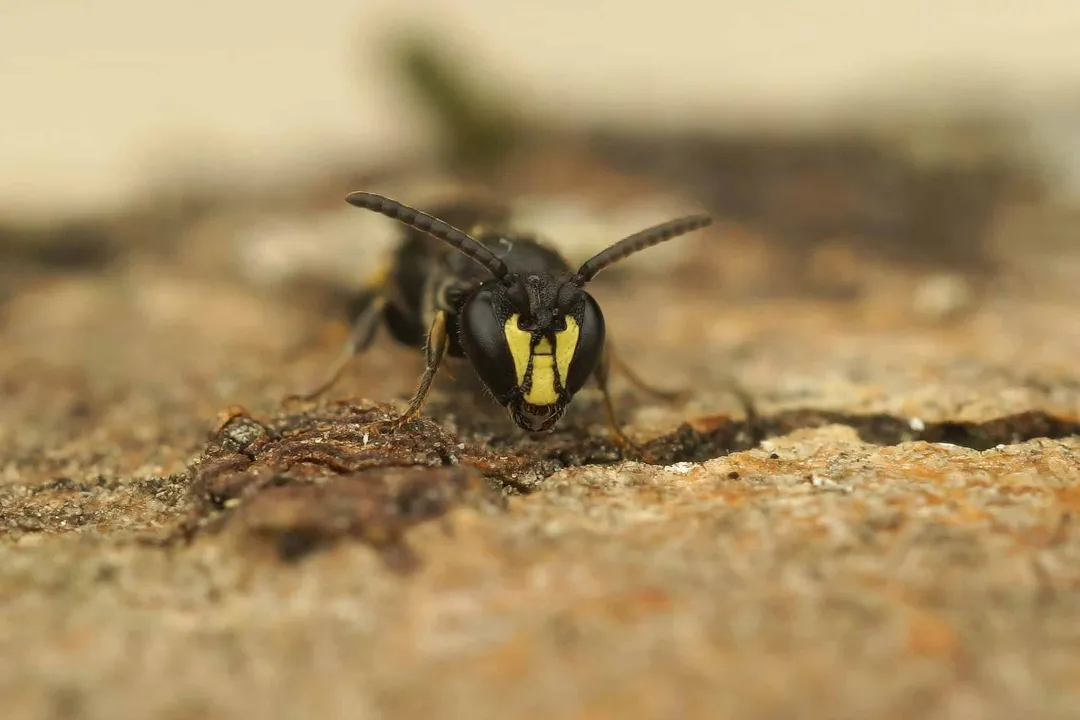
The common name itself points to the most diagnostic physical trait: conspicuous yellow markings on the face. This pattern of yellow coloration contrasts starkly against the dark background of the head. These markings are generally restricted to the face area, appearing as spots, stripes, or larger blocks. The precise shape, size, and location of these yellow areas are critical for identifying the species. For an observer trying to distinguish between different yellow-faced bees, focusing on how the yellow is distributed—whether it forms a distinct band between the eyes, covers the clypeus (the area below the antennae), or extends lower—is key. If you see a small, slender, dark bee with any bright yellow on its face, you are likely observing a member of this group.
In some species, the yellow pattern is highly reduced, while in others, it is extensive and prominent. For instance, in the species Hylaeus facilis, the markings are noted to be present on the clypeus and sometimes on the face above and below the antennae, but the exact configuration distinguishes it from its close relatives. The consistency of this facial feature across species, despite variation in its detail, confirms the genus identification.
# Pollen Transfer
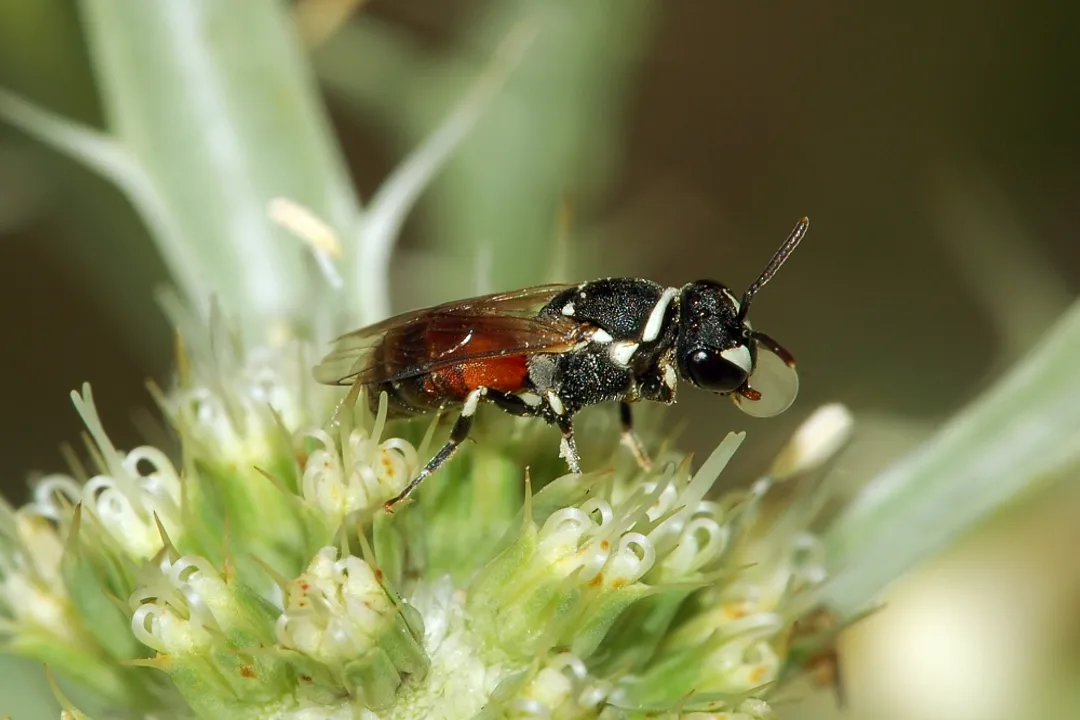
The physical mechanics of pollen collection provide a fascinating insight into the adaptations of Hylaeus species, which directly impacts their appearance compared to other bees. Most bees carry pollen externally in specialized structures called scopa, usually found on the hind legs, or sometimes on the underside of the abdomen. Yellow-faced bees do not possess these external structures. Instead, they are known for collecting pollen internally.
This internal storage system means they rely on the small amount of pollen adhering to their smooth bodies or, more commonly, they carry it within their mouths—specifically in their mandibles or on their forelegs. This method of transport explains why their legs appear less hairy or specialized than those of other bees and contributes to their generally clean-cut, non-furred appearance. Observing a yellow-faced bee moving pollen using its front legs while foraging is a direct observation of this unique physical specialization in action. This characteristic sets them apart morphologically from the vast majority of other bee families that exhibit visible, hairy pollen baskets.
# Species-Specific Details
While the genus Hylaeus shares the common traits of being small, slender, and possessing facial yellow markings, the differences between individual species can be subtle yet significant, demanding close inspection of physical attributes.
# Hawaiian Endemics
In places like Hawaii, where many Hylaeus species are critically endangered or already extinct, physical examination often relies on very specific morphological keys used by entomologists. For example, descriptions often rely on features like the relative length of the segments of the antennae or the minute sculpturing (sculpture) on the surface of the thorax, details invisible to the naked eye but crucial for taxonomic work. The size variation among the native Hawaiian species is substantial; some species are reported to be among the smallest bees in the world, while others are larger. The color variation can also include bees that possess an almost metallic sheen, differentiating them from purely matte black relatives.
# North American Distinctions
In North America, distinctions also hinge on these finer points. While the Hylaeus in Texas share the overall body plan, identification requires looking at precise ratios and markings, especially for species that are often confused with similar-looking non-native species. The pattern of yellow markings on the face is the primary field characteristic, but scientific classification often requires examining the shape of the terminal abdominal segments or the specific arrangement of bristles on the legs—features that underscore that physical identification goes deep beneath the common observation of a "yellow face".
If one were to compare Hylaeus difficilis to another co-occurring species, the primary differences might not be size (as both are small), but rather the exact placement of a single yellow spot relative to the eye margin or the presence of a small yellow stripe on the pronotum (the top plate of the thorax). A practical takeaway for a serious observer in a location with multiple Hylaeus species is that the "yellow-faced bee" is not one thing, but a large group defined by a single characteristic that masks a world of underlying structural differences.
# Morphological Comparison
To truly appreciate the physical nature of the yellow-faced bee, it helps to place it against its relatives. Consider the common European honeybee (Apis mellifera). The honeybee is defined by its dense, fuzzy coat designed to carry vast amounts of pollen on its hind legs, a trait entirely absent in Hylaeus. Where the honeybee is built for bulk pollen transport, the yellow-faced bee is structurally adapted for a different strategy: rapid, discreet foraging, potentially making many small trips rather than a few heavily laden ones.
Another comparison might be made with certain solitary wasps. While the wasp has a very narrow "waist" (the petiole) connecting the thorax and abdomen, the yellow-faced bee’s connection is much broader, though still more slender than that of a bumblebee. The smooth, often shiny surface of the Hylaeus contrasts sharply with the slightly roughened, hair-covered surface of many small native solitary wasps that share a similar size range. The facial yellow is almost always the true differentiator against wasps, as wasps typically have white or cream markings, or none at all in the same configuration.
Given the conservation status of several island species, understanding these physical characteristics is tied directly to monitoring efforts. The subtle differences in marking patterns and size help researchers track populations and ensure that conservation efforts are directed toward the correct, threatened taxon, rather than a more common relative. The physical structure of these bees—small, sleek, and carrying pollen internally—represents a unique evolutionary path in the bee lineage, specializing in efficient, perhaps less visually obvious, pollination.
Related Questions
#Citations
Species Profile for Anthricinan yellow-faced bee(Hylaeus anthracinus)
Hylaeus facilis - Yellow faced bees | Xerces Society
Hylaeus (bee) - Wikipedia
Masked bees - Yellow-faced bees - Hylaeus - NATIVE BEES
Yellow-faced Bee Insect Facts - A-Z Animals
[PDF] Yellow-Faced Bees - Marine Corps Base Hawaii
Yellow-Faced Bees - Texas Apiary Inspection Service (TAIS)
[PDF] Longiceps or long head yellow-faced bee - AWS