Where do *Hylaeus* bees store the mixture of pollen and regurgitated nectar for their young?
Answer
Crop (the honey stomach)
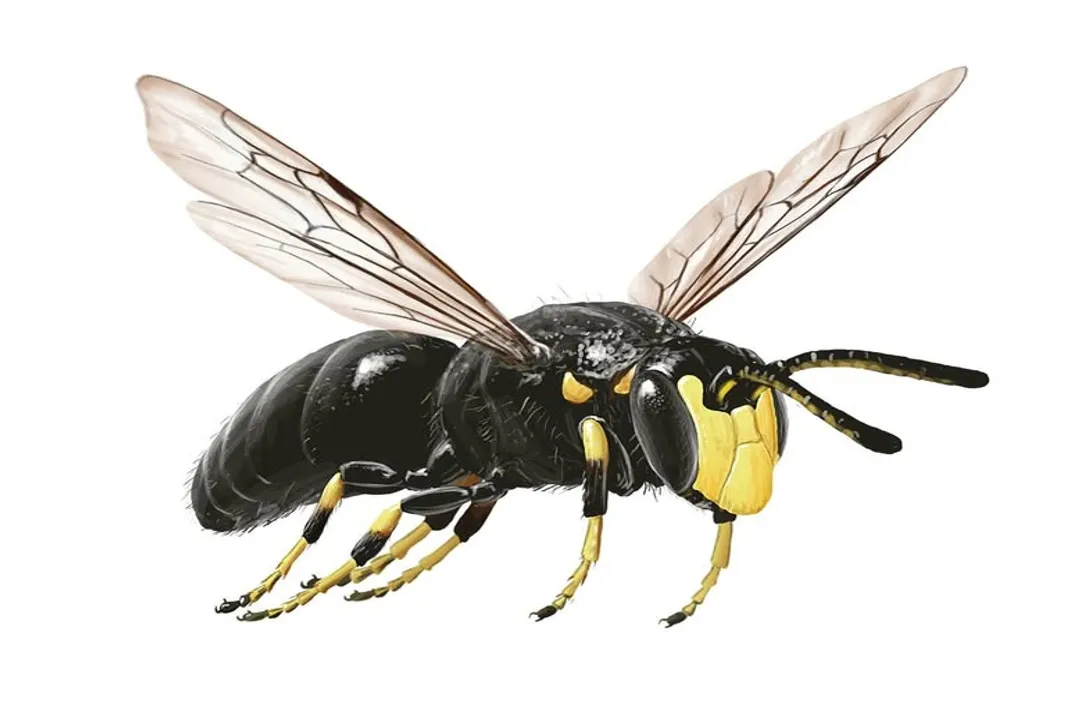
The yellow-faced bee utilizes a unique internal storage method, setting it apart from bees that pack pollen externally. After gathering pollen from flowers, the *Hylaeus* bee mixes these grains with nectar that has been regurgitated from its digestive system. This resulting moist, liquid paste or solution is then stored within the crop, which is also known as the honey stomach. This internal placement means the larval food supply is carried alongside the adult's own nectar supply until delivery inside the nest cell.
Related Questions
What substance provides the primary energy source for the adult yellow-faced bee?Where do *Hylaeus* bees store the mixture of pollen and regurgitated nectar for their young?Unlike honey bees, what structure do *Hylaeus* bees specifically *not* use for external pollen packing?What foraging strategy characterizes yellow-faced bees across their native ranges in North America and Hawaii?What vulnerability arises because *Hylaeus* stores contaminated pollen internally?What is the resulting nutritional form of the pollen mixed with nectar for *Hylaeus* larvae?Why does the lack of specialized hair in *Hylaeus* reinforce the need for internal pollen mixing?For native bee conservation, what generalist diet requirement necessitates a diversity of available plants?What aspect of flower characteristics matters less to yellow-faced bees compared to bees with specialized leg structures?What is the benefit potentially derived from the upfront energetic cost of mixing nectar and pollen internally for *Hylaeus*?