What specialized structure found on honeybees do yellow-faced bees notably lack?
Answer
Corbiculae, or pollen baskets.
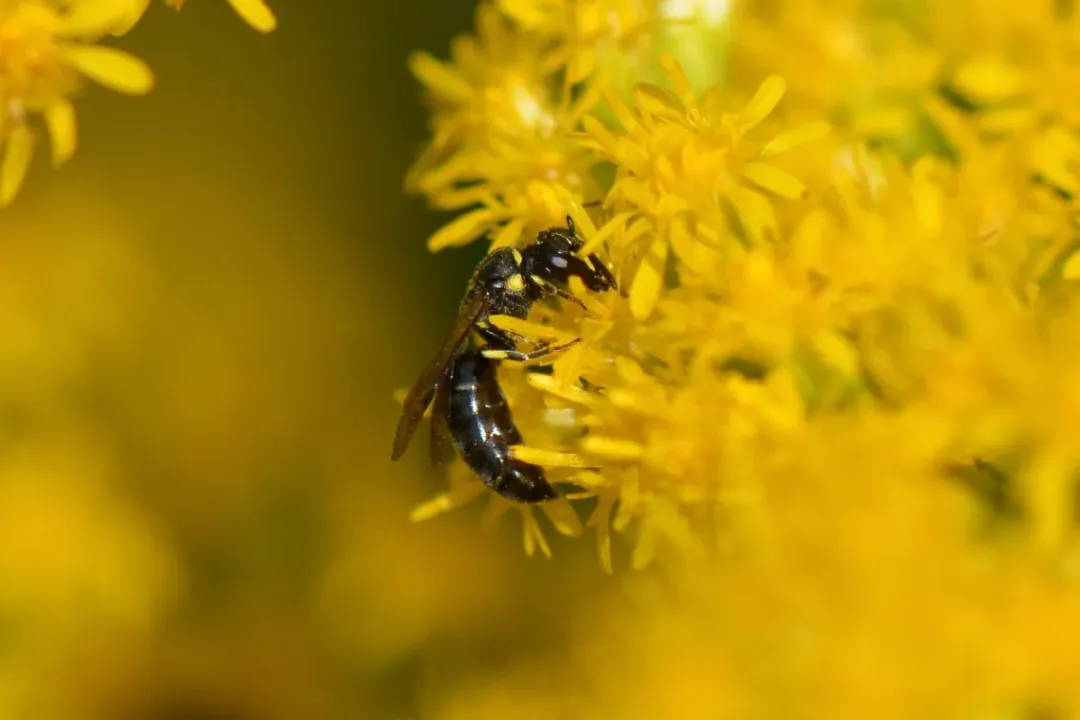
A key physical difference noted in yellow-faced bees (*Hylaeus*) when compared to familiar, hairy bees like honeybees is the absence of specialized structures used for external pollen carriage. Honeybees utilize corbiculae, often called pollen baskets, located on their hind legs, which are modified surfaces designed to hold tightly packed balls of pollen. Because *Hylaeus* bees transport pollen internally as a liquid mixture within their crop, they do not possess these external baskets. This difference in pollen management explains their relatively smooth appearance, as they lack the dense, pollen-trapping hair that accumulates grains externally on species possessing corbiculae.
Related Questions
How do yellow-faced bees of the genus Hylaeus transport pollen differently than many other bees?What specialized structure found on honeybees do yellow-faced bees notably lack?What characteristic, cellophane-like substance do female Hylaeus bees use when constructing nest cells?Which of the following Hawaiian species is noted as being found across Oahu, Maui, Molokai, and Kauai?What is the Hawaiian name often used locally for native yellow-faced bees?Where is Hylaeus kuakea, a species found in dry forests, known to establish its nesting tunnels?What invasive agents in Hawaii are responsible for raiding the small nests of native yellow-faced bees?What type of nesting habitat is indicated by small, perfectly round exit holes in dead branches for cavity-nesting Hylaeus species?Which *Hylaeus* species in the Pacific Northwest of North America is listed as a species of conservation concern?What specialized requirement for supporting yellow-faced bees should gardeners focus on instead of just quantity of blooms?