In which substrate condition are Zebra Mussels notably absent, preferring Quaggas instead?
Answer
Soft-bottomed areas
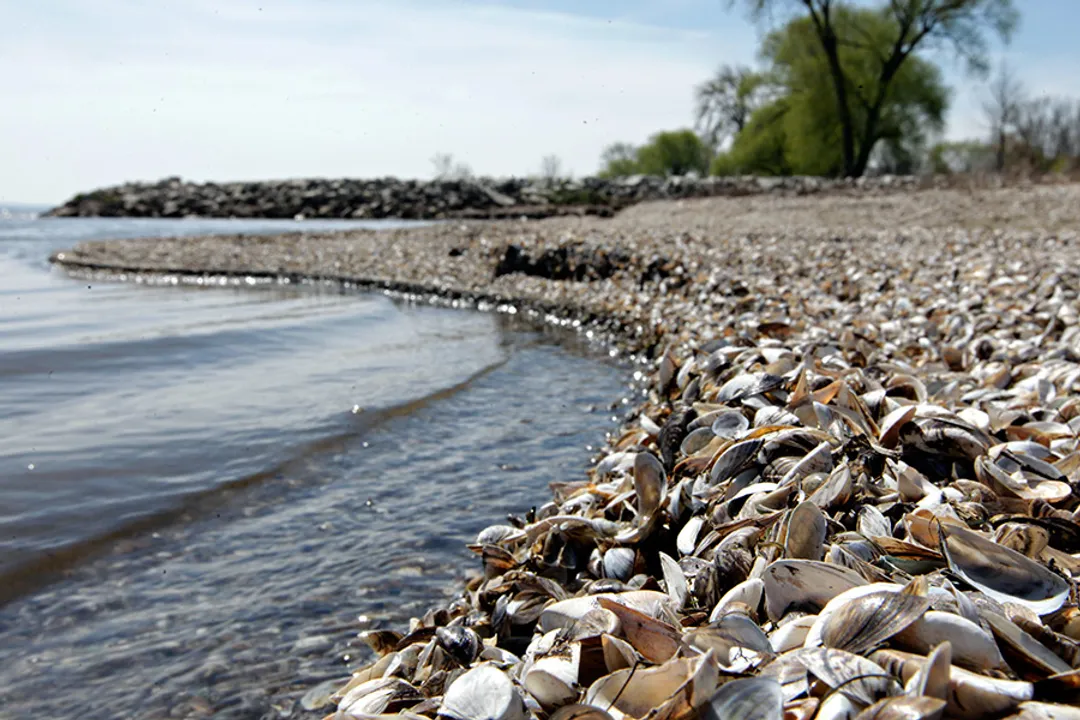
Zebra mussels are obligate attached organisms, meaning they must secure themselves firmly to hard surfaces such as rocks or wood, and they are specifically noted as being absent from areas characterized by soft bottoms. This ecological limitation creates an opportunity for the related quagga mussel, which is more physically adaptable. Quaggas do not rely on firm attachment and can settle directly onto soft lake sediments or bottom deposits, allowing them to colonize deeper environments and soft substrates where the classic zebra mussel strategy of attachment fails.
Related Questions
Where do Zebra Mussels originate, according to their historical background?What is credited for the arrival of Zebra Mussels in the Great Lakes?What physical feature gives the Zebra Mussel its specific name?How does Zebra Mussel attachment differ from Quagga Mussel attachment behavior?What are the microscopic, free-swimming larvae of Zebra Mussels called?What immediate, observable impact does high-volume Zebra Mussel filtration have on water?What term describes the process where Zebra Mussels restrict water flow in infrastructure?What is the three-step protocol strongly promoted for boaters controlling Zebra Mussel transport?How is the Zebra Mussel's shell profile described when viewed from the top compared to the Quagga mussel?At approximately what minimum water temperature does Zebra Mussel reproduction typically begin?In which substrate condition are Zebra Mussels notably absent, preferring Quaggas instead?