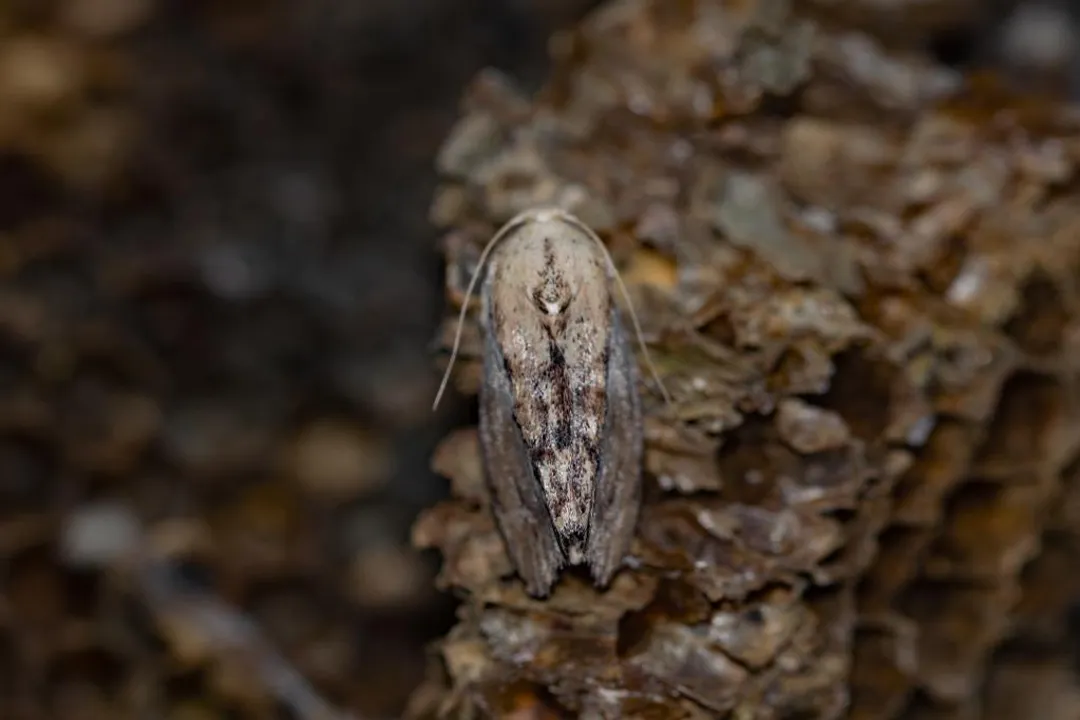
If a beekeeper finds active wax moth larvae destroying comb in a living hive, what is the primary issue to inspect?
The colony itself to determine why the bees lost their ability to police their own hive.
The presence of significant wax moth damage, especially active destruction of comb within a living colony, is generally not the primary problem but rather a strong diagnostic indicator of a preceding failure within the bee colony's defensive perimeter. Worker bees in a healthy, strong colony are highly adept at identifying and ejecting moth larvae before they can cause widespread damage. Therefore, if larvae are found actively tunneling and destroying comb, the critical next step for the beekeeper is to inspect the colony intensely for the underlying cause—such as disease, starvation, or queen loss—that led to the bees losing their protective vigilance, which permitted the surge of the pest population.