Besides stored grains and wool fibers, what surprising component feeds *Endrosis sarcitrella* larvae?
Answer
Droppings left behind by other stored product pests
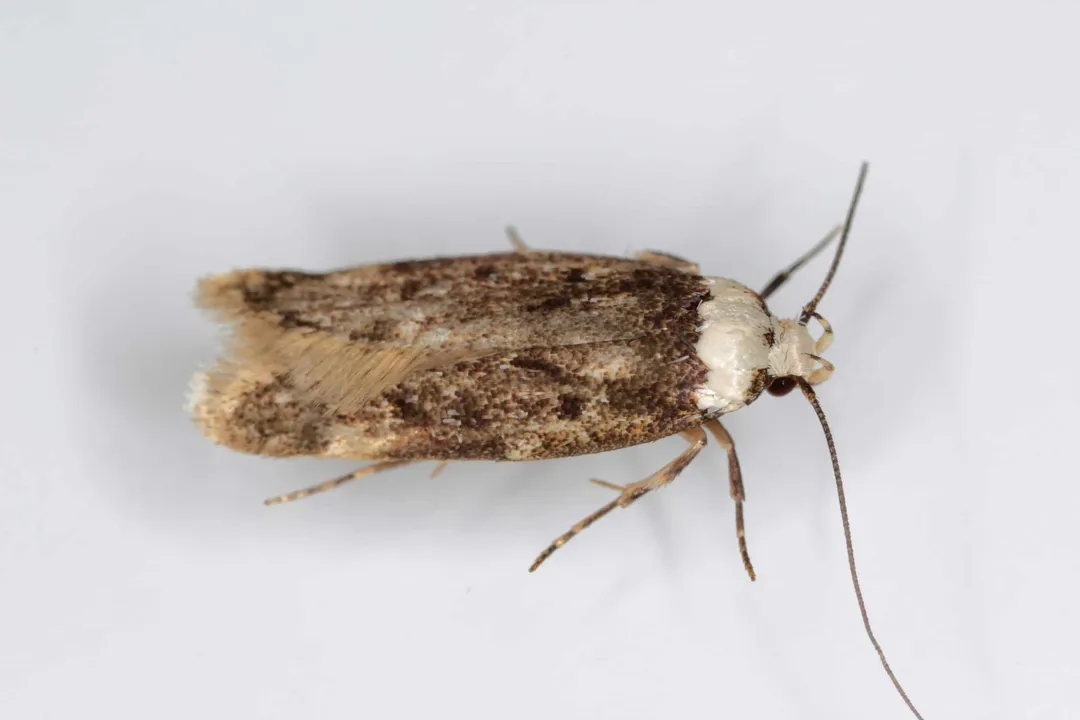
The larvae of the White-shouldered House Moth are characterized as general scavengers with a remarkably broad diet that extends beyond typical pantry items or textile fibers. A specific and key element of their sustenance includes the waste materials generated by other pest species residing in storage areas. This diet incorporates debris and fecal matter left by organisms such as clothes moth larvae or dermestid beetles. This ability allows the moth to successfully colonize areas previously infested by different pests, essentially utilizing the residual organic waste left behind, which makes remediation more complex as the food source is less obvious.
Related Questions
Which continents document the widespread presence of *Endrosis sarcitrella*?Where might *Endrosis sarcitrella* larvae develop within hidden void spaces inside a structure?Besides stored grains and wool fibers, what surprising component feeds *Endrosis sarcitrella* larvae?What environmental factor, besides food presence, defines the moth's location density?Where might pupae of *Endrosis sarcitrella* be found after leaving the primary feeding site?Which outdoor sites serve as potential bridging points between the environment and the home interior?If larval casings or webbing are observed in Zone 2, what does this imply about Zone 1?How does the diet of *Endrosis sarcitrella* larvae differ from that of *Hofmannophila pseudospretella*?Which life stage of the White-shouldered House Moth is characterized as the destructive one indoors?What general concept dictates where *Endrosis sarcitrella* establishes its larval colonies?