How does the *Dysdera* spider's use of silk contrast with general traits of Order Araneae?
Answer
*Dysdera* relies more on silk for lining retreats or wrapping prey rather than aerial capture webs.
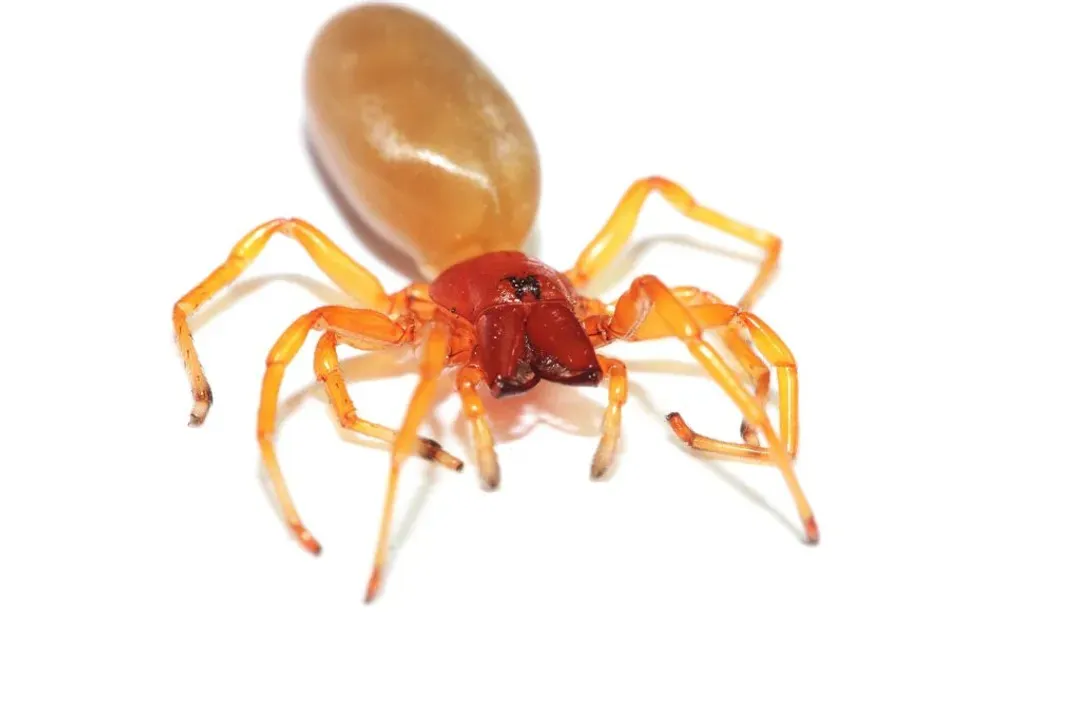
The Order Araneae is universally defined by the capacity to produce silk via spinnerets. However, *how* that silk is utilized varies dramatically across the order. While many familiar spiders employ silk primarily for constructing large, classic aerial capture webs to intercept flying insects, the Woodlouse Spider exhibits a behavioral adaptation where its silk usage is redirected. This species utilizes its silk predominantly for ground-level activities, such as lining its underground retreats, constructing burrows, or wrapping up captured ground-dwelling prey, rather than relying on large, intricate nets suspended in the air.
Related Questions
What fundamental characteristic defines the Kingdom Animalia placement of the Woodlouse Spider?Which anatomical features characterize the Phylum Arthropoda classification of *Dysdera*?What distinguishes Class Arachnida membership for the Woodlouse Hunter Spider?What specialized organ unites members of the Order Araneae, including *Dysdera*?What specific predatory adaptation defines the Family Dysderidae placement of *Dysdera*?What general morphology is consistently found across species in the Genus *Dysdera*?What does the specific epithet *crocata* in *Dysdera crocata* primarily refer to?How does placement in Phylum Arthropoda refine the *Dysdera* classification from Kingdom Animalia?Why are the large, protruding chelicerae of *Dysdera crocata* significant taxonomically?How does the *Dysdera* spider's use of silk contrast with general traits of Order Araneae?