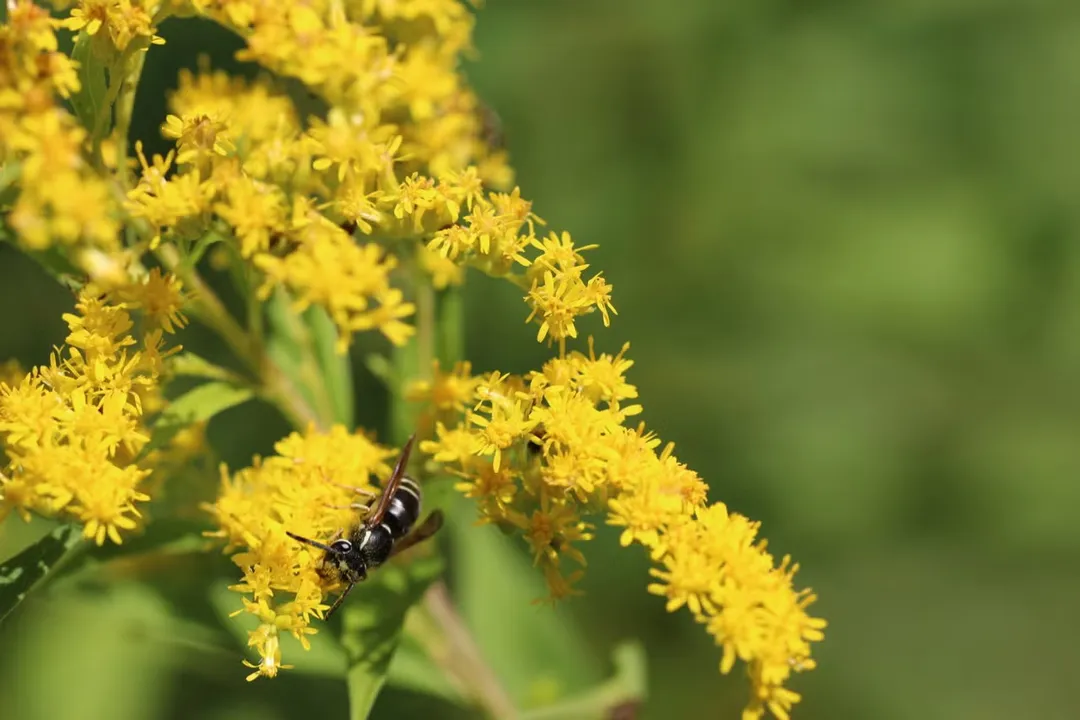
How do the foraging strategies of yellowjackets differ ecologically from social paper wasps (*Polistes* species)?
Yellowjackets exhibit a pronounced shift toward exploiting human food waste (scavenging)
While both yellowjackets and paper wasps (*Polistes* species) are social and predatory insects, their ecological roles diverge significantly based on dietary focus, especially later in the season. Paper wasps tend to maintain a more consistent predatory focus, relying predominantly on hunting live prey to provision their young. In contrast, yellowjackets have developed a derived and highly successful behavioral trait: a pronounced reliance on scavenging. This involves exploiting resources such as fallen fruit or discarded human food waste, particularly carbohydrates, once the colony's immediate need shifts from larval protein provisioning to fueling the reproductive adults. This ability to utilize opportunistic, readily available human refuse grants yellowjackets an ecological advantage and adaptability unavailable to less opportunistic predators.