Yellowjacket (Yellow Jacket) Physical Characteristics

The yellowjacket, often grouped casually with other stinging insects, possesses a distinctive physical profile that sets it apart from its close relatives like hornets and even bees. Recognizing these specific characteristics is key to accurate identification, especially when assessing potential hazards around your property. Generally, these wasps are characterized by a stark, contrasting pattern of black and bright yellow. [1][5] This bold coloration serves as a warning signal in nature, a concept known in biology as aposematism.
# Size and Shape
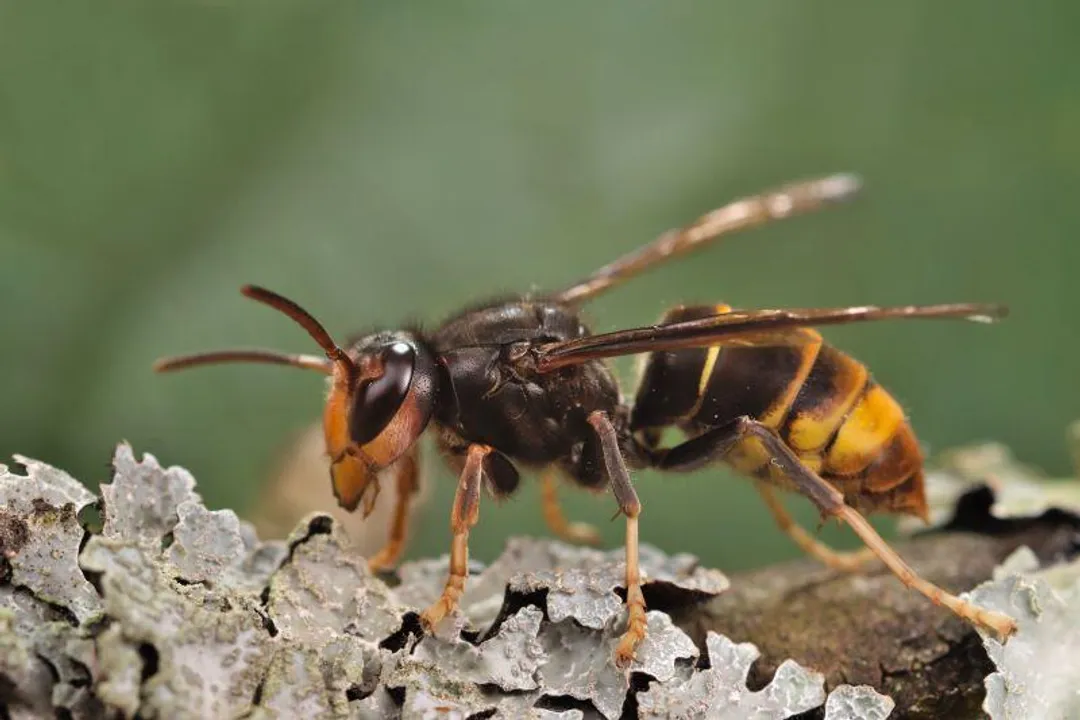
When comparing a yellowjacket to other flying insects, their size is a reliable initial identifier. Most common yellowjacket species measure somewhere between 3/8 and 5/8 of an inch in length. [5] Many are noted to be approximately half an inch long when fully mature. [4] While this size can overlap with some larger paper wasps or smaller hornets, the overall body shape is more telling than the measurement alone.
The classic wasp body plan is readily apparent in the yellowjacket. Its body is clearly divided into three segments: the head, the thorax (the middle section where wings and legs attach), and the abdomen. [6] What truly defines the yellowjacket's silhouette is the slender connection between the thorax and the abdomen—this segment is known as the petiole, often described as a dramatically narrowed "waist". [6] This extremely narrow constriction is a defining trait for Vespidae wasps, distinguishing them from the more robust or evenly tapered bodies of many beetles or even bumble bees.
If you are observing the insect in flight or resting, pay close attention to the texture. Yellowjackets are distinctly smooth and shiny. [9] This lack of fuzziness is a major differentiator from their fuzzy counterparts.
# Color Patterns
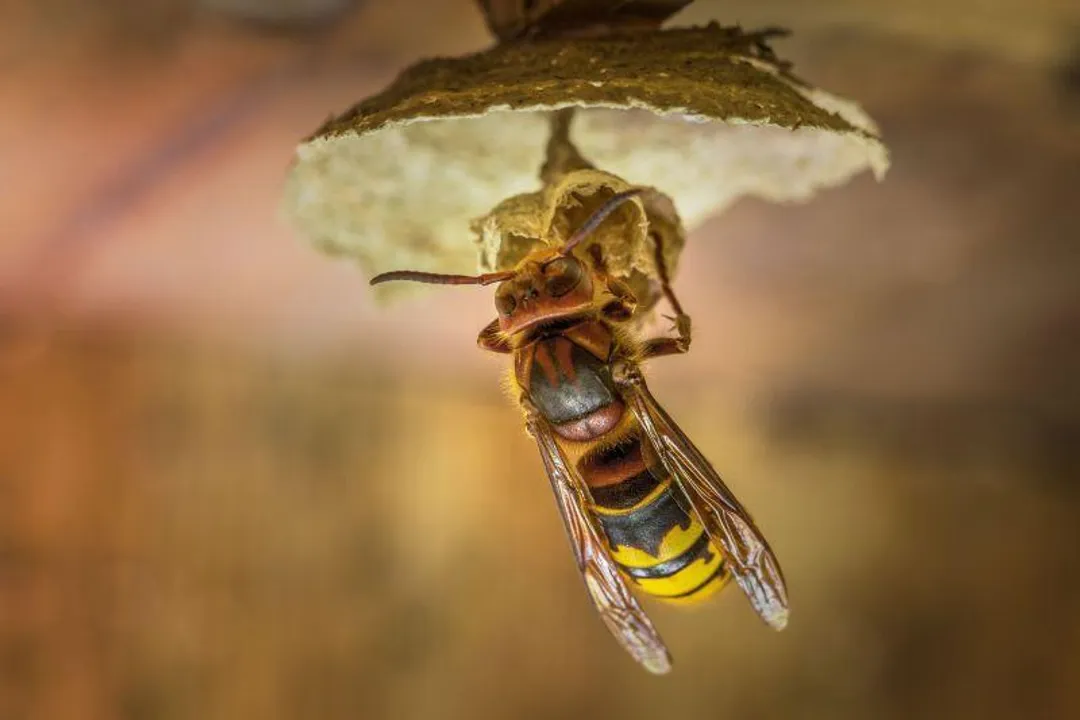
The namesake coloration—yellow and black—is the most recognized physical trait, yet it exhibits surprising variation across the different species within the genus Vespula and Dolichovespula. [1] While the typical image involves bright, vivid yellow bands or stripes set against a jet-black background, not all yellowjackets conform to this high-contrast image.
For instance, while the Eastern Yellowjacket (Vespula maculifrons) displays this classic bright pattern, other species like the Southern Yellowjacket (Vespula squamosa) can appear significantly darker. [1] In some darker specimens, the yellow areas may be reduced or replaced by paler shades, making the insect appear almost entirely black from a distance. [1] This variability means that relying solely on "bright yellow" can sometimes lead to misidentification if you encounter a darker morph or a closely related species. A useful internal check for identification is to note that where the yellow exists, it is usually arranged in distinct bands or stripes around the abdomen, unlike the blotchy or irregular markings sometimes found on other wasps. [4]
# Distinguishing Features
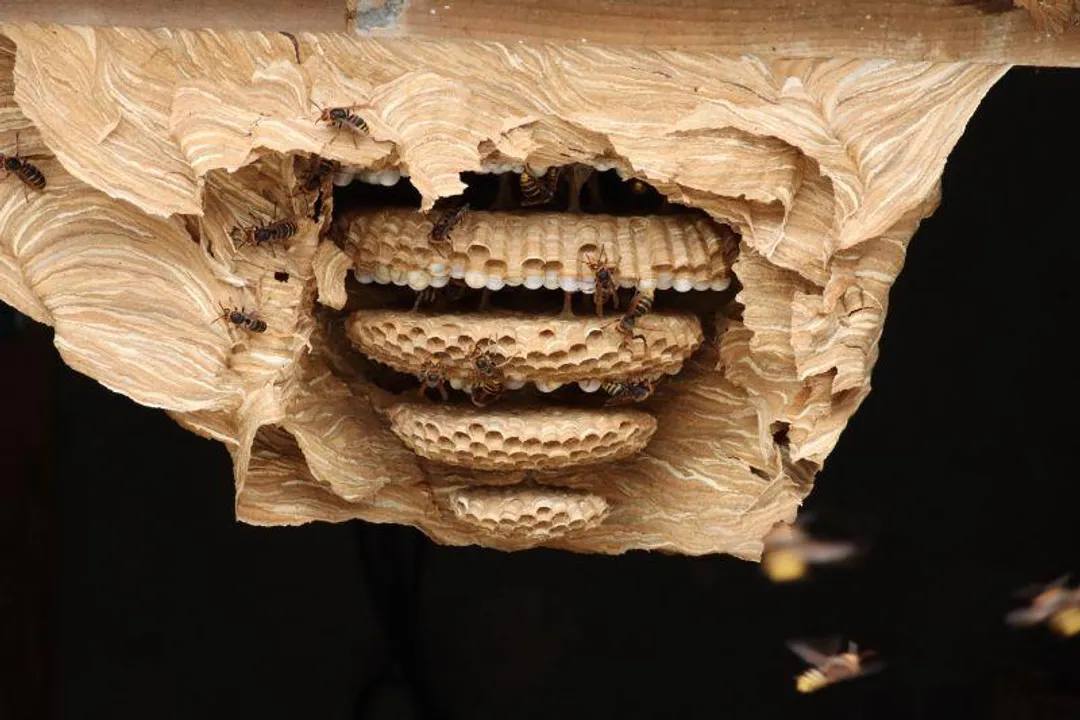
To truly differentiate a yellowjacket from a honey bee or a hornet, a closer look at specific body parts is necessary. The head, antennae, and legs are consistent across the genus, but it is the combination of hairlessness, waist structure, and mouthparts that clarifies its identity.
# Comparison with Bees
The contrast between a yellowjacket and a honey bee is perhaps the most common point of public confusion, largely because both are often seen foraging near human activity. The most significant difference lies in body hair. Honey bees, as pollinators, are covered in dense, branching hairs designed to collect pollen. [9] Yellowjackets, on the other hand, have a smooth, less hairy body. [9] While they might have some fine setae (bristles), they lack the thick, pollen-catching fuzz of a bee. [9] Furthermore, yellowjackets possess the characteristic thin wasp waist mentioned previously, whereas honey bees have a broader, less defined connection between their thorax and abdomen. [9]
# Comparison with Hornets
Distinguishing yellowjackets from hornets, such as the Bald-faced Hornet (which is technically a type of yellowjacket in the subfamily Vespinae but often discussed separately), also relies on scale and build. Generally, true hornets are larger than most yellowjackets. [7] More reliably, yellowjackets possess a significantly narrower waist than hornets. [7] While both are wasps and possess sharp stingers, the overall body mass and proportions lean differently. Hornets often appear bulkier relative to their length compared to the more streamlined yellowjacket. [7] If you see a large, pale-marked, very bulky wasp, it leans toward being a hornet; if it is mid-sized with a pronounced, nearly pinched waist, it is more likely a yellowjacket. [7]
A helpful field test for quick classification involves synthesizing these observations: if the insect is relatively small to medium-sized, highly shiny, has a clearly demarcated, narrow waist, and possesses only minimal body hair, you are almost certainly observing a member of the yellowjacket group [Analysis/Tip].
# Mouthparts and Defense
Yellowjackets are equipped with powerful mandibles, which are the strong, jaw-like mouthparts essential for chewing wood fiber to build their nests and for cutting food items for their larvae. [3] These mandibles are used for manipulation and defense, though they are not the primary defense mechanism.
That mechanism is, of course, the stinger. Like many other wasps, yellowjackets have a stinger located at the tip of the abdomen. Crucially, this stinger lacks barbs. [5][8] This morphological feature is vital because it permits the yellowjacket to sting repeatedly without losing the stinger, unlike a honey bee whose barbed stinger usually pulls free along with its venom sac, resulting in the bee's death. [5][8] This ability to deliver multiple defensive stings contributes significantly to the danger they pose when their colony is disturbed.
# Appendages and Sensory Organs
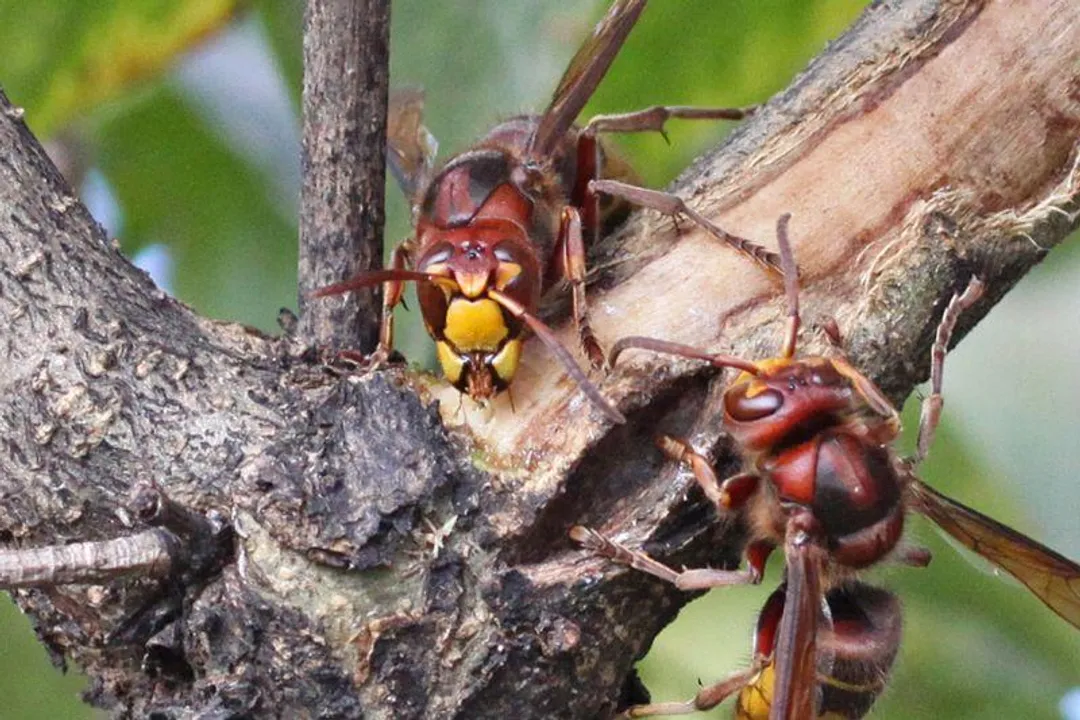
The antennae of yellowjackets are fairly typical for wasps—long, segmented structures used for touch, smell, and taste. [1]
Their legs are also smooth and adapted for perching rather than the specialized pollen-carrying structures found on bees. When the insect is moving quickly or hovering, the legs are often tucked back against the body.
When considering wings, yellowjackets possess two pairs of membranous wings that hook together during flight to function as a single unit, providing the rapid, agile maneuvering characteristic of wasps. [1] The coloring on the wings is generally a smoky or translucent brown, though this is not usually a primary identification marker unless distinguishing between extremely similar species.
# Body Consistency Insight
It is interesting to note how the physical characteristics relate to behavior. Because yellowjackets rely on scavenged sugars and proteins, their body structure is optimized for quick feeding and aggressive defense, rather than sustained, heavy-duty pollination like a bee. Their shiny, smooth exoskeleton reduces friction when maneuvering in tight spaces, such as inside a garbage can or under siding, which aligns with their scavenging and predatory nature [Inference/Analysis]. This smooth surface contrasts with the need for a hairy coat to maximize pollen collection, illustrating an evolutionary path driven by their carnivorous and opportunistic diet rather than strictly nectar feeding.
To consolidate the most critical physical markers for general field identification, an overview helps:
| Feature | Yellowjacket | Honey Bee | Hornet (General Comparison) |
|---|---|---|---|
| Body Hair | Smooth, sparse | Dense, fuzzy | Moderately hairy, less dense than bee |
| Waist | Very narrow, clearly defined | Broad, less defined | Wider/bulkier than yellowjacket |
| Body Finish | Shiny | Dull/Matte | Varies, often less intensely shiny |
| Stinger | Smooth, multi-sting capability | Barbed, single-sting | Smooth, multi-sting capability |
| Size Range | Small to medium (3/8" - 5/8") | Medium | Medium to large |
Understanding these tangible, physical differences—the lack of hair, the pinched waist, and the smooth exoskeleton—provides a much more reliable method for identification than simply relying on the general yellow-and-black coloring, which, as established, can vary significantly between species. [1]
Related Questions
#Citations
Yellowjacket - Wikipedia
Yellow Jacket Facts - NatureMapping Foundation
Yellow Jackets - Texas Apiary Inspection Service (TAIS)
Facts About Yellow Jackets | Ozane Termite & Pest Control
Yellowjackets in Virginia | VCE Publications
Social Wasps: Yellowjackets, Hornets, and Paper Wasps
Hornets vs Yellow Jackets Differences for Missouri Homeowners
Yellowjackets – Better Termite & Pest Control
What's the difference between yellowjackets and honeybees?