Yellowjacket (Yellow Jacket) Evolution
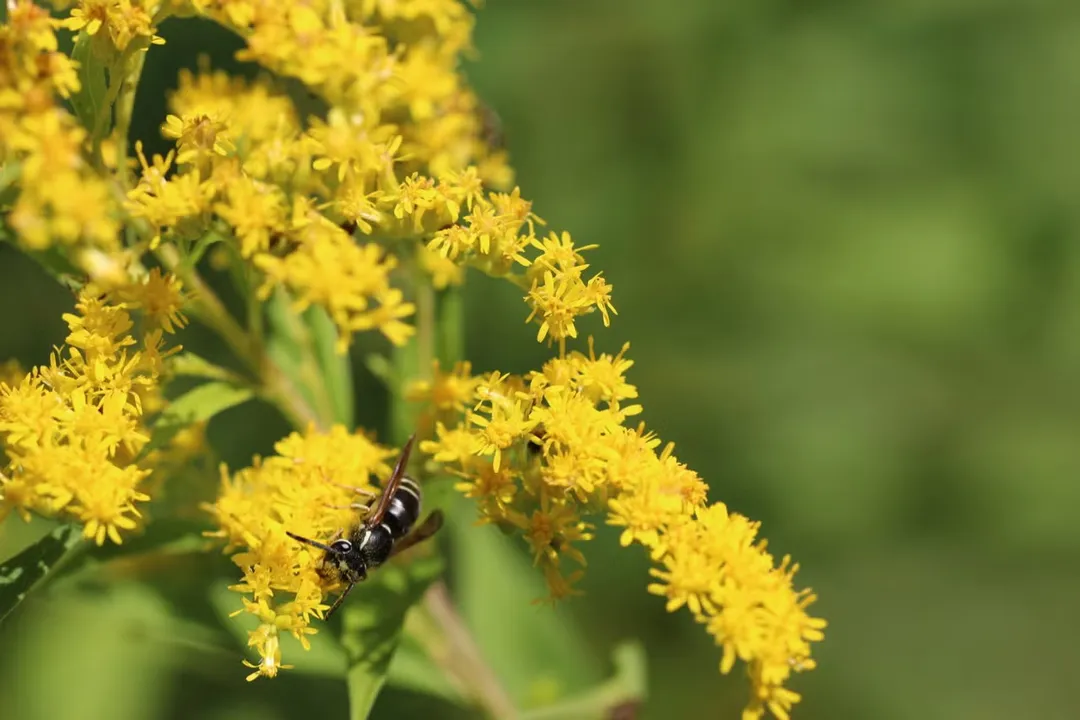
Yellowjackets, often grouped under the common name "yellow jacket" or recognized scientifically within the genera Vespula and Dolichovespula, represent a fascinating branch of the insect world, characterized by striking black and yellow aposematic coloration and notoriously aggressive defense mechanisms. These wasps belong to the order Hymenoptera, placing them alongside ants, bees, and sawflies. To understand the evolution of this group is to trace how an ancestral solitary wasp developed sophisticated, annual eusocial colonies, leading to their immense ecological success and, for many people, their unwanted presence at picnics.
# Taxonomic Placement
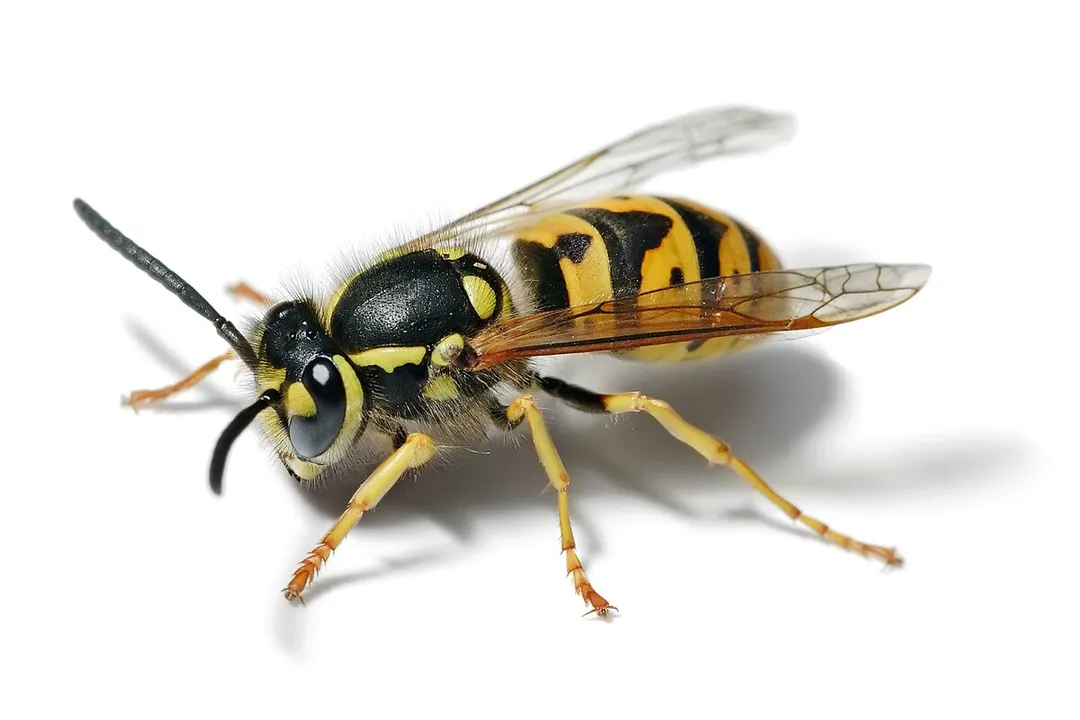
The yellowjackets are part of the family Vespidae, a large group that includes familiar insects like hornets and paper wasps. Within the Vespidae, yellowjackets are typically separated into two primary genera: Vespula and Dolichovespula. This division is significant because it reflects early evolutionary splits within the group, resulting in differences in size, nesting habits, and geographical distribution. For instance, most common yellowjackets in North America fall under the genus Vespula. Their classification is hierarchical, tracing their lineage back through subfamilies, which helps scientists map out the evolutionary tree that connects them to other wasps. The relationship between these genera and other related Vespids, such as the true hornets (Vespa), is a key area of study in understanding how different forms of sociality evolved within the broader wasp lineage.
# Social Systems
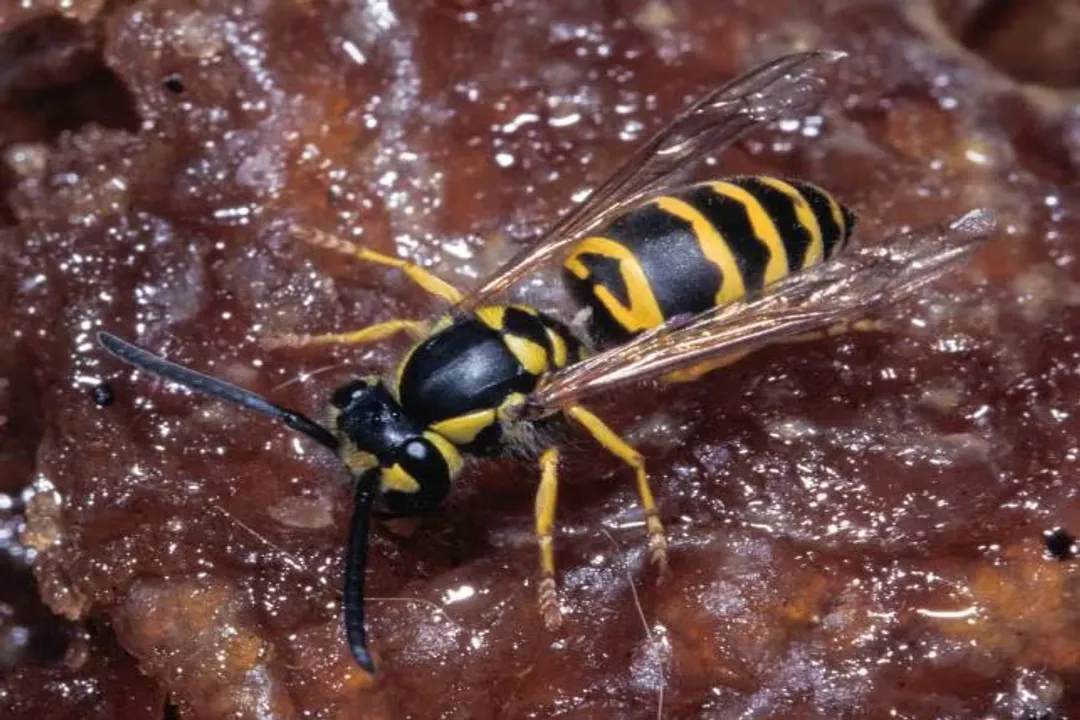
Perhaps the most compelling aspect of yellowjacket evolution relates to the development of their complex social organization, or eusociality. Unlike solitary wasps that reproduce independently, yellowjackets live in annual colonies headed by a single foundress queen. This system requires division of labor, communication, and cooperative brood care—traits that required significant evolutionary adaptation. The social structure dictates that only the fertilized queen and the new queens and males survive the winter, with the old queen and all the workers perishing before the first hard freeze. This annual cycle contrasts with the perennial colonies of bees or ants, representing a distinct evolutionary path for maintaining the species across seasons.
The workers, which are sterile females, perform all the foraging, nest maintenance, and defense duties. Their evolution has favored efficiency in resource gathering, leading to their famous scavenging behavior—a trait that brings them into frequent conflict with humans. The workers are highly protective of the colony, and their stings are memorable because they can sting repeatedly, lacking the barbed stinger found on honey bees. This repeated stinging ability is an evolutionary trait favoring defense of a high-investment structure (the colony) over individual survival, as workers do not need to survive long-term after defending the nest.
# Genome Study
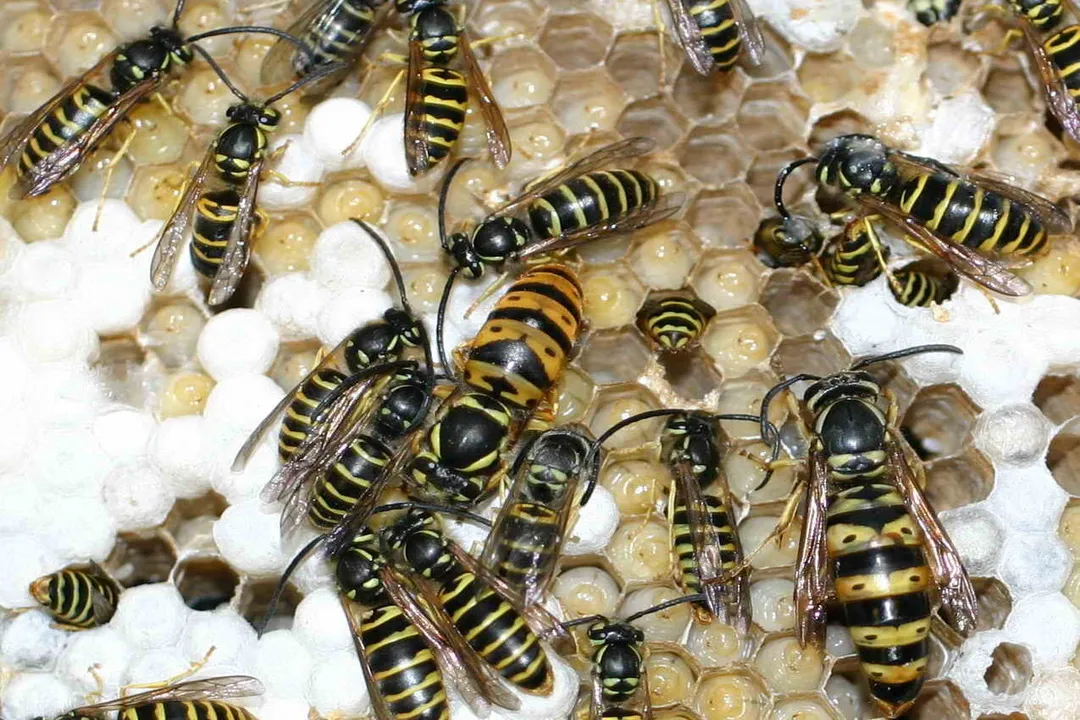
Recent scientific efforts are beginning to shed light on the genetic mechanisms underpinning these complex behaviors, providing direct insights into their evolutionary trajectory. Researchers have successfully sequenced the genome of certain yellowjacket species, such as the eastern yellowjacket (Vespula maculifrons). The data obtained from this genome sequencing effort is invaluable, as it allows biologists to examine the actual genetic architecture that supports their sociality, foraging plasticity, and aggression.
By comparing the yellowjacket genome to that of solitary wasps, scientists can pinpoint which genes have been duplicated, lost, or modified over evolutionary time to facilitate group living. This genetic mapping helps to move beyond mere observation of behavior to understanding the molecular "how" behind their evolutionary success. For instance, investigators are looking for differences in genes related to immunity, development, and brain function that might correlate with the shift from solitary to social life. Such comparative genomics provides a powerful tool for tracing the precise moments and pathways of evolutionary adaptation within the Vespidae family.
# Foraging Shifts
A key area where evolutionary adaptation is observable in yellowjackets is their diet and foraging strategy. While yellowjackets are predators, consuming other insects, they also become significant scavengers, especially later in the season. Early in the season, workers primarily hunt soft-bodied insects to feed the developing larvae protein-rich food. However, as the colony matures and the need shifts toward feeding the new queen and male reproductive forms, their diet leans heavily toward carbohydrates, such as fruit juices or sugary drinks.
This flexibility in resource acquisition is an evolutionary advantage. A species that can switch its primary food source based on colony needs—protein for brood production versus sugars for adult maintenance—is far more adaptable to changing local food availability than a specialist. This adaptability explains why certain species, like the common yellowjacket (Vespula squamosa) or the German yellowjacket (Vespula germanica), can establish themselves widely and thrive even in disturbed habitats. Considering the rapid proliferation of urban and suburban environments, the evolutionary trait favoring dietary generalization over specialization likely contributed significantly to the sustained population success of many yellowjacket species in human-altered landscapes.
The reliance on scavenging also highlights a difference in ecological role compared to their close relatives. While paper wasps (Polistes species) are also social and predatory, they tend to maintain a stronger focus on hunting live prey for their young. Yellowjackets' pronounced shift toward exploiting human food waste—whether it be fallen fruit or unattended barbecue scraps—represents a derived trait that sets them apart behaviorally and ecologically, allowing them to utilize a resource base unavailable to less opportunistic predators.
# Nest Construction
Yellowjackets are often called "paper wasps," but their nests differ significantly from the open-comb nests of Polistes wasps. Yellowjackets construct enclosed nests made from chewed wood pulp mixed with saliva, creating a paper-like material. The difference in nesting strategy is another marker of their evolutionary path. Vespula species often build their nests underground in abandoned rodent burrows, while Dolichovespula species prefer aerial nests, usually hidden in dense shrubs or eaves.
The enclosed structure offers superior thermal regulation and protection compared to the exposed combs of their relatives. Building a fully enclosed envelope around the comb, which can house thousands of individuals by late summer, is an energetically expensive process driven by the needs of the large colony. The evolution of the capacity to generate such large, well-protected structures is intrinsically linked to the evolution of a highly efficient worker caste capable of sustained foraging efforts.
To put this construction effort into perspective, consider the material science involved: a typical late-season nest can involve hundreds of thousands of tiny paper fibers held together by a complex proteinaceous saliva binder. The consistent architecture across different colonies of the same species suggests a deeply ingrained, evolutionarily stable set of behavioral instructions passed down through generations.
# Life Cycle Timing
The timing of the yellowjacket life cycle reveals another layer of evolutionary pressure related to climate and resource availability. The cycle is strictly annual in temperate zones. The entire colony's fate hinges on the success of the single queen in establishing the first brood before she is overwhelmed by the demands of maintenance and defense.
If we look at the contrast between species, we can infer evolutionary trade-offs. A species that emerges slightly earlier might exploit the first flush of spring insects but risks a late frost destroying the nascent colony. Conversely, a species that waits until conditions are warmer might find more competition for established nesting sites or fewer early resources.
This concept of phenological timing—the seasonal timing of life cycle events—is a critical area where evolutionary forces shape insect behavior. For example, one interesting observation is how the success of invasive species, like the European Hornet (Vespa crabro) in North America, might impact native yellowjacket populations by competing for prime, sheltered nesting cavities. The native yellowjackets, having evolved under different competitive pressures, must now adapt their timing or location selection to coexist with this larger, perennial competitor. If a native Vespula species is slower to initiate nesting than the invasive hornet, it could face an evolutionary disadvantage in securing ideal territory, potentially leading to local population declines if this competitive interaction becomes severe enough to limit reproductive success across generations.
# Original Ecological Adaptations
The sheer scale that some yellowjacket populations can reach in a single season, particularly in areas with abundant human refuse, demonstrates an evolutionary capacity for rapid population explosion that outpaces many other insect groups. The ability of worker wasps to switch focus from feeding larvae to collecting high-energy sugars for colony maintenance—an evolutionary shift towards scavenging—is remarkable. This is not just about finding food; it reflects an evolutionary payoff structure where maximizing adult survival (the queens and males preparing for mating flights) becomes more important than strict larval provisioning late in the year, especially if the colony has already produced many viable future queens.
Furthermore, the high level of genetic similarity between Vespula species, despite observable differences in nesting site preference (aerial versus subterranean), suggests that the evolution of social complexity itself—the foundation of their success—may have occurred before the major habitat specialization within the genus. In essence, the "software" for building a large, paper-wrapped colony may have been established first, and the "hardware" (where to place that colony) evolved later as a secondary adaptation to local environmental conditions and competitive landscapes. This implies that environmental pressures might act more strongly on nest location selection than on the fundamental blueprint of their social organization.
The sustained interest in their genome underscores that yellowjackets are not merely pests but powerful models for understanding how complex animal societies arise and adapt to rapidly changing environments, making their evolutionary study as relevant to ecology as it is to pest management.
# Species Variation
While the general life cycle is similar, variation exists across the genus, reflecting localized evolutionary pressures. The bald-faced hornet (Dolichovespula maculata), often mistaken for a true hornet but classified as a yellowjacket relative, builds large, distinctive, gray, football-shaped aerial nests. This contrasts with the subterranean nests of the common eastern yellowjacket. These differences in habitat preference are clear evidence of divergent evolutionary paths within the broader group, likely driven by varying selective pressures regarding predation on the nest or microclimate stability. The choice to build high above ground versus deep underground represents two different evolutionary strategies for mitigating environmental risk and avoiding ground-based predators.
| Genus/Species Example | Common Name | Typical Nest Location | Key Behavioral Note |
|---|---|---|---|
| Vespula spp. | Common Yellowjackets | Subterranean (old rodent burrows) | Highly attracted to human sweet/protein foods late season |
| Dolichovespula spp. | Bald-faced Hornet | Aerial (covered, football-shaped) | Builds large, enclosed paper envelopes high up |
This table illustrates how the taxonomic split corresponds to visible differences in life history, which scientists use as markers to trace evolutionary divergence within the Vespidae family. The ability of some species to thrive in close proximity to human activity, while others remain more secluded, speaks volumes about the adaptive power inherent in their evolved social and foraging strategies.
Related Questions
#Citations
15.7 Vespula pensylvanica: Yellowjacket Wasp - CK-12
Yellowjackets - University of Illinois - Extension Crop Science
Yellowjacket - Wikipedia
Yellowjacket (Yellow Jacket) Insect Facts - A-Z Animals
Yellowjackets (Vespula Wasps) - Missouri Department of Conservation
Genome Sequencing Could Unlock Answers to Yellow Jacket ...
The Nature of Yellowjackets
Yellowjacket Biology - Simon Fraser University
What's The Buzz With All The Yellow Jackets? - WPR
Yellow Jacket Wasp | Department of Entomology