Compared to Potamotrygon henlei, what is a noted difference in the back coloration of P. leopoldi?
Answer
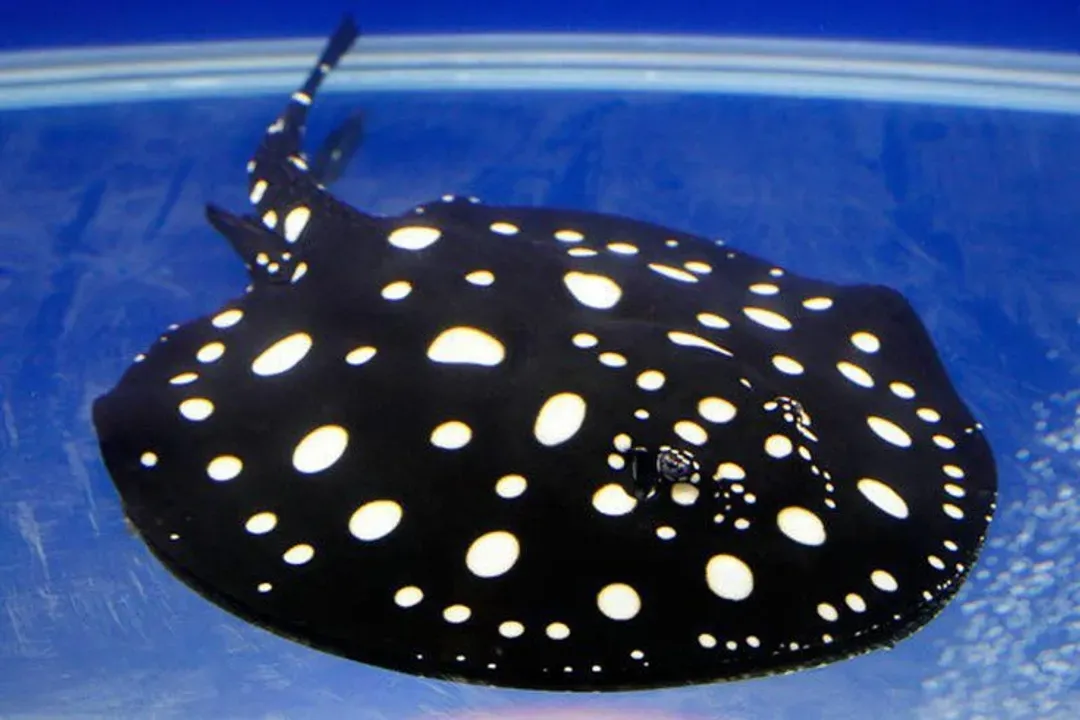
P. leopoldi presents a deeper black coloration on its back
Morphological distinctness exists between *P. leopoldi* and its relatives in neighboring river systems due to isolation. When directly comparing the Xingu River Ray with *Potamotrygon henlei*, which resides in the Tocantins River basin, a key difference noted is that *P. leopoldi* displays a visibly deeper black coloration across its back surface. This difference in dorsal base tone, alongside variations in spot size and number observed when compared to species like *P. albimaculata*, contributes to the overall morphological confirmation of *P. leopoldi*'s distinct species status shaped by its unique habitat.
Related Questions
To which family does Potamotrygon leopoldi belong, sharing traits like a cartilaginous skeleton?How is the pectoral disc shape of the Xingu River Ray generally described?Regarding size metrics of P. leopoldi, which sex consistently grows larger?What is the maximum recorded disc width cited for the Xingu River Ray?What is the characteristic background color of the P. leopoldi dorsum?How do the white spots on adult P. leopoldi often evolve compared to young individuals?In contrast to its complex dorsal display, what is the typical appearance of the ventral surface of P. leopoldi?How does the toxicity of the venom in P. leopoldi change as the ray ages?Approximately how often does the Xingu River Ray periodically shed its venomous sting?What specific term describes the maturation of the jaw structure in P. leopoldi allowing consumption of hard-shelled prey?What specialized sensory organs are the primary tool for P. leopoldi locating meals hidden in the sediment?Compared to Potamotrygon henlei, what is a noted difference in the back coloration of P. leopoldi?