Xingu River Ray Evolution
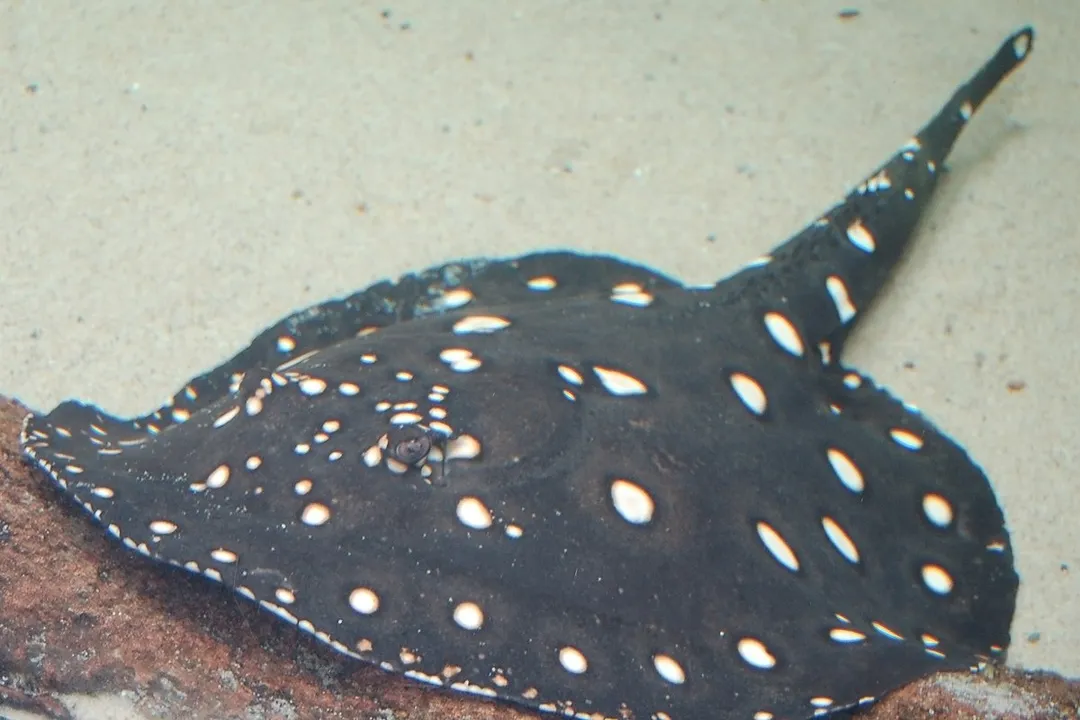
The Xingu River, a vast tributary of the Amazon, carves a path through the Brazilian Amazon, creating a unique aquatic world where specialized life forms have arisen. Among the most striking of these are the freshwater stingrays, particularly those endemic to its waters, whose very existence speaks to a long history of isolation and adaptation within this river system. These creatures represent a fascinating chapter in Neotropical ichthyology, showcasing how isolation within a major river basin can drive the evolution of distinct, specialized fauna unlike their marine or other riverine relatives.
# River Isolation
The Xingu River itself presents an environment that fosters unique evolutionary trajectories. It is a major waterway in the eastern Amazon basin, known for its distinct hydrological and ecological characteristics, setting it apart from neighboring river systems. The existence of species found only here—a concept known as endemism—is a direct result of this geographical separation over evolutionary timescales. When a population becomes geographically isolated, as many species within the Xingu basin are, the process of natural selection acts upon local environmental pressures without significant gene flow from outside populations. This leads to divergence and, eventually, the formation of new species perfectly tailored to their specific stretch of river. The fact that researchers continue to identify new species, or describe the life histories of existing ones like the Xingu ray, underscores the region's significance as an evolutionary cradle.
# Ray Species
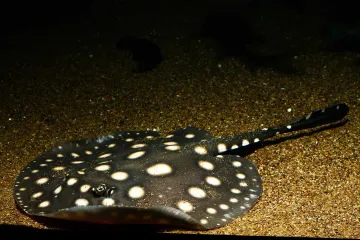
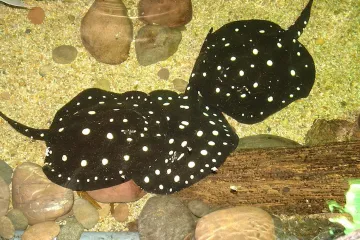
The jewel in the crown of the Xingu's freshwater rays is arguably Potamotrygon leopoldi, commonly known as the Xingu River Stingray. This species is instantly recognizable by its stunning appearance, featuring a pattern of black rings or spots on a lighter background, leading some to call it the leopard ray. Its adaptation to a purely freshwater existence in a turbulent river environment, rather than the ocean, is a significant evolutionary accomplishment shared by the entire Potamotrygon genus. The ray’s morphology—its shape, sensory capabilities, and life cycle—is fine-tuned for life in flowing river currents over substrate. The distinct coloration, for instance, serves as camouflage against the river bottom, a crucial adaptation whether the ray is resting or ambushing prey. One intriguing aspect derived from studying the distribution of ray populations within the river basin is the implication of micro-endemism; the specific black and white ring pattern found in the main stretch of the Xingu suggests that distinct morphological traits evolved even between populations separated by relatively short distances within the same river system, driven by localized habitat differences or subtle barriers to dispersal. This level of fine-scale adaptation suggests that evolutionary pressures within the Xingu are perhaps more varied than a simple broad categorization might suggest.
# Life History
Understanding how these rays live, grow, and reproduce provides clues about their evolutionary fitness and success. Research into the age and growth of P. leopoldi is essential for conservation efforts and provides insight into their life history strategy. Scientists have employed techniques like counting growth bands on vertebrae, often validated using fluorescent dyes injected into live specimens, to determine age accurately. A study on this species found that individuals could reach ages of at least 11 years, with growth slowing considerably after the first few years. This suggests a relatively long lifespan for a freshwater stingray of its size, which often correlates with a slower reproductive rate. Slower growth and maturity, common in many long-lived species, represent an evolutionary trade-off: fewer offspring produced over a lifetime, but those offspring that are produced may benefit from extended parental care (if any exists) or simply mature into physically more capable survivors. Furthermore, the ability of the species to survive in captivity, as evidenced by its presence in aquariums like the Biodome in Montreal, suggests a degree of physiological tolerance, though captive conditions rarely mirror the complex evolutionary pressures of the wild Xingu.
# Feeding Niche
The jaws and teeth of stingrays are remarkable structures adapted for crushing hard-shelled prey, a testament to evolutionary modification away from typical predatory fish morphology. Stingrays, including freshwater species, possess powerful oral structures that allow them to exploit food sources unavailable to most other bottom-dwelling fish. The Xingu River Ray feeds on invertebrates found on the riverbed, such as crustaceans and mollusks, often consuming food that is significantly harder than their own jaws. This specialization reduces direct competition with other predators that focus on softer-bodied prey, carving out a secure ecological niche that supports the population. If we consider the physical constraints, the evolutionary arms race between the ray and its shelled prey must be ongoing; the rays develop stronger crushing power, and the prey develops thicker shells, leading to the specialized, formidable jaw structure seen today. The energy efficiency of crushing hard items versus hunting elusive, fast-moving fish is a compelling evolutionary calculation favoring this durophagous (hard-food-eating) diet in the turbid, substrate-heavy environment of the Xingu.
# Conservation Context
The very uniqueness and endemism that make the Xingu ray an evolutionary marvel also place it at significant risk. Any change to the delicate balance of the Xingu River ecosystem can have disproportionate consequences for species that exist nowhere else. Research papers discussing the Xingu ray often highlight the need for ecological data to support conservation planning. For example, understanding the growth rates and population structure is vital for setting sustainable harvest limits or for predicting population declines following environmental disturbance. The introduction of large hydroelectric dams on the Xingu, for instance, fundamentally alters the river’s flow, sediment load, and temperature profiles—factors that have shaped the ray’s evolution for millennia. If the river's character changes rapidly, species adapted to the previous conditions may not have the evolutionary plasticity or time required to adapt to the new reality, leading to localized extinction. Observing expeditions that successfully locate these rare species underscores the effort required to even monitor the health of these specialized habitats.
To truly grasp the evolutionary story of P. leopoldi, one must look at the historical connection to its marine ancestors. While the sources confirm its freshwater existence and unique traits, a comparative study against marine relatives would likely reveal key genetic and morphological shifts that occurred as the ancestors colonized freshwater environments—changes in osmoregulation (salt/water balance) being a primary, though unstated here, evolutionary hurdle overcome by these freshwater pioneers. The successful establishment of the Potamotrygon genus in South American rivers is itself a major evolutionary event, and the Xingu population represents a later, highly specialized branch of that freshwater lineage.
Related Questions
#Citations
Exploring South America's Xingu River | TFH Magazine
Draft Genome of White-blotched River Stingray Provides Novel ...
Dots in the dark: dorsal polychromatism in the endemic Xingu ...
Age and growth of the endemic Xingu River stingray Potamotrygon ...
Analysis of the Entire Mitogenome of the Threatened Freshwater ...
Xingu River ray - Wikipedia
Xingu River stingray | Space for life
Big Fish Expeditions's post - Facebook
Stingrays Eat Food That Is Harder Than Their Own Jaws - Forbes