How are the teeth of *P. leopoldi* adapted regarding food processing?
Answer
Specifically adapted for crushing hard materials
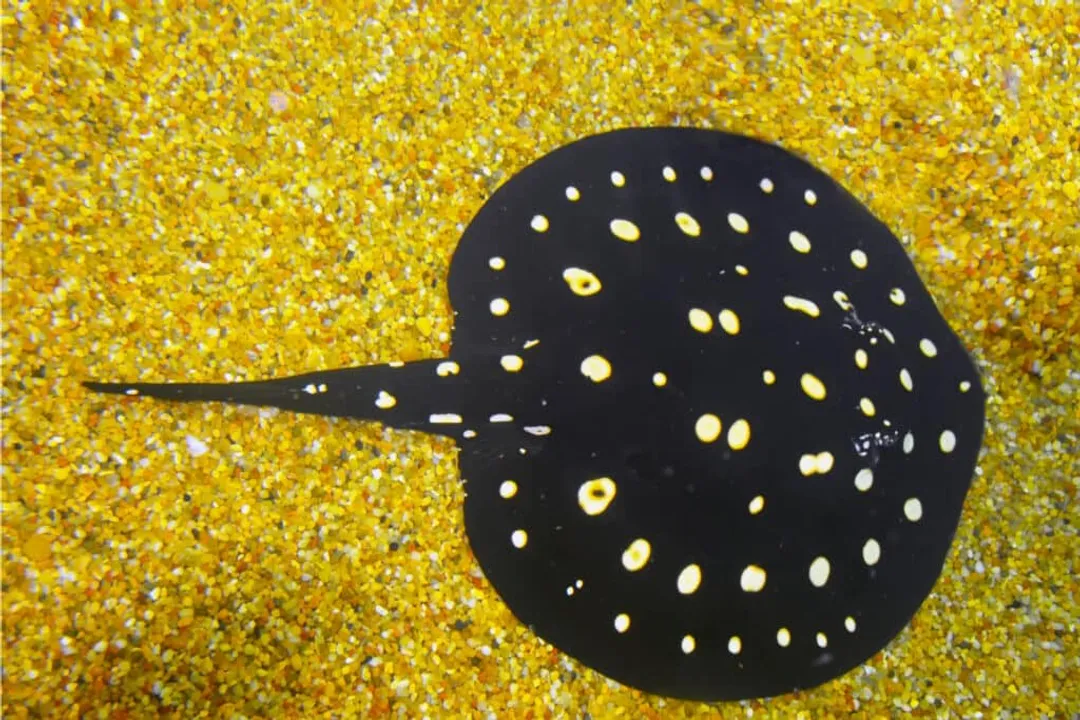
The dental structure of *Potamotrygon leopoldi* is uniquely evolved for the mechanical reduction of tough materials, contrasting sharply with species whose teeth function for cutting or tearing. This specialization enables the ray to effectively process prey protected by hard shells or exoskeletons, such as mollusks. The strength of these crushing plates is so pronounced that the ray can successfully process food items that are inherently harder than the material composing its own jaws, demonstrating extreme evolutionary specialization.
Related Questions
What is the scientific name for the Xingu River Ray?What primary prey category forms the bulk of the Xingu River Ray's sustenance?How are the teeth of *P. leopoldi* adapted regarding food processing?What type of environment dictates the food sources for the Xingu River Ray?What structural characteristic defines the bulk of the *P. leopoldi* diet?What feeding behavior is favored by the ray's reliance on substrate investigation?What risk arises from not providing high-calcium, hard-shelled prey in captivity?Besides mollusks, what other invertebrate groups are incorporated into the ray's diet?What does the formidable crushing structure suggest about the ray's evolutionary history?How does specialization likely affect the Xingu River Ray's ability to hunt certain prey?