What specific pattern defines the Xingu River Stingray, Potamotrygon leopoldi?
Answer
Black rings or spots on a lighter background
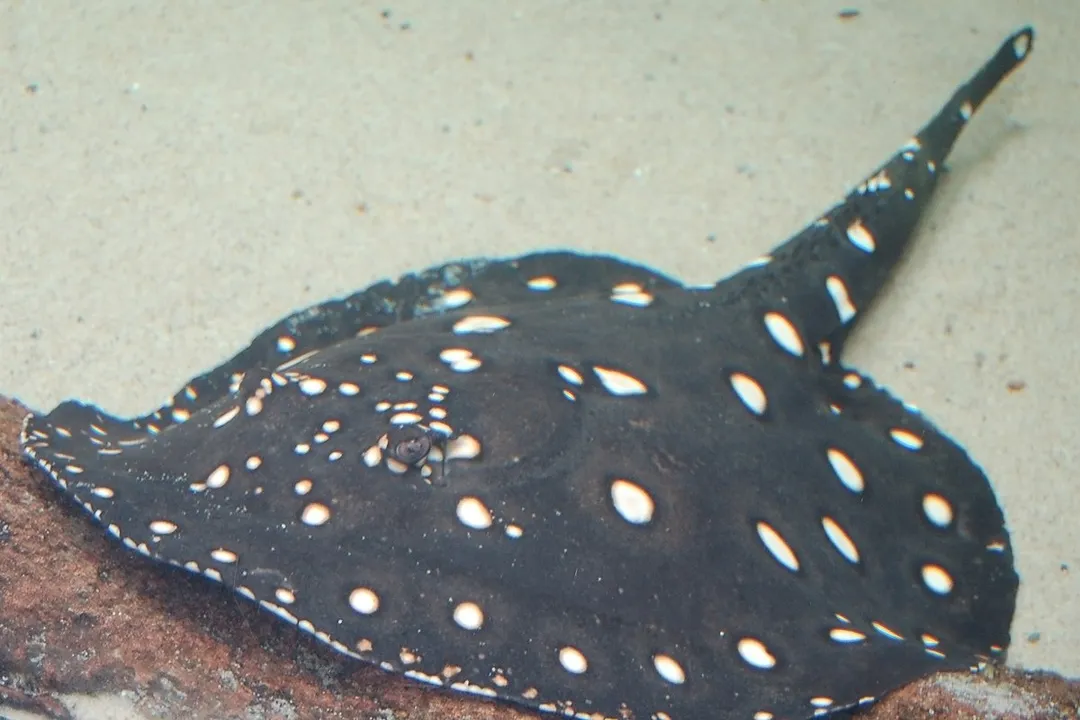
The Xingu River Stingray, scientifically designated as *Potamotrygon leopoldi*, is instantly recognizable due to its stunning visual appearance. This appearance features a specific pattern consisting of black rings or spots superimposed upon a lighter background color. This distinctive marking system is so notable that it has earned the species the colloquial name, the leopard ray. Functionally, this coloration is crucial as it serves as camouflage, allowing the ray to blend effectively against the river bottom substrates prevalent in its habitat, whether it is resting motionlessly or actively attempting to ambush unsuspecting prey within the flowing waters.
Related Questions
What specific pattern defines the Xingu River Stingray, Potamotrygon leopoldi?Which major river system is the Xingu River identified as a tributary of?What type of diet does the Xingu River Ray specialize in, concerning its prey?How did scientists determine the age of P. leopoldi individuals in research studies?What evolutionary concept is suggested by distinct morphological traits evolving between Xingu ray populations separated by short distances?What major infrastructural development poses a fundamental threat to the evolutionary conditions shaped in the Xingu River?The entire Potamotrygon genus shares which significant evolutionary accomplishment regarding habitat?Geographical separation over evolutionary timescales results in what ecological phenomenon within the Xingu basin?What is the evolutionary trade-off associated with the slower growth and maturity observed in long-lived P. leopoldi?What is the primary function of the distinct coloration in the Xingu Ray's morphology?