What type of diet does the Xingu River Ray specialize in, concerning its prey?
Answer
Durophagous (hard-food-eating)
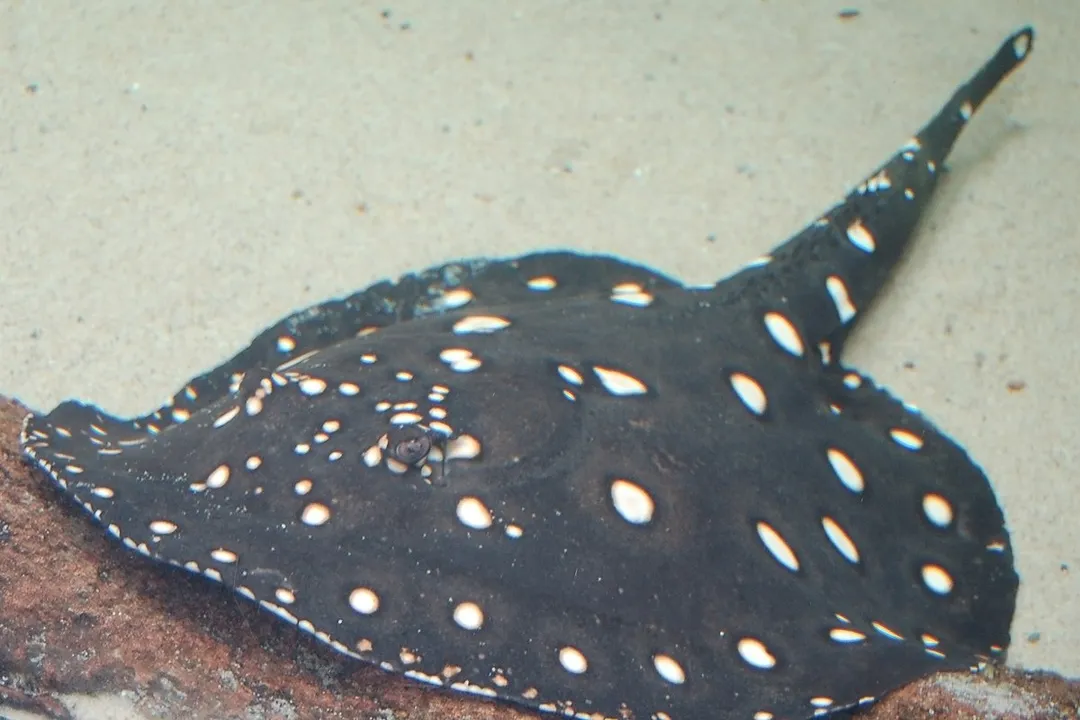
The feeding niche occupied by the Xingu River Ray is highly specialized, characterized by a durophagous diet, which translates to the consumption of hard-food items. This adaptation is clearly reflected in the remarkable morphology of their jaws and teeth, which are powerful structures engineered specifically for crushing hard-shelled invertebrates residing on the riverbed, such as mollusks and crustaceans. This specialization provides a competitive advantage by allowing the ray to exploit food resources that are generally unavailable to other bottom-dwelling fish that target softer prey, thereby carving out a secure ecological space within the river system.
Related Questions
What specific pattern defines the Xingu River Stingray, Potamotrygon leopoldi?Which major river system is the Xingu River identified as a tributary of?What type of diet does the Xingu River Ray specialize in, concerning its prey?How did scientists determine the age of P. leopoldi individuals in research studies?What evolutionary concept is suggested by distinct morphological traits evolving between Xingu ray populations separated by short distances?What major infrastructural development poses a fundamental threat to the evolutionary conditions shaped in the Xingu River?The entire Potamotrygon genus shares which significant evolutionary accomplishment regarding habitat?Geographical separation over evolutionary timescales results in what ecological phenomenon within the Xingu basin?What is the evolutionary trade-off associated with the slower growth and maturity observed in long-lived P. leopoldi?What is the primary function of the distinct coloration in the Xingu Ray's morphology?