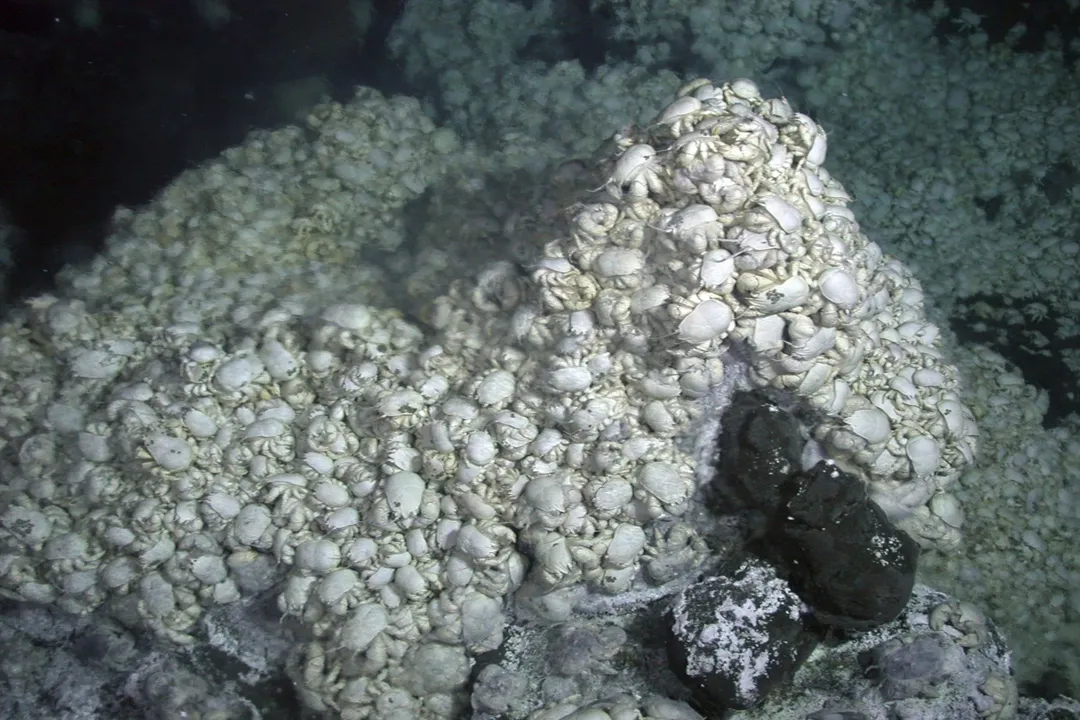
Why must the Yeti Crab remain close to active hydrothermal vents?
To access the flow of reduced chemical compounds for symbiotic bacteria
The Yeti Crab is described as an obligate resident of hydrothermal vent communities because its entire ecosystem and energy acquisition method depend directly on geological activity. Unlike surface life sustained by solar energy, the *Kiwa* genus relies on chemosynthesis, a process powered by geochemical output. To support the dense, chemosynthetic bacterial mats growing on its claws, the crab must remain in close proximity to the vents themselves. This proximity allows it access to the necessary continuous flow of reduced chemical compounds, such as hydrogen sulfide, which the bacteria metabolize. If the crab moves away from this specific chemical gradient, the energy source for its symbiotic partners is lost, making survival impossible, despite its physiological tolerance for high pressure and fluctuating temperatures in the mixing zones.