Compared to shallower-water relatives like porcelain crabs, how is the evolutionary rate in the Kiwa lineage often suggested?
Slower
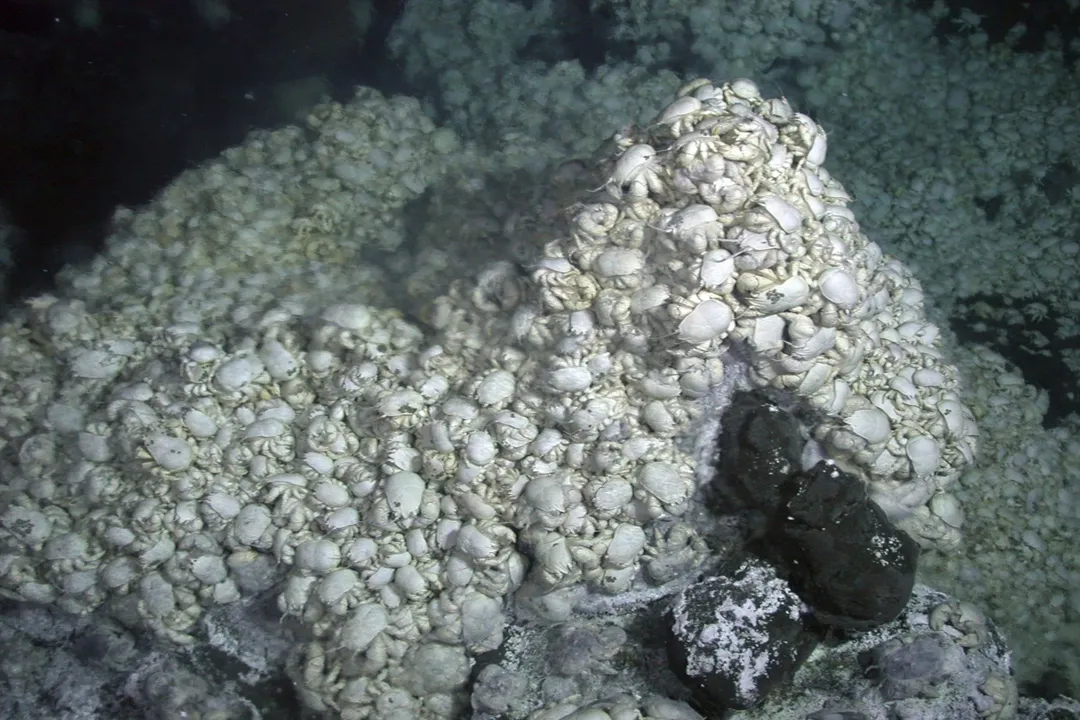
When comparing the genetic changes observed in the *Kiwa* lineage to those seen in shallower-water relatives, such as porcelain crabs which inhabit more dynamic coastal environments, a pattern regarding evolutionary pace emerges. Molecular data suggests that the evolutionary rate within the *Kiwa* lineage, particularly concerning the genes analyzed for divergence studies, might be relatively slower. This phenomenon is linked to the stability of the deep-sea chemosynthetic niche. Once an organism achieves perfect adaptation to a stable, extreme environment—like mastering bacterial farming at a consistent chemical source—the selective pressures driving rapid morphological change diminish. Unlike surface organisms facing constant shifts in temperature, light availability, and predation, the deep vent system offers temporal consistency. This stability allows refined, specialized morphologies, like the dense bacterial farms, to persist with minimal modification over extended geological timescales.