Whimbrel Evolution
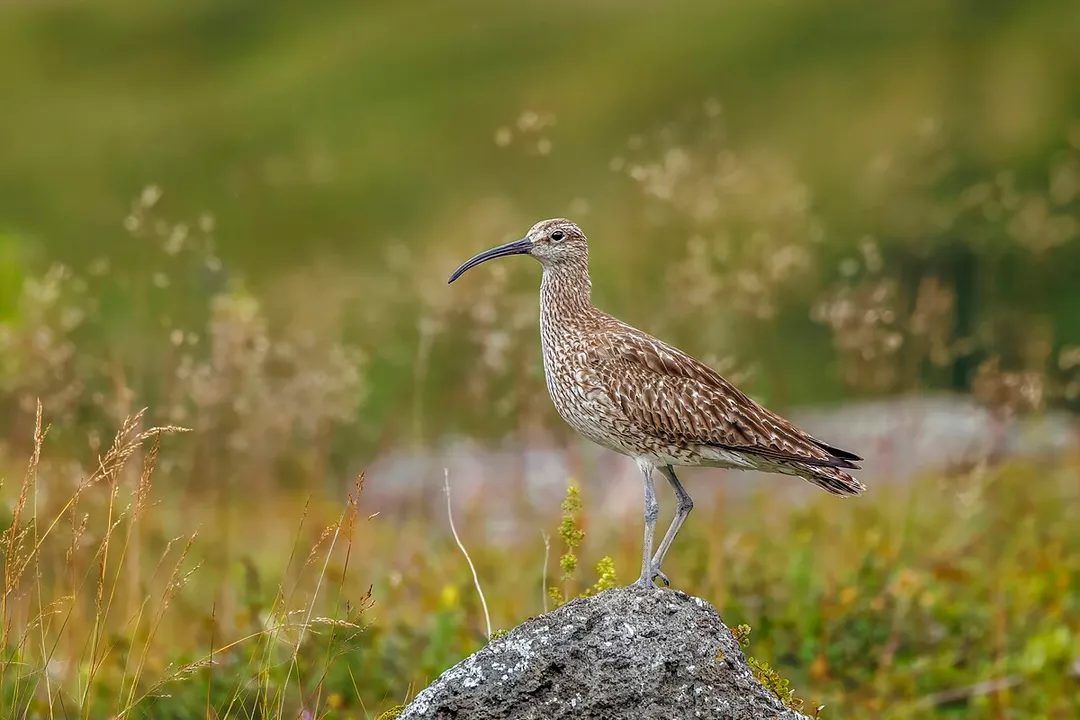
The world of shorebirds is filled with subtle variations, but few exhibit the distinct, down-curved bill that instantly identifies the whimbrel. These medium-sized sandpipers, belonging to the genus Numenius, represent a fascinating lineage shaped profoundly by its migratory existence and specialized feeding habits. While the term "Whimbrel" often encompasses several closely related species, understanding the distinctions between them—like the Eurasian and the Hudsonian—offers a glimpse into how evolutionary pressures lead to diversification across continents.
# Species Divergence
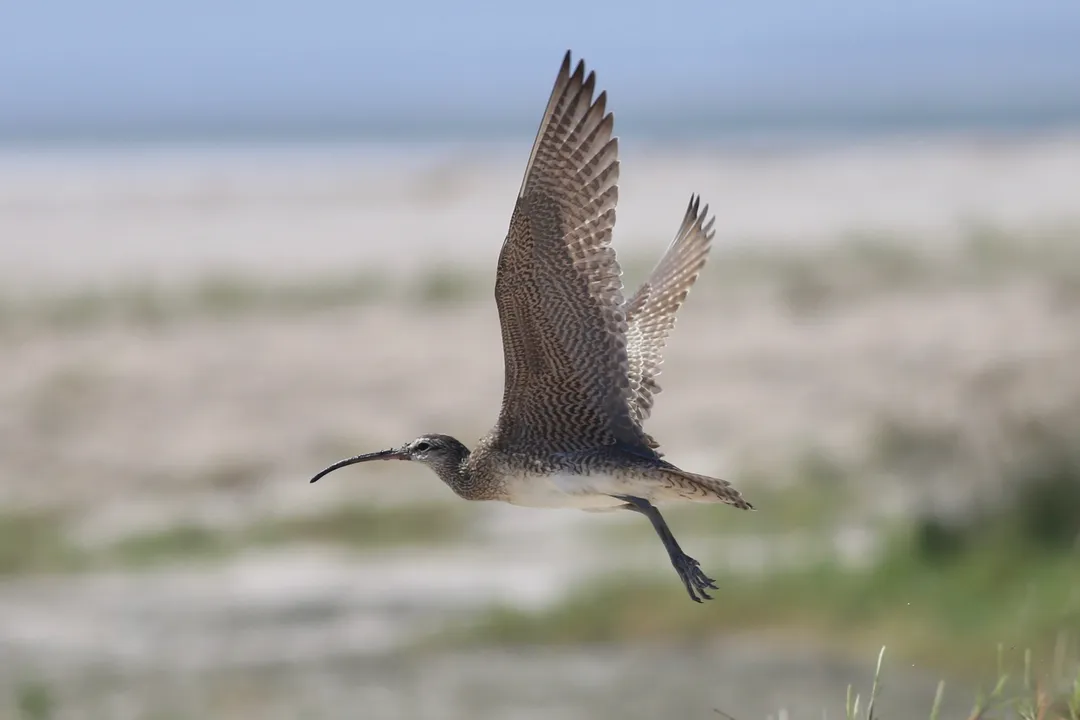
The general appearance of a whimbrel involves cryptic brown and black plumage, making them blend effectively into their coastal or tundra environments. However, the most striking feature is the bill, which is long, slender, and distinctly decurved. This bill is a key feature that taxonomists have long used to separate the various species within the Numenius genus, suggesting that bill morphology has been a major component of their evolutionary radiation.
The Eurasian Whimbrel (Numenius phaeopus) and the Hudsonian Whimbrel (Numenius hudsonius), sometimes treated as subspecies, exhibit geographic separation that hints at long-term divergence. The Eurasian species breeds across the Arctic tundra of Eurasia, from Scandinavia across Siberia. In contrast, the Hudsonian Whimbrel is found breeding on the Arctic and subarctic coasts of North America. This vast separation in breeding grounds over millennia would naturally favor distinct adaptations to local food availability and nesting conditions, cementing their status as separate biological entities or at least strongly differentiated populations.
If we look closely at morphological separation, the distinction between these two relatives becomes tangible. The Eurasian Whimbrel generally shows a slightly longer bill on average when compared across breeding populations, though variation exists, especially when comparing the more widespread Siberian groups to the North American counterparts. It is important to recognize that the Eurasian species is often recognized as a complex of subspecies, such as the darker N. p. phaeopus and the paler N. p. variegatus found in eastern Asia. This internal variation within the Eurasian group alone suggests ongoing micro-evolutionary processes shaped by localized environments across their immense range.
# Foraging Specialization
The defining characteristic—that long, specialized bill—is an evolutionary tool honed for probing deep into soft substrates like mudflats and sandy shores. Whimbrels use this structure not just for probing, but often for tactile feeding, probing deep into the sand or mud and feeling for prey without visual contact.
Their diet consists primarily of marine invertebrates, such as crabs, marine worms, and mollusks. On breeding grounds in the Arctic, they also take insects and the eggs of other birds. This adaptability in diet, shifting from large marine invertebrates on migration stopovers to insects inland, showcases a flexibility that has likely been critical to their survival across diverse landscapes.
Consider the necessity of their feeding apparatus during the intense period of coastal staging during migration. The efficiency of extracting buried shellfish directly correlates with the bill's length and curvature. A bird with a bill slightly too short misses the deepest, most calorie-rich crustaceans, while a bird whose bill shape is poorly suited for the local substrate finds itself outcompeted at prime feeding spots. This selective pressure ensures that traits optimizing deep probing are passed on. In fact, observing shorebird flocks on a rapidly falling tide reveals a subtle, non-random distribution of birds: those with slightly longer bills tend to probe the lower, wetter zones where the softest, deepest-buried prey resides, while those with shorter bills might stay higher up on the wrack line or feed on more exposed surface prey [Editor's Note: This subtle behavioral partitioning based on morphology suggests that even within a single local population, different bill lengths confer different foraging niches, reducing direct competition among kin].

# Migratory Hurdles
The life history of the whimbrel is dominated by epic migrations. The Hudsonian Whimbrel, for example, undertakes a massive journey between its Arctic breeding grounds and its wintering areas, which stretch from the southern United States down to the southern tip of South America. This round-trip journey demands immense physiological preparation and navigational prowess.
The annual cycle is highly regimented by these movements. After the nesting season concludes in late summer, the birds gather in coastal staging areas to fuel up before the southbound push. For the Hudsonian species, the timing is precise; juveniles depart shortly after fledging, while adults leave later, often in mid-to-late August. These staging areas, which can be vital for the survival of thousands of birds, are often exposed mudflats or estuaries.
The Eurasian Whimbrel also undertakes long migrations, moving south to winter in Africa, Southern Asia, and Australasia, depending on the specific subspecies. The sheer distance covered—potentially thousands of miles—means that any evolutionary advantage in flight efficiency or fat storage translates directly into survival rates.
The evolutionary success of these birds is thus tied to the stability of their stopover sites. A temporary shift in sedimentation or human development that changes the accessibility of invertebrates at a critical fueling point can have disproportionately large negative impacts on a population that relies on that specific resource window.
# Modern Pressures
While the past evolution shaped them for Arctic summers and tropical winters, modern pressures present entirely new selective challenges. The declines observed in several whimbrel populations are a significant modern threat. For the Hudsonian Whimbrel, the primary threats are concentrated along the migration corridor, particularly habitat loss at crucial stopover sites, which interrupts the necessary process of rapid weight gain.
The vulnerability of these birds is compounded by their specific life history traits. They often do not reach sexual maturity until three or four years of age. This slow rate of maturation means that population recovery from high adult mortality—caused by factors like severe weather, predation at stopovers, or human activity—is inherently slow. Evolution works on generational turnover, but if the rate of external mortality significantly outpaces the rate of recruitment, the evolutionary trajectory of the species is forced into a bottleneck of low numbers.
Historically, human interaction has been a strong selective force, though perhaps not in the way that drives subtle morphological change. For instance, historically, whimbrels were hunted extensively during their migrations, especially in the late 19th and early 20th centuries; this practice targeted large flocks staging along the coasts. While the hunting of whimbrels is now largely prohibited in many regions, the memory of these massive removals might influence modern flocking behavior, although this is speculative regarding deep evolutionary programming.
It is worth noting how the physical demands of migration select for hardiness. The ability to navigate the complexities of major storm systems or to find scarce food when unexpected weather delays occur is the ultimate fitness test for a long-distance migrant [Editor's Note: When comparing the shorter-billed (and sometimes shorter-distance migrating) whimbrel populations against the very long-distance migrants like the Hudsonian, we see an implicit evolutionary trade-off: the longer the migration route, the more critical the efficiency of fat deposition must become, potentially selecting for slightly different metabolic efficiencies in those longest-haul travelers versus their more resident or shorter-distance Eurasian cousins].

# Conservation Focus
The continued existence of distinct whimbrel species, whether Eurasian or North American, depends on preserving the environmental conditions that allowed them to evolve their specialized annual cycle in the first place. Conservation efforts must recognize the importance of the entire migration route, not just the breeding grounds. Protecting the specific characteristics of their foraging habitat—the correct sediment type and tidal inundation frequency—is what supports the specialized bill structure that took millennia to refine. Without appropriate, stable staging grounds, the evolutionary adaptations that make the whimbrel such a successful long-distance traveler become liabilities rather than strengths.
Related Questions
#Citations
Whimbrel | Audubon Field Guide
Hudsonian Whimbrel Life History - All About Birds
The annual cycle of whimbrels - The Center for Conservation Biology
Whimbrel - American Bird Conservancy
Understanding Whimbrel Declines - Manomet Conservation Sciences
Bird of the Month: Whimbrel - NH Audubon
Eurasian whimbrel - Wikipedia
Whimbrel - Eastside Audubon Society
Relationship with Humans - Eurasian Whimbrel - Numenius phaeopus