Are crab-eating macaques endangered?
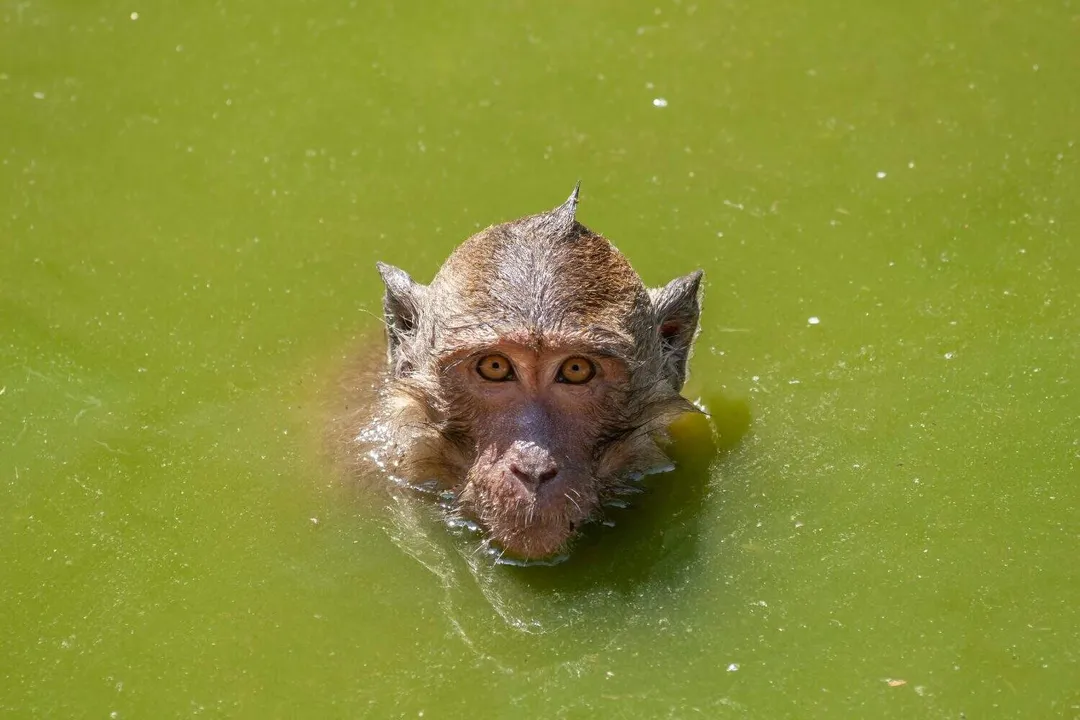
The status of the crab-eating macaque—also widely known as the long-tailed macaque—is a subject that often causes confusion among observers and conservationists alike. While these primates are frequently encountered across Southeast Asia, sometimes thriving near human settlements and even tourist areas, official assessments place them in a precarious position on the global conservation scale. The immediate answer to whether they are endangered is yes, according to the International Union for Conservation of Nature (IUCN) Red List, which currently classifies Macaca fascicularis as Endangered. This classification contrasts sharply with the common perception of a highly adaptable and numerous monkey, revealing a complex reality driven by global pressures.
# Species Names
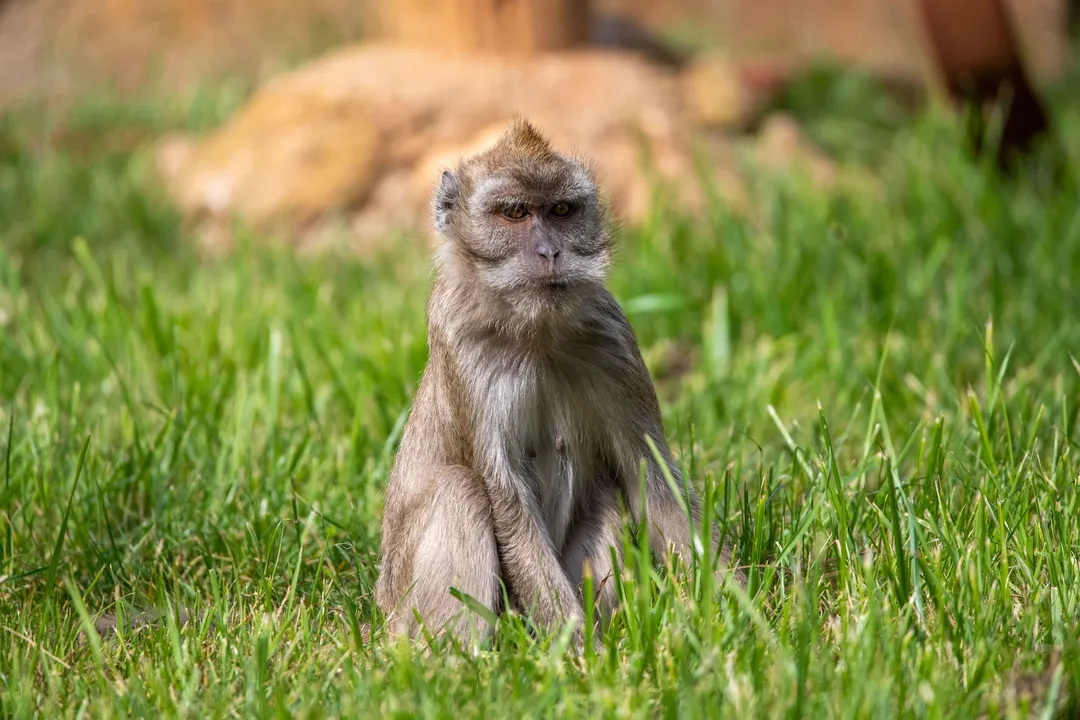
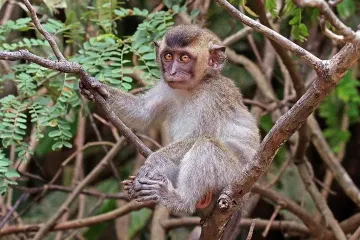
The frequent use of multiple common names can sometimes obscure the urgency of their situation. These primates are referred to variously as the crab-eating macaque, the long-tailed macaque, or the long-tailed crab-eating macaque. Their physical characteristics are distinct: they possess brownish-grey to reddish-brown fur, and their tails are characteristically long, often exceeding the length of their bodies. This extended tail aids them greatly in balance, especially given their arboreal tendencies and their surprising comfort in aquatic environments. Understanding that these various names generally point to the same species listed as Endangered is the first step in appreciating the conservation challenge they face.
# Aquatic Prowess
One of the most fascinating aspects of this species is their adaptability, particularly their comfort in water. Despite being primarily tree-dwellers, they are known to swim quite effectively, sometimes traveling considerable distances across water bodies. This skill plays a role in their foraging habits, as they are often found near coastal areas, mangrove swamps, and riverine forests. Their name, crab-eating macaque, hints at a significant part of their diet, which is notably broad. They consume a varied menu that includes fruits, seeds, insects, and small vertebrates, alongside their namesake crustaceans. Furthermore, they exhibit basic tool use, such as employing stones to break open shellfish or crabs—a behavior indicating advanced cognitive flexibility in their foraging strategies.
# Social Structure
Like many primates, crab-eating macaques live in complex social groups. These groups typically maintain a strict social hierarchy led by an alpha male. This structured society is essential for group defense, cooperation in finding food, and raising young. The social dynamics, combined with their adaptability to various environments—from deep forest to areas directly adjacent to human habitation—have historically allowed them to maintain large local populations. In many regions, such as Thailand, they are a common sight around temples or human settlements where food sources might be readily available, leading to the perception that they are abundant.
# Lab Demand
The primary driver behind the official Endangered listing is not localized habitat loss alone, but rather intense, unsustainable harvesting pressure stemming from global markets. The very traits that make them adaptable—their intelligence, similar physiology to humans, and ease of breeding in captivity—also make them highly sought after for biomedical research. The sheer volume of macaques required for laboratory use across various countries places an enormous strain on wild populations. This commercial capture and trade are significant factors contributing to population declines across their range. It is crucial to recognize that the animals seen freely interacting with tourists or scavenging near villages represent only one aspect of the species; a massive, often hidden, demand for capture exists elsewhere.
# Population View
The data supporting the Endangered listing paints a picture of widespread, sharp declines, yet the reality on the ground can appear inconsistent. The Science report highlights this dissonance: while some populations are undoubtedly collapsing due to heavy trapping for research, other localized groups living far from capture zones might remain stable or even increase due to their opportunistic nature near human-altered landscapes. This unevenness complicates conservation management. A region reporting a healthy population might feel secure, while just a few hundred miles away, specialized capture operations could be rapidly decimating another sub-population. When an entire species is listed as Endangered, it signifies that enough populations are experiencing severe threats that the species' long-term survival across its entire historical range is in jeopardy, even if local pockets appear secure for now.
# Threats Across Range
Threats to the crab-eating macaque are multifaceted, extending beyond the scientific community's demands. Beyond their use as laboratory subjects, they face dangers from habitat loss due to encroachment and development. In some areas, they are hunted, either as a source of food or because they are perceived as pests raiding agricultural areas or trash bins near towns. The pet trade also consumes a portion of the young individuals captured. This combination of high-volume commercial extraction, slow recovery rates in the wild compared to capture rates, and gradual habitat degradation pushes the species toward the brink.
# Protection Needs
Addressing the conservation challenge requires looking closely at where the pressure points lie. While protecting large tracts of forest is always beneficial, the most immediate, quantifiable impact on the Endangered status relates to regulating the supply chain feeding research and trade. For those interested in the welfare of these animals, understanding where their demand originates is key. Supporting organizations that advocate for the replacement of primates in research or that work to stop illegal capture operations addresses the most acute threat recognized by the IUCN. Locally, respecting their space and not feeding them in areas where they are considered pests can reduce human-wildlife conflict, thereby lowering the justification for retaliatory killing or removal. The difference between an animal thriving in a protected national park and one being captured for export emphasizes that conservation success for this species demands both large-scale policy shifts regarding research sourcing and responsible local coexistence. It is a species caught between its ecological hardiness and its exploitation by human industry.
# Field Data Comparison
To better visualize the localized pressures, one can consider two hypothetical scenarios based on observed threats. Imagine a macaque group living in the protected interior of Khao Sok National Park in Thailand, where their primary threats are habitat integrity and natural predation. Contrast this with a group living near a rapidly expanding coastal town in Vietnam or Indonesia, where they might face constant pressure from trappers seeking animals for laboratories, alongside regular exposure to discarded human waste, which alters their natural diet and behavior.
| Factor | Interior Forest Population (Hypothetical) | Coastal/Urban-Edge Population (Observed Threat) |
|---|---|---|
| Primary Threat | Habitat fragmentation, natural resource competition | Commercial capture, direct human conflict |
| Diet Source | Natural foraging (crabs, fruits, insects) | Anthropogenic food sources, supplemented by natural prey |
| Conservation Focus | Land protection, anti-poaching patrols | Trade regulation, human-wildlife conflict mitigation |
| Perceived Status | Stable or slow decline | Rapid, severe decline due to trapping |
This comparison illustrates why a single, uniform assessment is difficult but why the IUCN defaults to the most severe observable trend across the species' range: the overall, unsustainable removal from the wild. The persistence of visible populations in some areas should not lull the public or policymakers into complacency regarding the species' Endangered listing. Their continued presence in urban fringes often signifies a compromised, high-stress existence, far removed from the natural balance required for long-term population health.
Related Questions
#Citations
Crab-eating macaque - Wikipedia
Long-Tailed Macaque, Macaca fascicularis
5 facts about long-tailed macaques - World Animal Protection Canada
Crab-eating macaque - Safari Mallorca
Nicobar long-tailed macaques are critically endangered - Facebook
Meet the Crab-Eating Macaque, an Ocean-Swimming Monkey
Is the world's most popular lab monkey vanishing—or flourishing?
Crab-eating macaque (Macaca fascicularis) - Thai National Parks
[PDF] Macaca fascicularis, Long-tailed Macaque - IUCN Red List