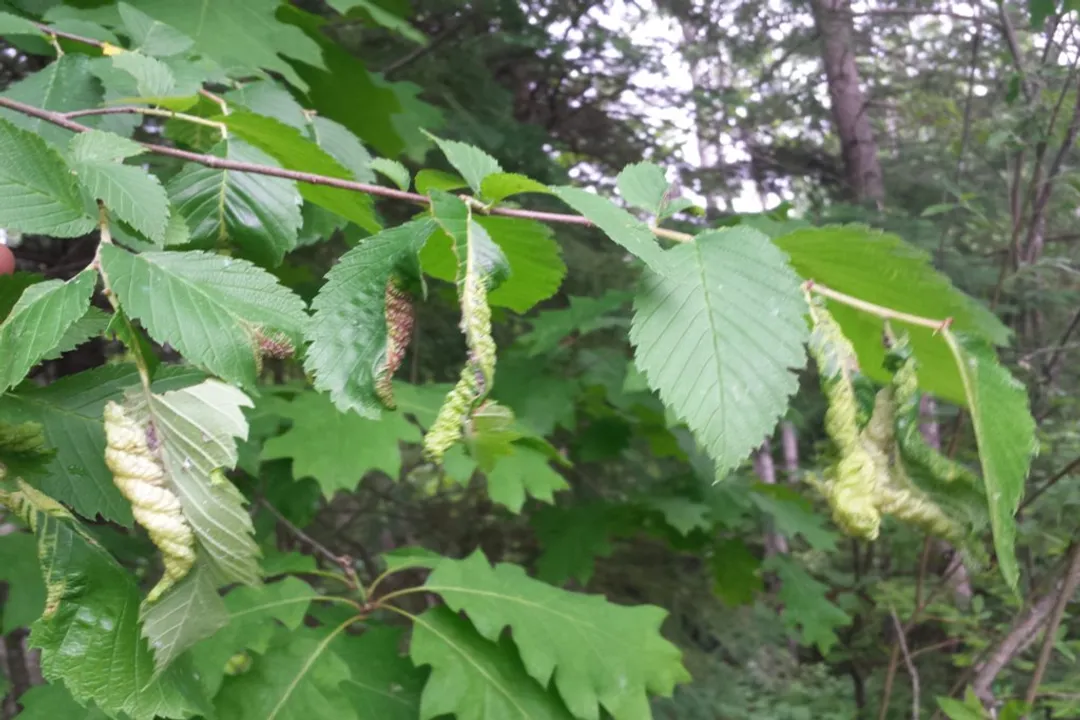
Why does the continuous, protected feeding on elm roots likely represent a greater physiological impact than the temporary elm leaf galls?
The root drain is continuous throughout the growing season and winter, affecting the entire root system's vitality.
While the leaf galls on the elm tree are visually alarming and result from concentrated sap extraction, they affect only a relatively small and temporary portion of the tree's total leaf area. In contrast, the migration of the elm aphid results in colonies established on the roots that feed on phloem sap year-round. This subterranean feeding provides protection from harsh weather and predators, leading to a sustained and pervasive drain on the entire root system's vitality, which likely results in a greater overall cumulative physiological stress on the elm tree over a full year compared to the ephemeral damage seen on the leaves.