What is the characteristic clear, sticky, sugar-rich liquid excreted as a metabolic byproduct of aphid feeding?
Answer
Honeydew
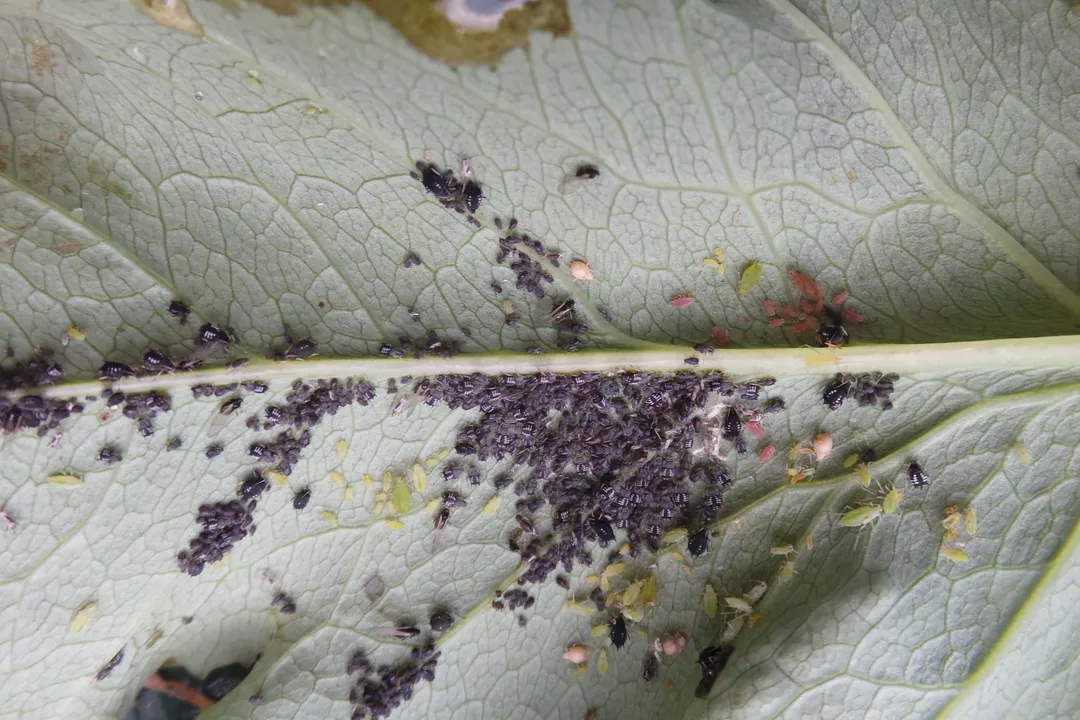
Honeydew is the metabolic byproduct resulting from the yellow aphid's diet. Because the phloem sap is high in necessary sugars but comparatively low in essential building blocks like amino acids, aphids must ingest far more fluid than they actually require for growth. They process this excess sugar and water and excrete it as a clear, sticky substance known as honeydew. This excretion coats the leaves and stems below where the aphids are clustered.
Related Questions
What is the primary sustenance consumed by yellow aphids that fuels their rapid reproductive cycle?What specialized, needle-like structures do yellow aphids utilize to pierce plant tissues and access sap?What is the characteristic clear, sticky, sugar-rich liquid excreted as a metabolic byproduct of aphid feeding?What secondary fungal growth commonly develops on the surfaces coated by aphid honeydew?How does the proliferation of sooty mold negatively impact the plant's energy production?Besides roses and flowering annuals, which vegetable family is listed as a common target for yellow aphids?Which highly specialized agricultural concern involves yellow aphids targeting a specific type of tree?What reproductive method, requiring no mate, is mentioned as fueling the potentially exponential increase in aphid populations?What visual cue signals that the critical window for intervention against yellow aphids is closing?Why is applying a sharp spray of water an effective, low-impact control method against yellow aphids?