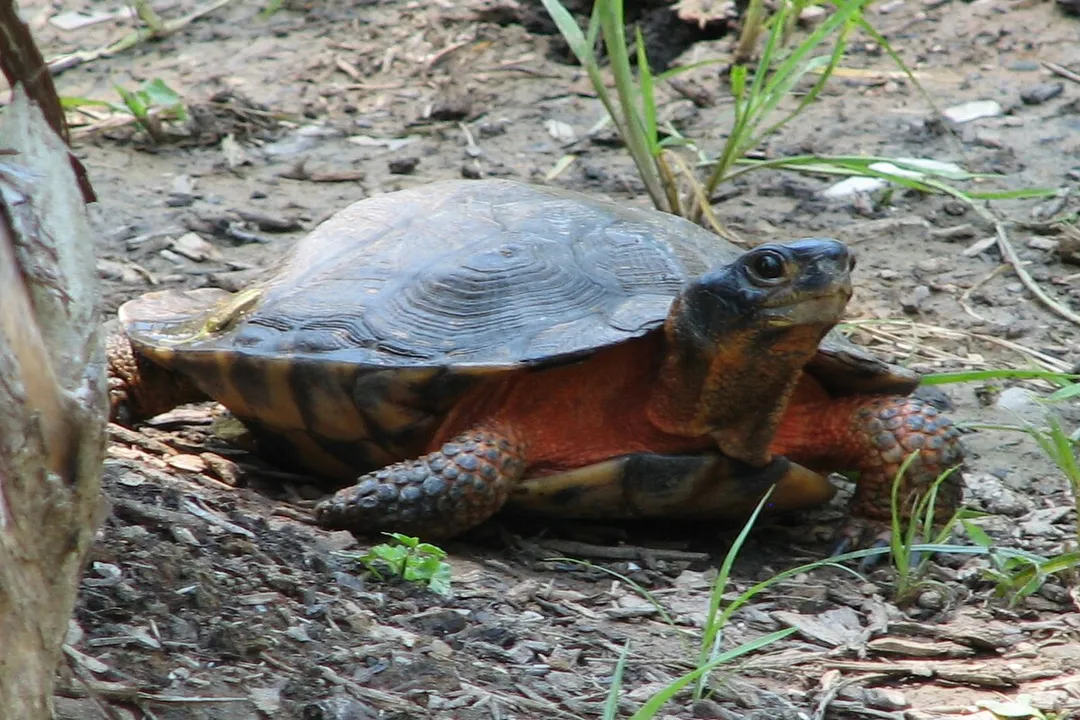
Why do population declines impact *G. insculpta* so severely despite a relatively wide historical range stretching to Wisconsin and New Brunswick?
Long generation time and late maturity severely slow population recovery from adult losses.
The evolutionary traits that favored survival in stable environments—specifically the long lifespan and late sexual maturity (12 to 20 years)—become the primary drivers of severe population decline when mortality rates increase due to modern threats like road mortality or habitat loss. If a population loses a substantial number of adults, it takes decades for new individuals to reach reproductive age and contribute to recovery, assuming the necessary high-quality riparian habitat remains intact for that entire duration. This inherent biological characteristic means population setbacks are not quickly overcome, magnifying the impact of contemporary stressors.