Wood Turtle Facts
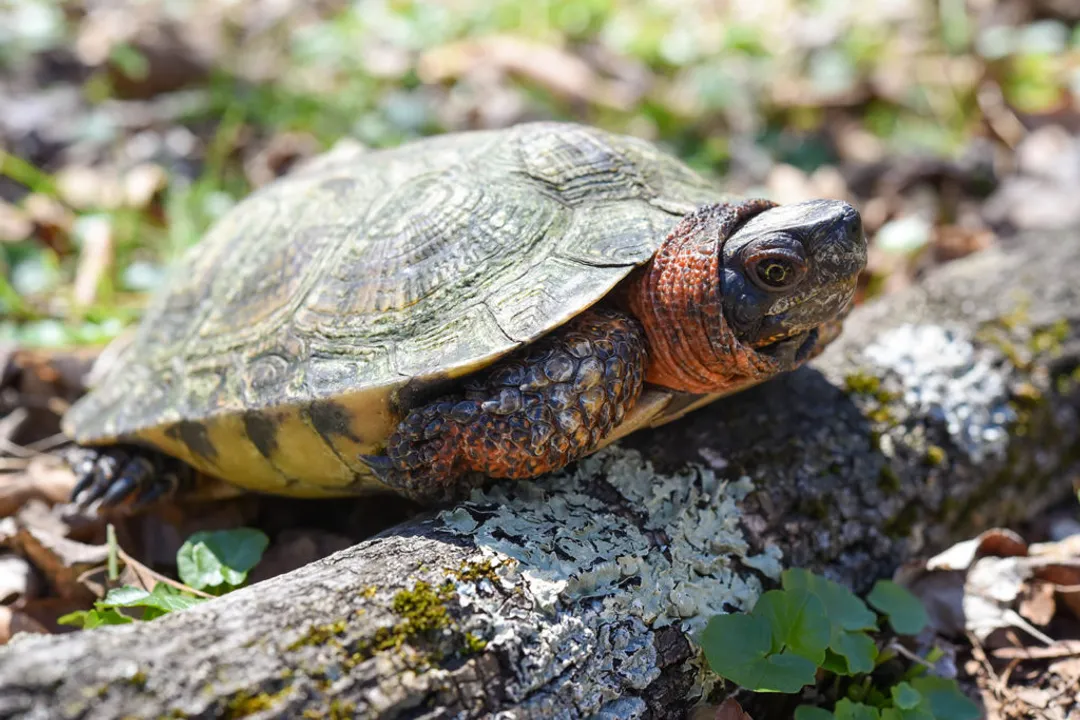
The wood turtle, scientifically known as Glyptemys insculpta, is a creature often caught between two worlds: the cool flow of a stream and the warm cover of a terrestrial forest floor. This mid-sized freshwater turtle is instantly recognizable, possessing a distinctly rugged appearance that sets it apart from its aquatic cousins. [1][6] The shell, or carapace, usually measures between 5 and 7.5 inches in length, though males generally achieve a larger size than females. [1][2]
# Shell Details
What truly defines the wood turtle’s look is the texture of its shell. The scutes—the individual plates that make up the carapace—are noticeably ridged, often giving the shell a stacked, sculptured, or "pyramidal" look. [1][6][10] This rugged texture is complemented by a coloration that ranges from dark brown to black, frequently highlighted by striking yellow or reddish-orange markings or streaks on the edges of the scutes. [6][10] Contrast this rough upper shell with the plastron, the smooth underside, which is typically a vibrant yellow or orange, sometimes featuring dark blotches near the bridge connecting it to the carapace. [1][6] Another telling feature for identification involves looking at the skin on the legs and neck; the skin underneath is usually bright yellow or orange, which is quite visible when the turtle stretches out. [6][10] While many turtles are strictly aquatic, the wood turtle’s ability to traverse upland areas helps them find varied resources, but this duality also subjects them to different sets of dangers throughout their active season. [1]
# Where Found
Wood turtles inhabit a large, but fragmented, portion of eastern North America. [1][3] Their range spans from Nova Scotia down to Virginia, and west into states like Michigan. [5][10] Specific state regulations and protection levels vary widely across this area, from Connecticut where they are listed as threatened [10] to Virginia where they are considered a species of special concern. [4]
Their habitat preference is specialized. They thrive in areas where forests meet water bodies, favoring cool, clear streams, small rivers, and adjacent floodplains or moist meadows. [1][2][6] The aquatic component is essential, as these streams and rivers often serve as crucial corridors for movement and provide a safe haven for overwintering. [4][6] During the colder months, wood turtles typically retreat to overwinter in the muddy banks of streams, under submerged logs, or at the bottom of slow-moving water bodies. [4][6]
It is interesting to note how this amphibious existence shapes their geography. A population might occupy a specific river system, utilizing the riparian zone for foraging, but their presence is intrinsically linked to the quality of both the waterway and the adjacent upland habitat. If a stretch of stream is dammed or polluted, the entire local population faces stress, regardless of how healthy the surrounding woods are. [1][4]

# Daily Life
The wood turtle’s daily rhythm is dictated by the seasons and the weather. They are generally most active during the spring and fall when temperatures are mild. [2] As summer heat intensifies, they tend to spend more time in the cooler waters or in shaded, damp areas, reducing their surface activity significantly. [2]
Their diet reflects their ability to move freely between water and land. They are omnivores, displaying opportunistic feeding habits. [4][10] In the water, they might consume aquatic insects, snails, and small fish, alongside submerged vegetation. [1] On land, their menu expands to include slugs, earthworms, berries, mushrooms, and various fruits and flowering plants. [1][4] This adaptability in diet is a strength, allowing them to exploit seasonal food spikes, such as the abundance of fallen fruit in late summer or early autumn. [10]
A common behavior observed when they are basking is positioning themselves near the water’s edge, ready to slip into cover if disturbed. [2] Their movement on land can be surprisingly brisk for a turtle, especially when they are traveling between foraging grounds or heading toward a suitable nesting site. [4]
# Growing Up
Reproduction is a commitment for the wood turtle, largely due to their considerable lifespan. It is commonly reported that these turtles can live for fifty years or more in the wild, a longevity that demands slow, steady reproductive success. [1][3][10] Because they live so long, their reproductive rate is low; females may only successfully nest a few times throughout their entire lives. This slow reproductive curve means that if recruitment (the survival of new hatchlings to maturity) drops due to current threats, the population replacement rate will be extremely sluggish, taking decades to rebound even if conditions improve immediately. [4]
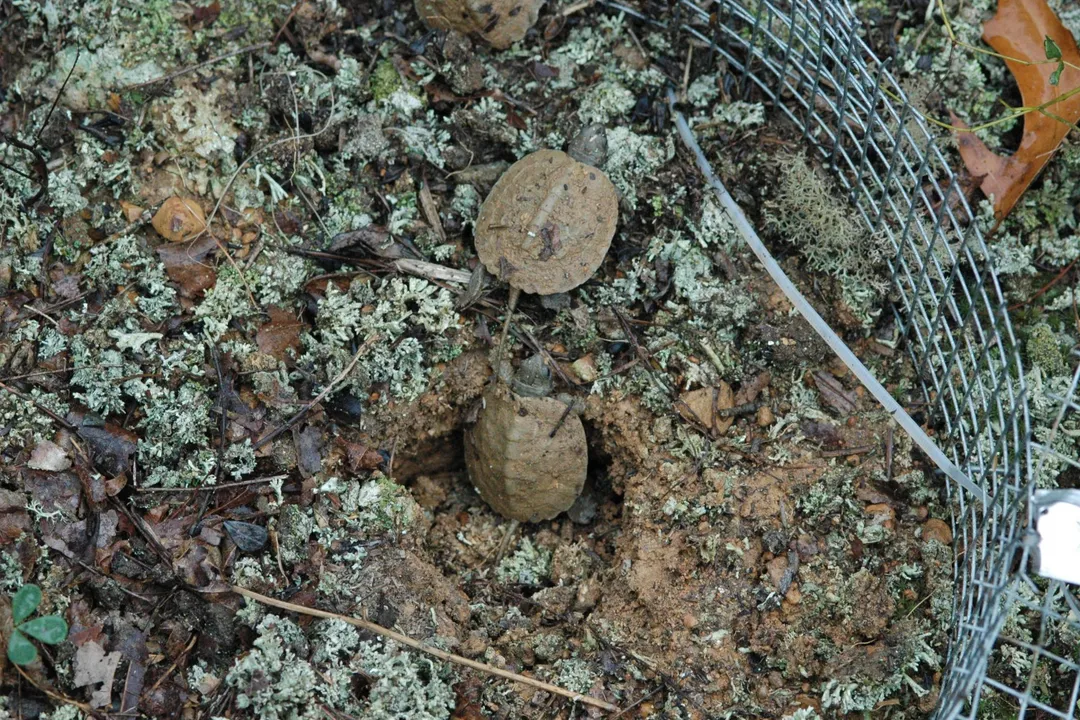
Nesting occurs exclusively on land, usually in late spring or early summer. [4] Females travel overland, often migrating considerable distances from their aquatic homes in search of the perfect spot to lay eggs. [2][4] They favor open, sunny areas with well-drained, sandy, or gravelly soil, which helps prevent the eggs from rotting due to excess moisture. [4] A typical clutch contains between four and ten eggs. [1][4]
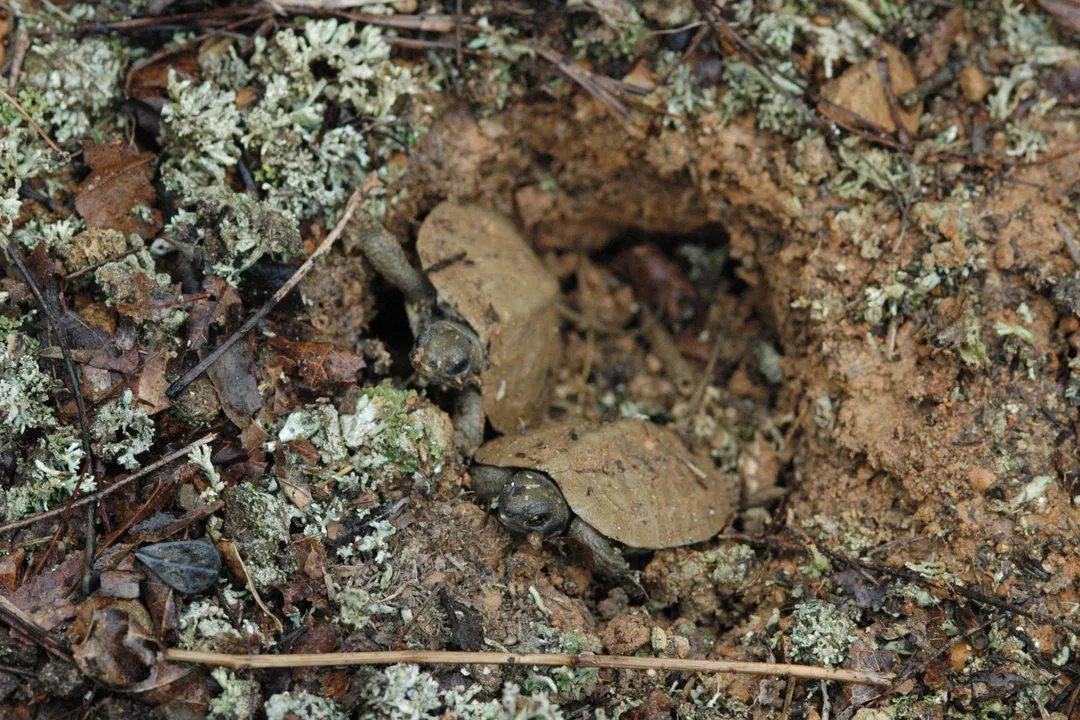
The incubation period is lengthy, often spanning from 50 to 80 days before the young turtles emerge. [4] The sex of the hatchlings is determined by the temperature inside the nest during incubation, a phenomenon known as Temperature-Dependent Sex Determination (TSD). [1][4] Upon hatching, the young turtles are very small, sometimes measuring only about an inch and a half long. [1] Like many reptiles, the young turtles are largely self-sufficient from the moment they break out of the egg, instinctively seeking cover and food. [4]

# Status Threats
Despite their natural resilience over a long lifespan, wood turtle populations across their range are experiencing noticeable declines. [1][5][9] This has resulted in various protective statuses depending on the jurisdiction, with several states listing them as threatened or endangered. [2][9][10]
The primary threats are directly tied to human activity and habitat fragmentation. Road mortality is a significant factor, particularly during the nesting season. [4][9] When females leave the safety of the stream to find dry nesting substrate, they frequently attempt to cross roads, where they are easily struck by vehicles. [4] This loss of mature, reproductive females is devastating to a species with such a slow reproductive cycle. [2]
Habitat destruction further compounds the problem. Development, alteration of stream banks, and habitat degradation reduce the availability of quality basking, foraging, and overwintering sites. [1][4] Furthermore, the historical practice of collecting these animals for the pet trade, along with illegal collection, has removed individuals from wild populations, putting further pressure on already stressed groups. [1][4] Protecting these turtles requires a concerted effort to maintain the integrity of the corridors connecting their aquatic and terrestrial homes, ensuring safe passage for nesting females and preserving the quality of the cool, clear water systems they depend on. [2][4]
Related Questions
#Citations
Wood Turtle | Movement of Life - Smithsonian Institution
Wood Turtle - The Maryland Zoo in Baltimore
Wood turtle - Wikipedia
Wood Turtle - Virginia Department of Wildlife Resources
Glyptemys insculpta (Wood turtle)
Wood Turtle | Vermont Fish & Wildlife Department
Wood Turtle (Glyptemys insculpta) | U.S. Fish & Wildlife Service
Wood Turtle - Mass.gov
Wood turtle Facts for Kids
Wood Turtle - CT.gov