Wood Turtle Physical Characteristics

The Wood Turtle, scientifically known as Glyptemys insculpta, presents a striking profile among North American reptiles, making it a favorite subject for naturalists across its broad range spanning from Nova Scotia south to Virginia and west to Minnesota. Its physical presentation is a complex interplay of shell structure, vibrant soft-tissue color, and subtle size differences between sexes, all contributing to its unique identity within the Emydidae family.
# Shell Texture

The most immediate and defining feature of the Wood Turtle is its upper shell, or carapace. The specific epithet, insculpta, directly references this rough, heavily sculptured surface. This texture is not smooth like many fully aquatic turtles; instead, the carapace is characterized by well-defined concentric growth rings, known as annuli, on each scute (the individual scale plates of the shell).
These annuli are often raised, giving each scute an irregular, somewhat pyramidal shape. This robust, sculpted appearance likely offers a degree of defense and resilience, which seems perfectly adapted for a species that spends significant time moving through rugged terrestrial habitats, traversing floodplains, and potentially weathering abrasion from gravelly stream beds or debris. While older individuals often show wear, resulting in an abraded or smoother shell surface, the characteristic sculpting is usually evident. Furthermore, the carapace typically possesses a low central keel, a raised ridge running down the center of the shell. In some specimens, the vertebral scutes may even display radiating yellow streaks, or yellow pigment might only be visible along this keel. It is worth noting that this highly sculpted carapace immediately distinguishes it from similar species like the Eastern Box Turtle or the Blanding’s Turtle, both of which have flatter or more domed shells lacking this specific texture.
# Color Palette

Beyond the shell's architecture, the Wood Turtle’s coloration is noteworthy, especially on the exposed skin. The turtle’s head and the skin on its back are generally dark—ranging from dark gray to solid black. This dark upper surface contrasts dramatically with the bright pigmentation found on the lower surfaces. The throat, chin, lower neck, and the insides of the legs often display vivid shades of orange, red, or yellow. This orange or reddish hue on the forelimbs is a key diagnostic feature in areas like Massachusetts.
The carapace itself is generally a shade of brown, tan, or grayish-brown. However, this background color is often embellished with patterns; the scutes frequently show black and yellowish markings or stripes radiating outward from the center. The plastron, or lower shell, provides a lighter base, being predominantly yellow, though it may be cream-colored in some individuals. This bottom shell is characteristically patterned with dark, oblong blotches situated toward the outer edge or rear corner of each scute, creating a pattern unique to each turtle, almost like a fingerprint.
A fascinating aspect of this coloration is its subtle regional variability. Individuals found toward the western edge of the species’ range, near the Great Lakes, tend to exhibit paler coloration on the inside of their legs and neck, often favoring yellow tones, whereas eastern specimens, particularly those near the Appalachian Mountains, display more vibrant orange or reddish pigmentation.
# Size Variation
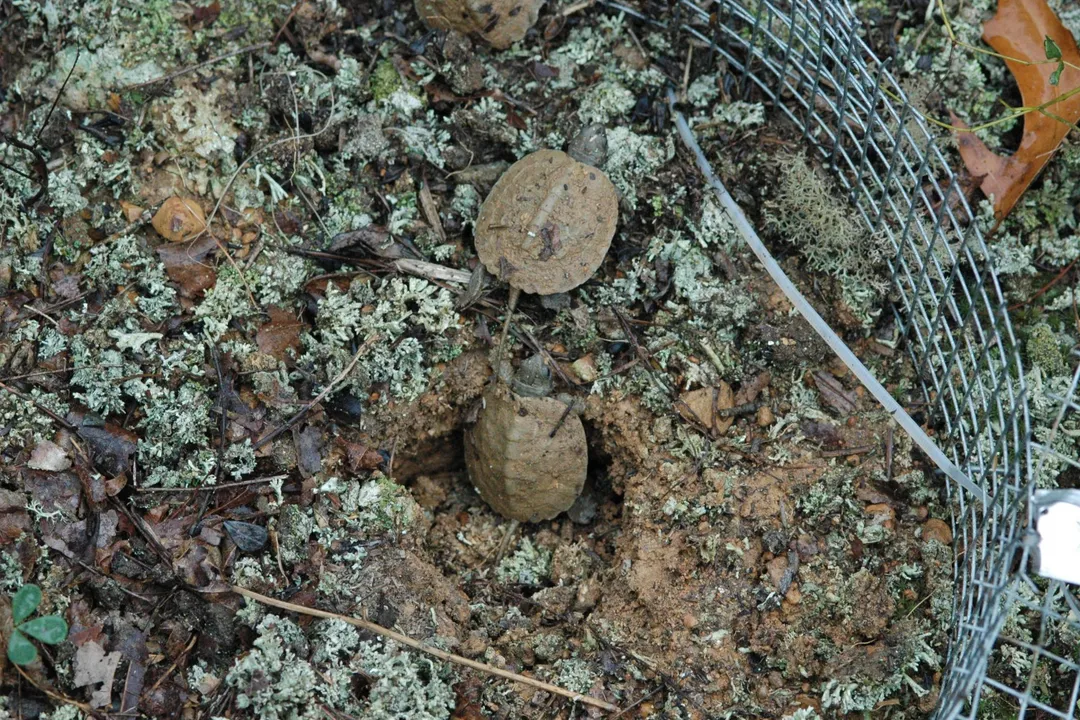
The Wood Turtle is classified as a medium-sized turtle. Adults typically measure between 14 to 20 centimeters (5.5 to 7.9 inches) in straight carapace length. While this range covers most individuals, some may grow slightly larger, with recorded maximums reaching up to 23.4 centimeters (9.2 inches). When fully grown, a Wood Turtle generally weighs around 1 kilogram or 2.2 pounds.
While the overall size is generally consistent across the range, direct comparison of maximum recorded lengths shows slight regional differences across research findings, with some studies in Michigan noting up to 25 cm, while others specify the 23.4 cm maximum. These minor discrepancies in maximum recorded size across various studies might reflect localized access to abundant resources or simply the statistical variation inherent in surveying wide-ranging populations. A turtle’s physical structure, which includes its carapace length, can also be estimated for younger individuals by counting the growth rings, or annuli, on the scutes, though this method becomes increasingly unreliable once the animal reaches maturity and growth slows significantly.
# Sexual Differences
Observing a Wood Turtle closely reveals several distinguishing physical traits that separate males from females, a necessary skill for conservationists studying population structure. At maturity, males are typically slightly larger than females, although both sexes possess significant size variability.
The most reliable indicators are found on the plastron and tail:
- Plastron Shape: The male’s plastron has a distinct concave or depressed center. In contrast, the female’s plastron remains flat or may even be slightly convex.
- Tail Structure: Males develop a thicker and longer tail compared to females. When the tail is fully extended, the vent (cloacal opening) of a male is often located beyond the edge of the carapace, whereas for a female, it remains situated beneath the carapace edge.
- Head Size: Mature males possess a broader and more robust head than their female counterparts.
- Color Vibrancy: While both sexes share the bright limb and neck coloration, it is often more vibrant in males than in females, which may display a paler yellowish tone in these areas.
These morphological distinctions underscore the competitive nature of the species, as male size and physical dominance often correlate with mating success.

# Juvenile Forms
The physical development from hatchling to adult involves a remarkable change in both size and coloration. Wood Turtle hatchlings are quite small upon emerging, measuring between 2.8 to 3.8 centimeters (1.1 to 1.5 inches) in straight carapace length. At birth, their shells are nearly circular in shape and their tails are almost as long as their carapace. Crucially, they lack the defining colors of the adults; their carapace is a uniform dull gray or brown, and the neck and legs are not yet brightly pigmented.
The transformation to the adult appearance is rapid during the first year of life. By about five years, the turtle has grown substantially, reaching around 11.5 cm. The development of the prominent scute ridges and the brilliant orange/red skin coloration occurs as they grow into their juvenile and sub-adult stages. Given that Wood Turtles reach sexual maturity relatively late—between 14 and 20 years of age, with females often taking longer—the turtle spends a very long period of its life displaying immature or sub-adult physical characteristics. This extended period before reproductive capability, coupled with a lifespan that can push 80 years, creates a unique demographic profile where the physical survival of older, mature individuals is paramount to population stability. The fact that the sex of the young is determined genetically, unlike many other freshwater turtles whose sex relies on incubation temperatures, is another fascinating physical trait distinction for this species.
Related Questions
#Citations
Wood turtle - Wikipedia
Wood Turtle - Virginia Department of Wildlife Resources
Wood Turtle - The Orianne Society
Glyptemys insculpta (Wood turtle)
Glyptemys insculpta ((North American) Wood Turtle) | INFORMATION
Wood Turtle Glyptemys insculpta - Chesapeake Bay Program
Wood Turtle - Ontario Nature
Wood Turtle - Mass.gov