What is the typical clutch size range observed when the Wood Turtle nests in sandy or gravelly soils near streams?
Answer
7 to 11 eggs
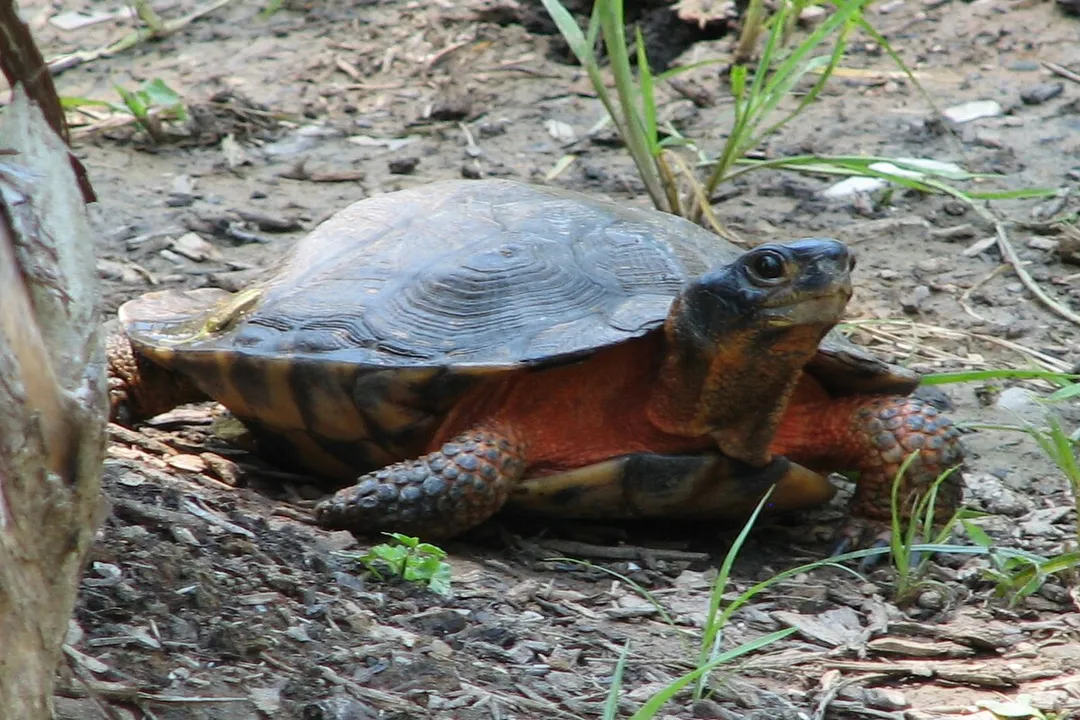
In contrast to turtle species known for producing hundreds of eggs, the Wood Turtle exhibits low annual fecundity, a trait associated with its K-selected life history. Reproductive output is relatively constrained, with females typically laying a small clutch averaging only 7 to 11 eggs per nest site. Nesting behavior is further restricted geographically, usually occurring specifically in sandy or gravelly soils adjacent to the essential stream corridors they rely upon for other life stages.
Related Questions
What is the modern genus classification for the Wood Turtle, *G. insculpta*, shifting from its historical grouping?Which genus is identified as the sister group to *Glyptemys* in phylogenetic analyses concerning Wood Turtle evolution?The key life history characteristics of *G. insculpta*, such as delayed maturity and long lifespan, are classic examples of which evolutionary selection strategy?What is the typical clutch size range observed when the Wood Turtle nests in sandy or gravelly soils near streams?What specific physical feature characterizes the carapace of the Wood Turtle (*G. insculpta*) distinguishing it morphologically?What critical requirement forces the Wood Turtle's tight coupling to river systems for overwintering?According to an eighteen-year mark-recapture study, what was the approximate annual apparent survival rate recorded for male Wood Turtles?What global conservation status has NatureServe currently assigned to *Glyptemys insculpta*?Why do population declines impact *G. insculpta* so severely despite a relatively wide historical range stretching to Wisconsin and New Brunswick?Besides *G. insculpta*, which other species is recognized as currently existing within the genus *Glyptemys*?