How big can a turtle frog get?
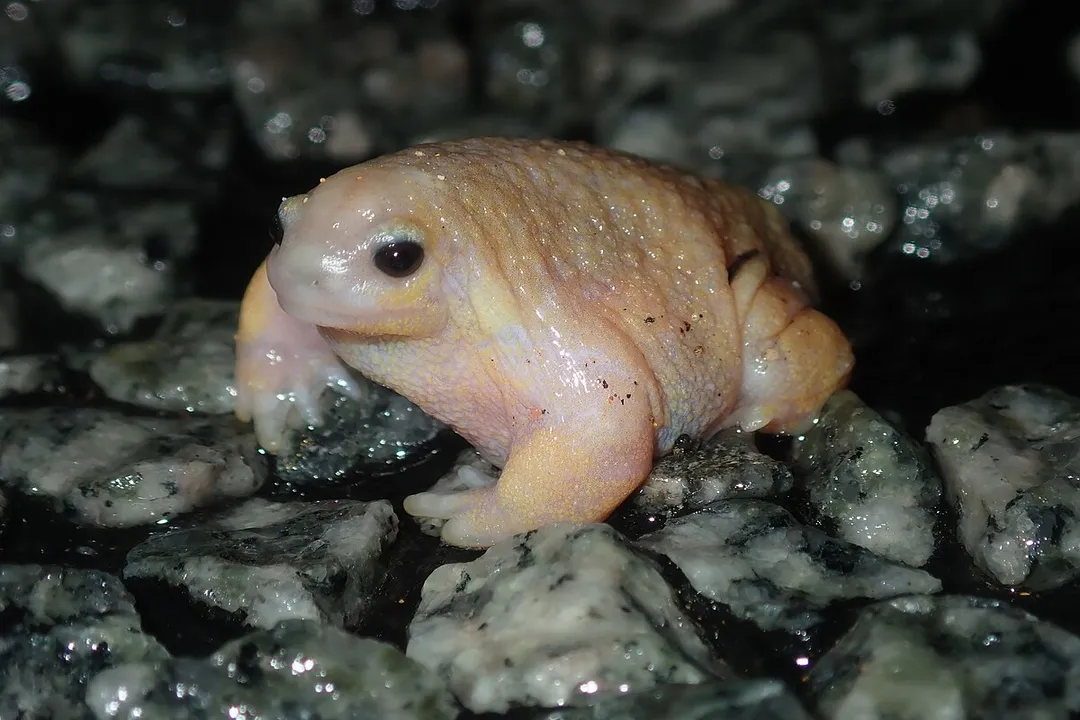
The Myobatrachus gouldii, commonly known as the turtle frog, is one of Western Australia’s most peculiar amphibians, readily identified by its body shape reminiscent of a turtle that has shed its shell. While its appearance might suggest a creature of unusual dimensions, the answer to how large this frog truly gets reveals it to be surprisingly diminutive. These frogs typically reach a maximum length of about 45 millimeters, or roughly 1.8 inches. Other sources specify this maximum size as 5 cm or 2 inches. This measurement firmly places the turtle frog in the category of small, specialized anurans, despite its rather robust physique.
# Appearance Scale
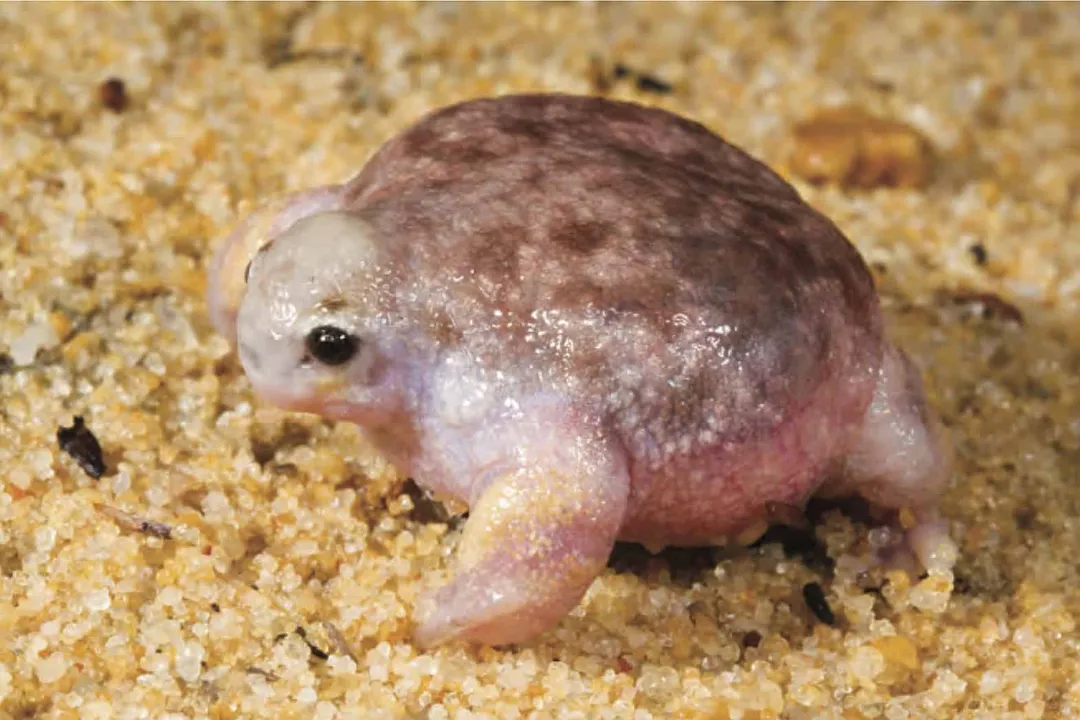
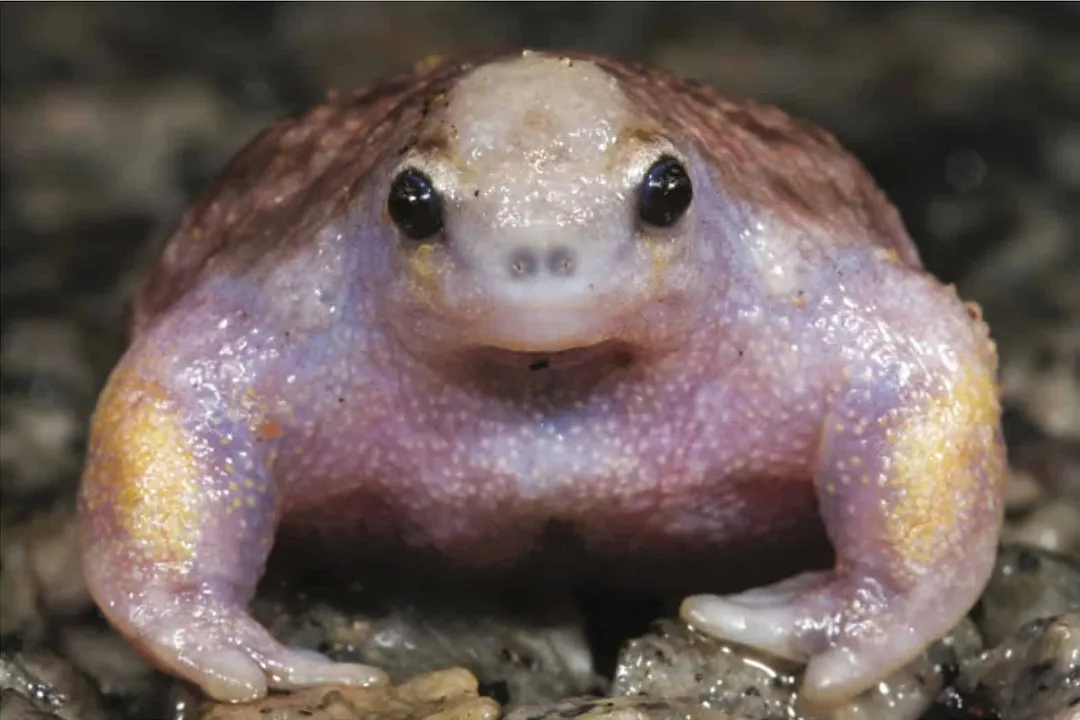
The general description of the turtle frog often highlights its disproportionate features. It possesses a very small, narrow head set against a notably round and stout body. Coupled with short but muscular limbs, particularly the front arms, this gives the animal a stocky, almost compressed look, which is accentuated by its skin color, ranging from pink to light or dark brown. Though it is only a small creature by length standards, its build is highly distinctive. Despite being one of Australia's smaller frogs, its extremely developed pectoral girdle, necessary for its unique lifestyle, gives it a deceptively "buff" or stout appearance; meaning its physical proportions are more extreme than its overall length suggests. This powerful forelimb adaptation is crucial for surviving in its arid home.
# Egg Size Contrast
The scale of the turtle frog becomes even more interesting when examining its reproductive output relative to its own body size. Female turtle frogs can lay up to 50 eggs. What makes these eggs noteworthy is their size: each one measures as much as 7.5 millimeters (0.30 inches) in diameter. This size is significant because these are considered the largest eggs of any frog in Australia. The direct development occurring within these large capsules, which bypasses the vulnerable, aquatic tadpole stage entirely, is a perfect adaptation for life away from permanent water sources.
# Burrow Engineering
Survival in the semi-arid sandy soils of Southwestern Australia, where this species is endemic, demands incredible adaptation to avoid desiccation. The turtle frog achieves this by burrowing deep underground, sometimes reaching depths of 1.2 meters (about 3.9 to 4 feet). The mechanism for achieving this depth is fascinating: unlike most frogs that use their hind legs to scoop soil backwards, the turtle frog uses its strong forearms to dig forward, much like a turtle. Considering a turtle frog averages around 4.5 cm in length, digging a burrow over 1.2 meters deep is equivalent to a 180 cm (6 ft) human digging a hole nearly 32 meters (over 100 feet) deep just to reach a moist spot for its eggs—an astonishing feat of subterranean engineering relative to its scale. This depth keeps them safe from the heat, predators, and allows their eggs to develop in the cool, moist sand.
# Distribution and Lineage
The Myobatrachus gouldii is exclusively found west of a line drawn between Geraldton and the Fitzgerald River in Western Australia, often near termite colonies which form its sole diet. Being the only species in its genus, it belongs to the family Myobatrachidae, sometimes called Australian ground frogs. Its unusual morphology, including its unique digging style and direct development, suggests it belongs to ancient frog lineages dating back to the early Tertiary or late Mesozoic eras. Its closest relatives are the Sandhill Frogs (Arenophryne), which share the traits of front-limb digging and direct-developing young. While it is a small frog in terms of length, its large egg size and ability to excavate deep, safe environments demonstrate that "big" in the amphibian world isn't always about adult body measurement.
Related Questions
#Citations
Turtle Frog | Western Australian Museum
Myobatrachus - Wikipedia
Turtle Frog - Myobatrachus gouldii - A-Z Animals
The turtle frog of Western Australia uses its short but muscular front ...
Turtle frog Facts for Kids
Turtle Frog - Curious Species