Why are juvenile Western Rattlesnakes initially concentrated on smaller ectotherms?
Answer
They are not yet large enough or skilled enough to consistently subdue larger, more powerful adult rodents
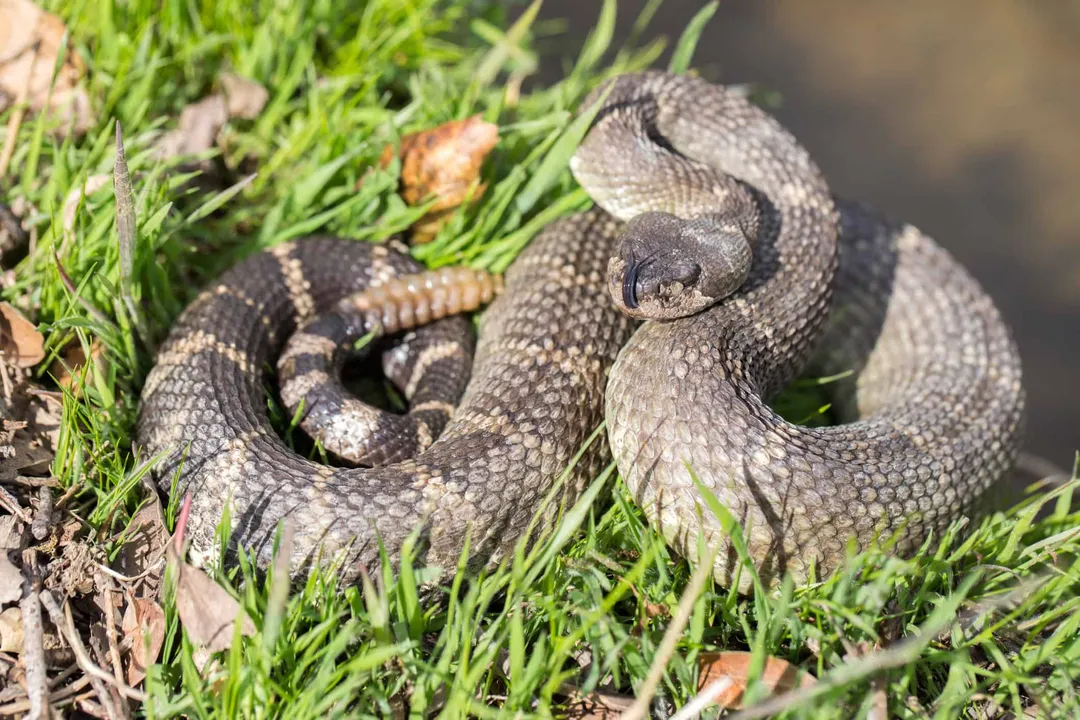
The dietary preference shift observed in younger *Crotalus oreganus* is directly tied to their physical immaturity and hunting proficiency. Juvenile snakes have not yet developed the size, strength, or learned skill set required to reliably overpower and subdue larger, more formidable prey such as adult rodents. To minimize the risk of injury and ensure successful foraging, they concentrate their initial efforts on smaller, less threatening prey, primarily lizards. This behavior ensures necessary energy intake while they develop the capacity to transition to their adult diet staples like mice and voles.
Related Questions
What prey forms the foundation of the adult Western Rattlesnake's diet across most distribution?Which prey item is juvenile *C. oreganus* disproportionately likely to consume?What primary method does the Western Rattlesnake use to secure prey?After striking prey, what cues does the Western Rattlesnake use to track the animal?What significant ecological service does the Western Rattlesnake provide by consuming small mammals?Which prey item heavily features in drier, inland California diets versus cooler British Columbia diets?What physical state follows the consumption of a substantial meal for *Crotalus oreganus*?Why are juvenile Western Rattlesnakes initially concentrated on smaller ectotherms?Which groups of prey are generally considered opportunistic rather than a dietary cornerstone for *Crotalus oreganus*?What consequence is noted when *Crotalus oreganus* populations are removed from a local area?